

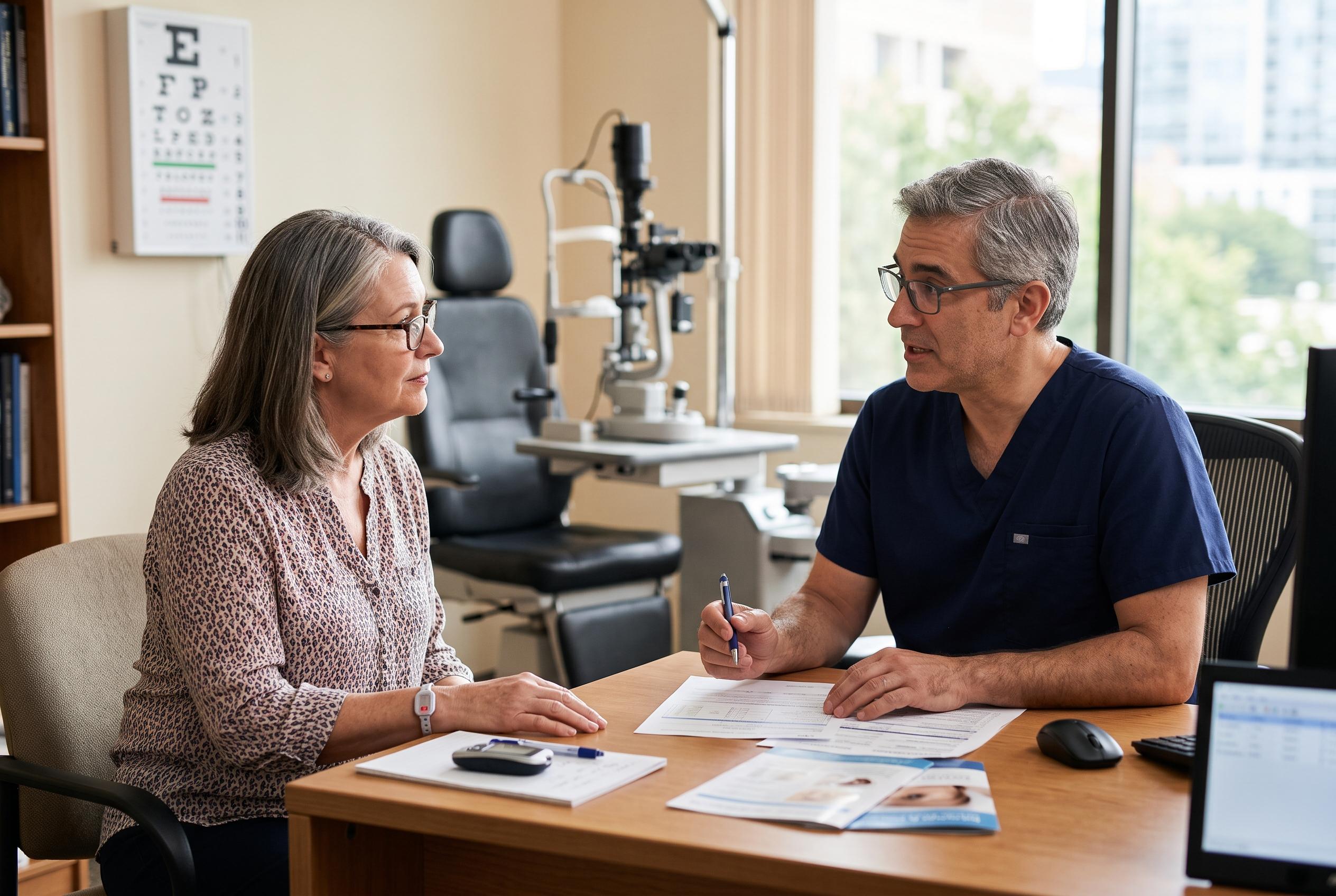

Cataract surgery is usually safe for people with diabetes, but retinal disease, macular swelling and slower healing can make assessment and follow-up more complex.
For people with diabetes, cataract surgery is generally safe and often restores useful vision, but the operation needs more careful planning than it does for patients without diabetes. The Retina Speciality Hospital says the main concerns are not the cataract itself but the eye conditions diabetes can bring with it, including diabetic retinopathy, swelling at the macula, slower healing and a greater risk of infection.
Diabetes can also bring cataracts on earlier and make vision change more quickly. High blood sugar alters the eye’s natural lens over time, leading to clouding, while swings in glucose can cause vision to fluctuate from day to day. Medical News Today and other patient-facing guidance note that blurred vision in diabetes is not always due to a cataract alone, which is why a full eye examination matters before treatment is planned.
A review in Diabetes Journals says the key to safer surgery is a thorough pre-operative assessment, especially checking the retina and getting blood sugar under control. That matters because cataract surgery can sometimes unmask or worsen existing diabetic eye disease. The review indexed on PubMed also stresses that treatment should be individualised, with particular attention to diabetic macular oedema and the possible progression of retinopathy after surgery.
In practice, doctors usually look at three things before proceeding: whether blood sugar is stable, whether the retina and macula have been examined, and whether blood pressure is controlled. If any of those is not where it should be, surgery may still be possible, but the care plan often changes. The hospital article says some patients need laser treatment or injections before cataract removal, while the broader medical literature also highlights the importance of close monitoring after the procedure.
The operation itself is often performed using phacoemulsification, a small-incision technique that breaks up the cloudy lens and removes it through a tiny opening. In people with diabetes, surgeons may also have to deal with a small pupil, denser cataracts or other eye disease at the same time. Reviews in the medical literature note that these challenges can be managed, but they make experienced surgical planning more important. Lens choice also depends on the retina: standard monofocal lenses are often preferred when the eye needs ongoing retinal monitoring, while premium or multifocal lenses may be less suitable if there is macular disease.
Recovery is usually straightforward, but diabetic patients may heal more slowly and need more follow-up than others. The hospital advises patients to use their drops exactly as prescribed, keep glucose under control and avoid rubbing the eye, swimming or heavy lifting until cleared to do so. It also warns that later blurring can come from macular swelling, dry eye or posterior capsular opacity, which is a clouding that can develop behind the implant months or years later.
The wider message from the medical reviews is consistent: cataract surgery is commonly successful in diabetes, but the best results come when eye disease is recognised early and managed as part of the bigger picture of diabetic care. That is why annual dilated eye examinations are recommended even when vision seems fine, and why urgent assessment is needed if a person notices sudden blur, flashes, floaters or a shadow across the sightline.
Disclaimer: This content is for informational purposes only and is not intended to be a substitute for professional medical judgment, advice, diagnosis, or treatment.



