

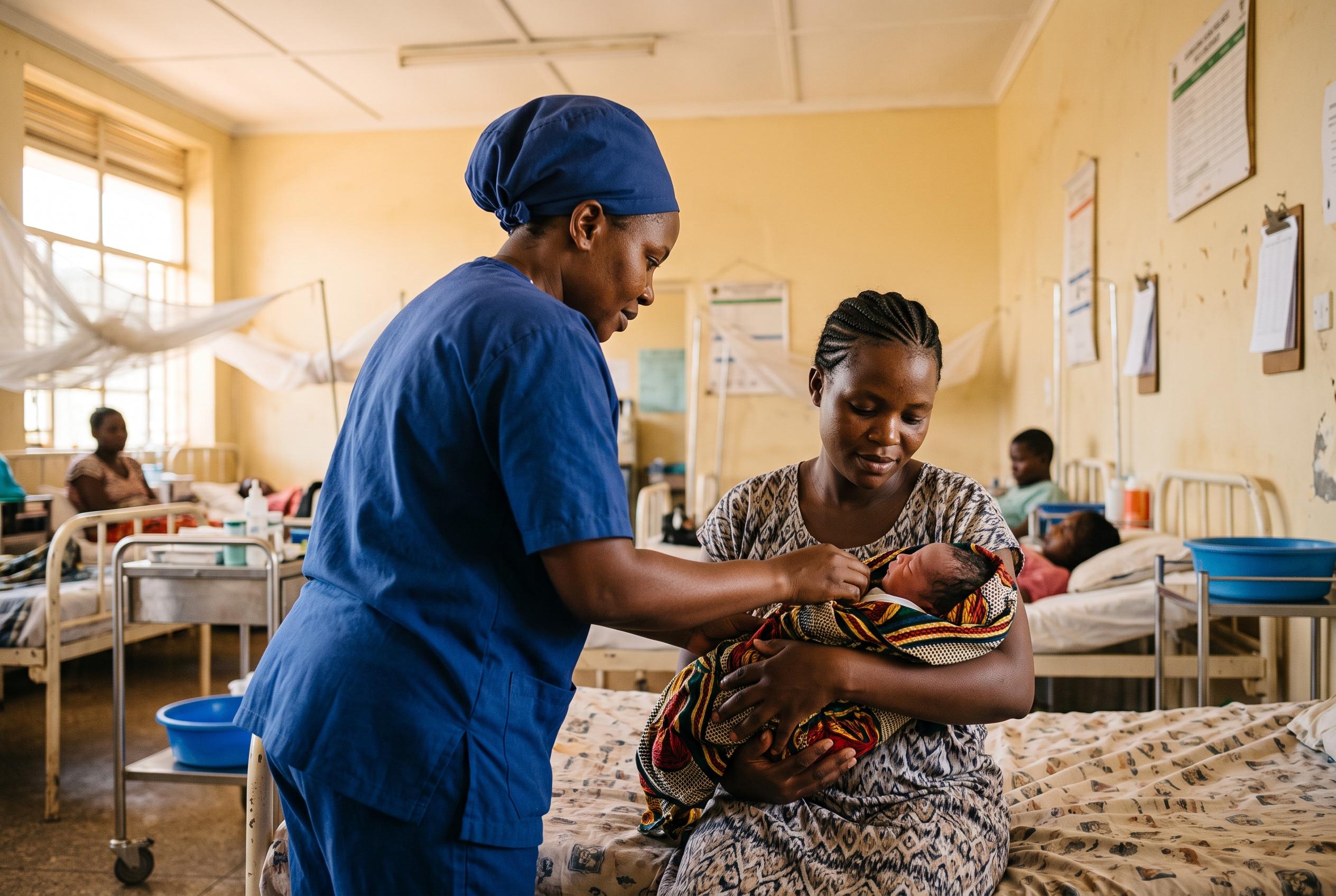

A prospective cohort study at three Ugandan referral hospitals found that 70.3% of newborns born to women with diabetes experienced at least one early adverse outcome, most commonly macrosomia.
A prospective cohort study in Uganda has found that babies born to women with diabetes faced a heavy burden of early complications, with more than seven in 10 affected by at least one adverse outcome during the first days of life. The study, published in Wiley’s Health Science Reports, followed mother-newborn pairs at Jinja, Hoima and Lira Regional Referral Hospitals and set out to measure the cumulative incidence of early neonatal harm, describe the specific problems seen, and identify maternal and obstetric factors linked to risk.
The researchers reported that 102 of 145 newborns developed at least one early adverse neonatal outcome, giving a cumulative incidence of 70.3%. Macrosomia was the most common individual problem, followed by low 5-minute Apgar scores, neonatal hypoglycaemia, respiratory distress and early neonatal death. Neonatal unit admission was also frequent, although it was analysed separately because admission depends on both clinical need and local hospital practice. The study found no clear evidence that the overall proportion of affected newborns differed meaningfully across the three referral hospitals.
The findings fit with a broader body of evidence showing that diabetes in pregnancy increases the risk of fetal overgrowth, neonatal metabolic instability and breathing problems after birth. A large Ugandan cohort published in BMC Pregnancy and Childbirth reported that higher fasting and post-load glucose levels were associated with caesarean delivery, large-for-gestational-age babies and neonatal intensive care admission, with the greatest risks seen when both glucose measurements were raised. International research has also linked gestational and pre-existing diabetes to neonatal respiratory distress syndrome and other complications.
Across Africa, however, the evidence base remains patchy. The Uganda study’s authors note that reported rates of gestational diabetes and related complications vary widely because screening practices, diagnostic thresholds and access to testing differ between settings. They also point out that timely treatment can reduce some harms, but does not eliminate risk. Trials cited in the paper suggest that managing gestational diabetes lowers excessive fetal growth and some pregnancy complications, while more recent work indicates that early diagnosis and treatment can modestly reduce a composite of adverse neonatal outcomes.
In the Ugandan cohort, the only factor that remained associated with the composite neonatal outcome after adjustment was self-reported exercise during pregnancy, though the direction of the relationship was unexpected. Women who said they did not exercise were recorded as having a lower risk than those who reported exercising, a finding the authors describe as exploratory and unlikely to be causal. They warn that the result may reflect reverse causation, confounding by illness severity, or crude measurement of physical activity. Maternal body mass index, rural residence and the number of antenatal care contacts were not clearly linked with the composite outcome after adjustment.
The study also underlines the limitations that often constrain research in low-resource settings: glucose monitoring before delivery was not always available, glycaemic control over time could not be measured in detail, and important factors such as diabetes type, treatment adherence, gestational age at birth and congenital abnormalities were not fully captured. Even so, the authors argue that the high rate of early neonatal complications strengthens the case for careful antenatal risk assessment, planned delivery in well-equipped facilities and immediate newborn surveillance, including monitoring for hypoglycaemia and respiratory distress.
Disclaimer: This content is for informational purposes only and is not intended to be a substitute for professional medical judgment, advice, diagnosis, or treatment.



