

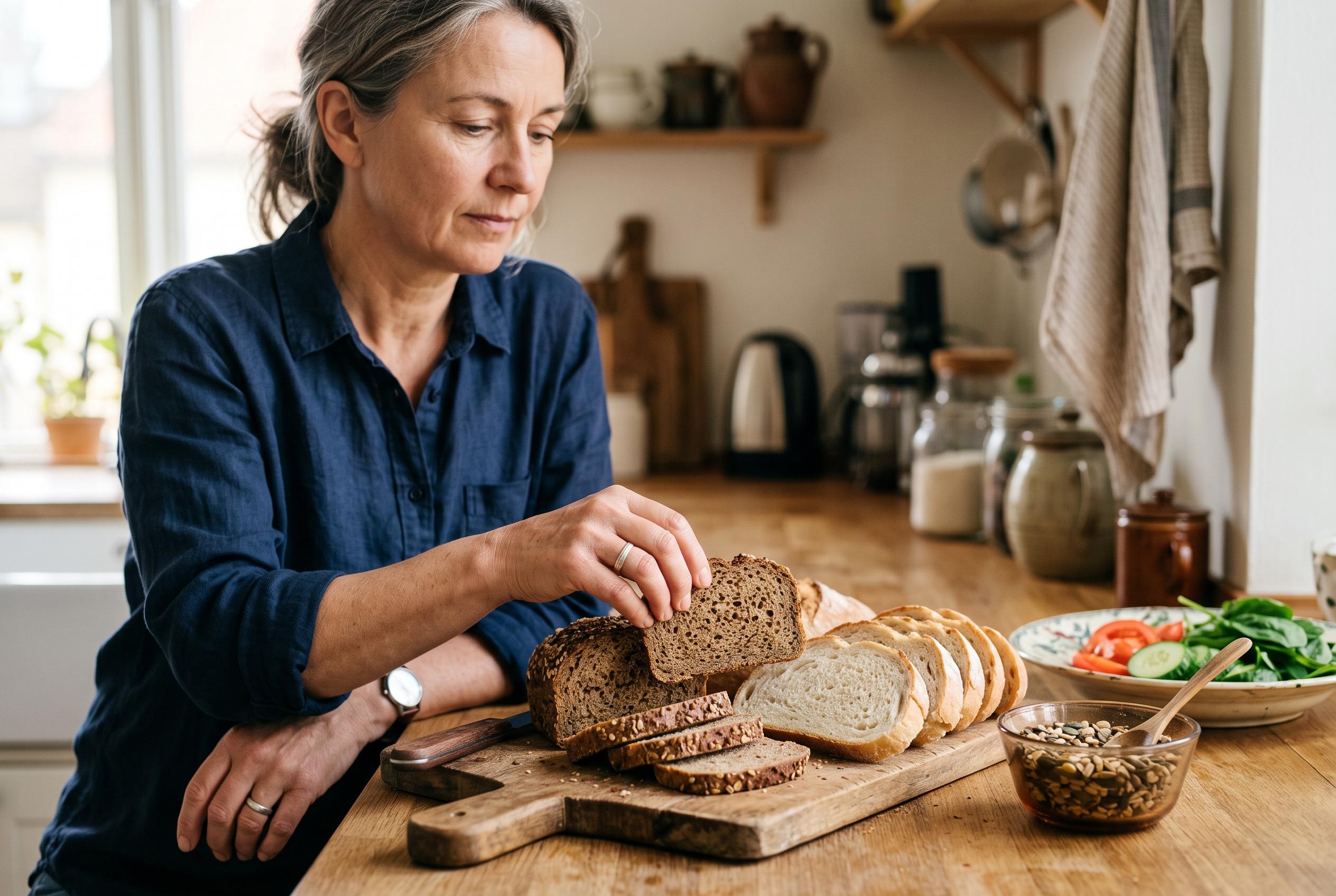

Wholegrain labels do not guarantee a slower rise in blood sugar: ingredients, processing and portion size can matter as much as bread colour.
Bread remains one of the staples of the Hungarian diet, eaten at breakfast, dinner and alongside soups and main courses, and shoppers now face an expanding range of wholegrain, rye and seeded loaves. But the question of whether brown bread is always the healthier choice is more complicated than many people assume. According to Origo, the key issue is not simply whether the loaf is white or wholemeal, but how much is eaten and what else is on the plate.
When bread is digested, the starch it contains is broken down into glucose, which enters the bloodstream and raises blood sugar. The body then releases insulin to help cells absorb and use that glucose. That process is entirely normal. What matters is the speed of absorption and the amount consumed at once. White bread is usually made from refined flour, from which much of the bran and germ has been removed, so it tends to contain less fibre than wholegrain bread. Fibre can slow digestion and absorption, which is why higher-fibre breads often produce a gentler blood sugar response.
Even so, wholegrain bread is not automatically low on the glycaemic index, the scale used to show how quickly foods raise blood sugar. Diabetes UK says white bread is typically a high-glycaemic-index food, but Origo notes that some wholegrain loaves can also score highly. Independent nutrition guides point out that wholegrain bread often has a lower score than white bread, yet the difference is sometimes smaller than people expect, and in some products the gap is minimal. The variation depends on factors such as flour particle size, how much intact grain remains, fermentation and the exact recipe.
That means the label alone does not tell the full story. A loaf described as wholegrain, multigrain or brown may still raise blood sugar fairly quickly if it is heavily processed or made with finely milled flour. By contrast, breads containing intact grains and seeds may digest more slowly. Nutrition advice cited by Origo also suggests that serving size matters just as much as bread type, and that pairing bread with protein or healthy fats can help blunt a sharp rise in blood sugar. For readers trying to manage glucose levels, the practical lesson is to look beyond colour and marketing and pay attention to fibre, ingredients and portion size.
Disclaimer: This content is for informational purposes only and is not intended to be a substitute for professional medical judgment, advice, diagnosis, or treatment.



