

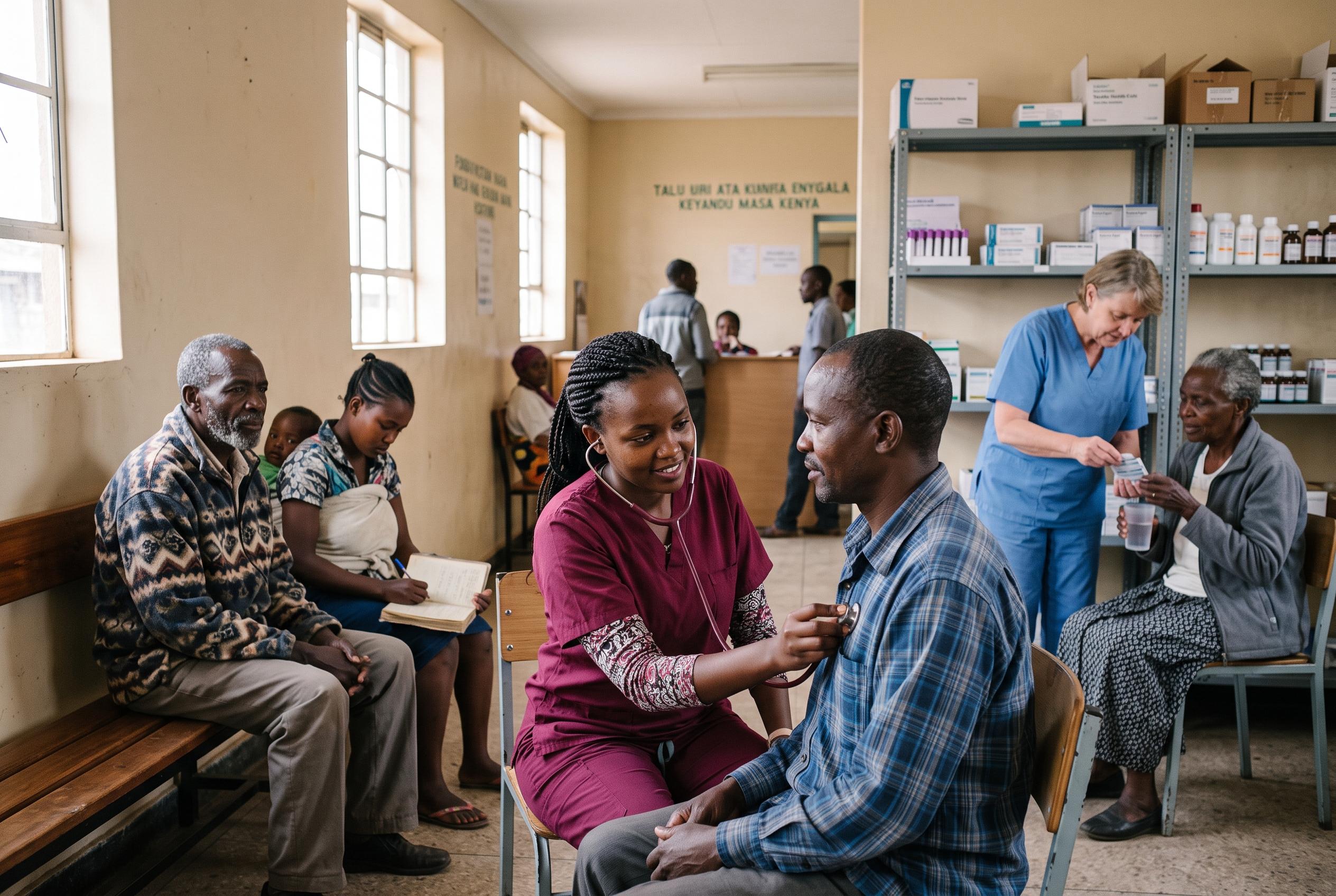

A new scoping review will examine how existing HIV, tuberculosis and primary care platforms are being adapted to deliver integrated care for diabetes, hypertension, obesity and dyslipidaemia.
Cardiometabolic disease is becoming one of the most pressing chronic health challenges in low- and middle-income countries, yet many health systems in those settings were built around single-disease programmes, especially HIV and tuberculosis. A protocol published in Frontiers in Health Services sets out a scoping review designed to map how care for type 2 diabetes, hypertension, obesity and dyslipidaemia has been integrated into existing adult health services in such countries, and to identify the implementation strategies used to make those models work. The review will focus on established platforms including HIV services, tuberculosis programmes and primary care, reflecting the reality that these systems already have the workforce, follow-up routines and patient contact needed for long-term chronic care.
The protocol argues that integration matters because the burden of non-communicable disease has risen sharply in places where health systems have historically prioritised infectious disease control. It notes that hypertension, diabetes and obesity affect very large numbers of adults globally, with low- and middle-income countries carrying much of that burden. Dyslipidaemia, though less consistently measured in those settings, is also an important driver of cardiovascular risk. The authors say that while treatments are well established, delivery remains uneven, and that understanding how services have been integrated into existing care platforms could help close the gap between effective clinical guidance and routine practice.
To answer that question, the team plans a structured search across PubMed, Embase, the Cochrane Library, Web of Science and CINAHL, using a scoping review approach based on the Arksey and O’Malley framework and the Joanna Briggs Institute method, with reporting aligned to PRISMA-ScR. Eligible studies will be screened in stages by trained reviewers, with agreement checks at both title-and-abstract and full-text stages. The protocol also sets out a detailed extraction process covering study characteristics, intervention content, implementation strategies, contextual conditions and reported outcomes. Methodological quality will be assessed with the Mixed Methods Appraisal Tool, while implementation strategies will be mapped to the ERIC framework and outcomes to the taxonomy developed by Proctor and colleagues.
The review is notable for its attempt to look beyond whether integration happened and instead ask how it was implemented. The protocol distinguishes between simple referral, coordination and full integration, and says only the latter two will be considered in detail. It will also record which parts of the health system were affected, including governance, financing, planning, service delivery, monitoring and demand generation. By limiting the review to adults in low- and middle-income countries and excluding reviews, opinion pieces and studies without original programme or implementation content, the authors aim to build a map of real-world service delivery rather than a broad narrative overview.
The protocol suggests the field may be at a turning point. It points to growing evidence that infectious disease platforms can be adapted for chronic cardiometabolic care, but says the implementation literature remains thinly specified, especially for obesity and dyslipidaemia. It also notes that shifts in international funding and biomedical priorities may make integrated models more attractive and, in some settings, more necessary. The review, registered on the Open Science Framework before data collection began, is intended to identify not only what has been done, but also which strategies appear most transferable, what adaptations were required and where the evidence base still has major gaps.
Disclaimer: This content is for informational purposes only and is not intended to be a substitute for professional medical judgment, advice, diagnosis, or treatment.



