

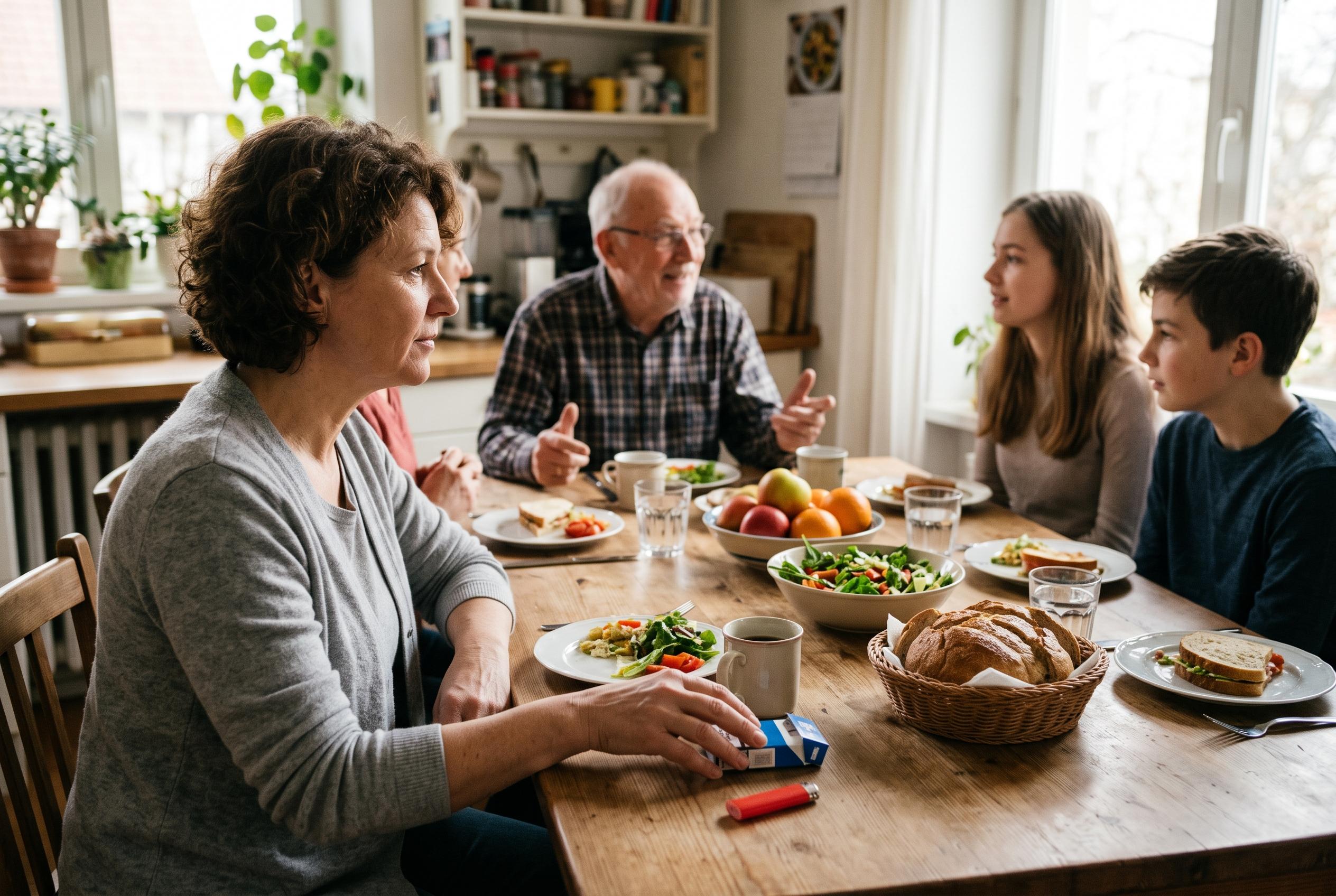

A family history of cancer does not usually mean the disease is inherited, while the benefits of quitting smoking begin soon after the last cigarette. Practical advice also highlights food choices that may help support steadier blood sugar in the evening.
Mangish.net’s Arabic-language health explainer focuses on evening eating habits and the idea that specific food choices after 5pm may help people keep blood sugar steadier. Taken alongside its other recent consumer-health items, the site is leaning into practical guidance aimed at family audiences, with topics ranging from stopping smoking to understanding whether cancer can run in families. According to the Cleveland Clinic, the benefits of quitting smoking begin quickly, with circulation and blood pressure improving soon after the last cigarette, while longer-term gains continue to build over the years.
The smoking guide is broadly in line with Medical News Today’s explanation that nicotine itself clears from the body relatively quickly, but related by-products can remain detectable for days or even weeks. The Cleveland Clinic adds that the health pay-off from quitting is substantial: the risks of heart disease and lung cancer fall over time, and stroke risk can return to normal after about five years. In other words, the first difficult days of nicotine withdrawal are only the start of a process that can deliver lasting improvements in health.
Mangish.net also raised the question of whether cancer in a parent or sibling necessarily means the disease is inherited. Medical experts say the answer is usually no. The Mayo Clinic says most colon cancers are not passed down through families, although inherited syndromes such as Lynch syndrome and familial adenomatous polyposis can sharply raise risk. The CDC likewise says family history matters because genes, shared habits and shared environments can all influence cancer risk, while the World Cancer Research Fund estimates that only about 5% to 10% of cancers are linked to specific inherited gene mutations. Cleveland Clinic’s guidance on breast cancer makes a similar point, noting that multiple affected relatives on the same side of a family can sometimes signal a genetic pattern.
Disclaimer: This content is for informational purposes only and is not intended to be a substitute for professional medical judgment, advice, diagnosis, or treatment.



