

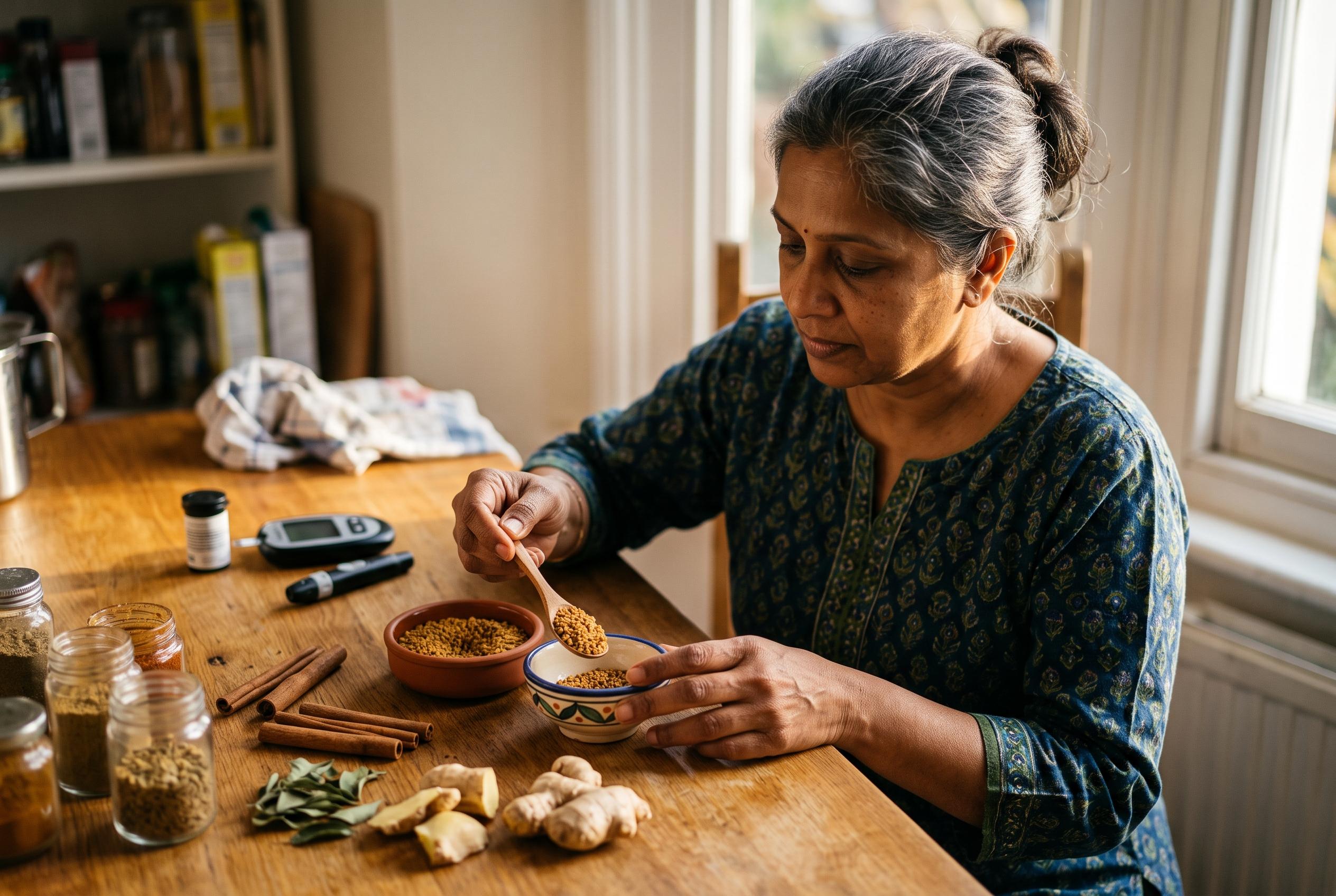

Studies suggest fenugreek may modestly improve blood sugar markers, while evidence for cinnamon and ginger remains more mixed and supplements may interact with diabetes medicines.
Fenugreek, cinnamon and ginger have long been used to flavour sweet and savoury dishes, but researchers have also been examining whether they may have a modest role in blood sugar control. According to the medical literature summarised in PubMed, the strongest evidence so far appears to be for fenugreek, while cinnamon has a more mixed but still suggestive record. Ginger remains promising, though the findings are less consistent.
Fenugreek has attracted particular attention because its seeds contain soluble fibre and bioactive compounds that may slow carbohydrate absorption and influence insulin action. A January 2023 systematic review and meta-analysis of 14 trials involving 894 participants found that fenugreek consumption was linked to lower fasting blood glucose, reduced post-meal glucose and a drop in HbA1c, the measure that reflects average blood sugar over two to three months. An earlier meta-analysis published in 2014 reached similar conclusions, reporting improvements in fasting blood glucose, two-hour post-load glucose and HbA1c, while noting that the evidence came from relatively small studies. A later updated review published in late 2025, covering 26 randomised controlled trials, again found significant improvements in fasting glucose, two-hour post-meal glucose, HbA1c and insulin sensitivity.
Cinnamon has also been studied for its possible effect on glucose metabolism. A 2011 meta-analysis found that cinnamon supplementation significantly lowered fasting blood glucose in people with type 2 diabetes and prediabetes. More recent analysis published in 2023 reported reductions in fasting blood sugar, HbA1c and insulin resistance, suggesting a possible role as an add-on rather than a stand-alone treatment. Even so, the results have not been uniform across studies, and the Cleveland Clinic has noted that the evidence is still not strong enough to recommend cinnamon as a primary therapy for diabetes. That caution is particularly relevant because cassia cinnamon, the variety most commonly sold in shops, contains more coumarin, a compound that can strain the liver in high amounts.
Ginger is often included in the same conversation because it contains gingerols and shogaols, compounds that may affect glucose handling and insulin activity. Reviews have suggested possible benefits for fasting glucose and HbA1c in people with type 2 diabetes, but the overall picture remains less certain than for fenugreek or cinnamon. Differences in dose, preparation and treatment length appear to influence the results, which makes it harder to draw firm conclusions.
What the research does support is a clear distinction between culinary use and therapeutic use. The small amounts of spice added to porridge, tea, sauces or baked goods are not equivalent to the powders, capsules or standardised extracts used in clinical trials. Those foods can still be useful because they add flavour without extra sugar and may contribute antioxidants, but they should not be treated as medicine. People already taking diabetes drugs should be especially careful, because concentrated supplements with blood-sugar-lowering effects can raise the risk of hypoglycaemia if used alongside prescribed treatment.
Disclaimer: This content is for informational purposes only and is not intended to be a substitute for professional medical judgment, advice, diagnosis, or treatment.



