

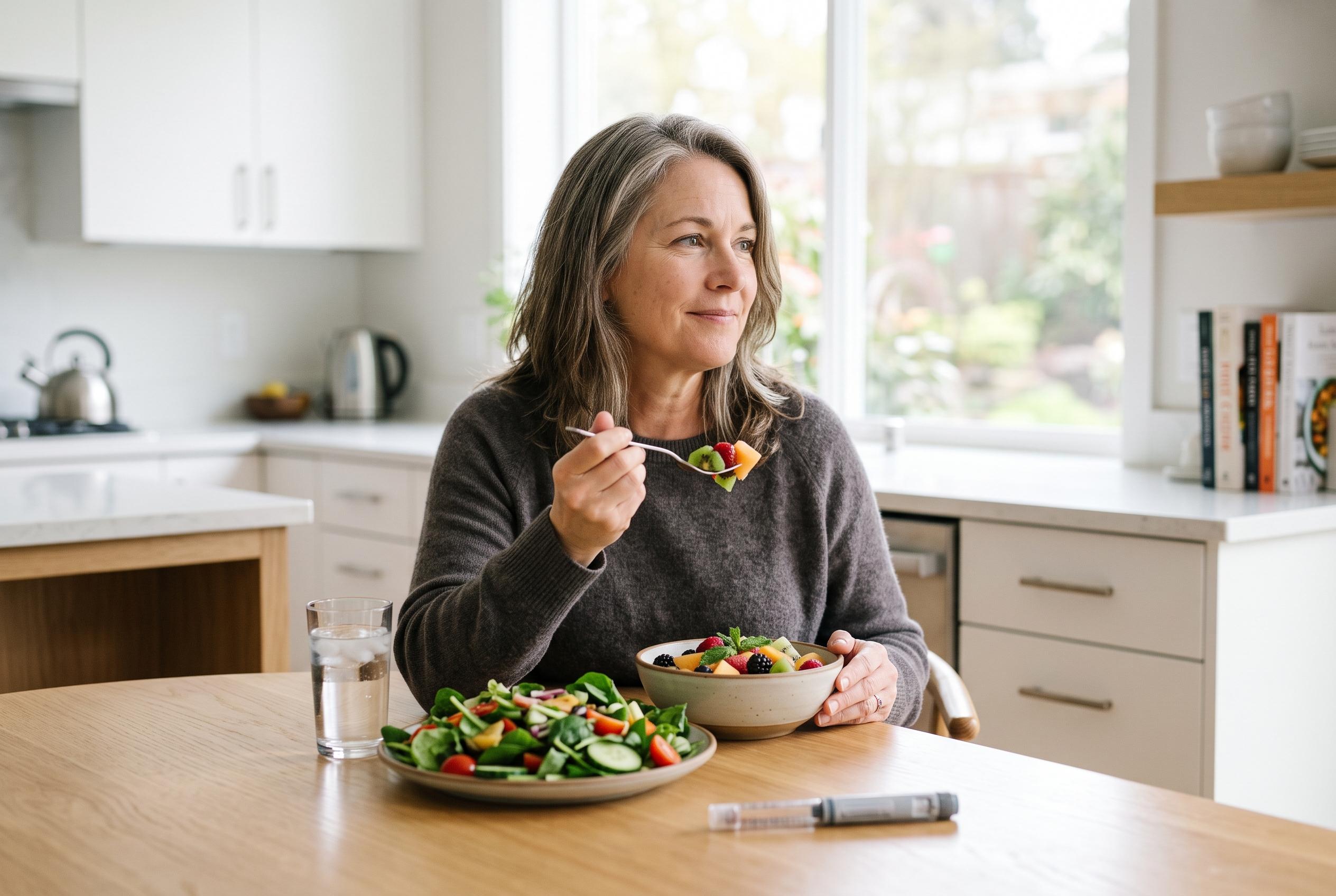

Small, frequent meals, cooler foods and careful hydration may help people manage nausea after GLP-1 injections or dose increases, while severe symptoms need medical advice.
Nausea is one of the most common complaints among people taking GLP-1 medicines such as Wegovy, Ozempic, Zepbound and Mounjaro, and nutrition specialist Dr Su says it often shows up most strongly soon after an injection or after a dose increase. That pattern fits with what other medical sources describe: these drugs slow gastric emptying, meaning food stays in the stomach longer, which can leave people feeling uncomfortably full, bloated or queasy. Drugs.com notes that the symptom usually peaks in the first few weeks of treatment or after a higher dose, while Yale Medicine and Cleveland Clinic say digestive side effects often ease as the body adjusts.
Clinical trial data suggest the problem is common but not usually severe enough to force people off treatment. Dr Su’s article cites trial figures showing nausea in roughly 44% of people taking semaglutide and about 28% of those taking tirzepatide, compared with much lower rates on placebo. Even so, fewer than one in 10 patients stopped treatment because of stomach side effects. The practical message from several medical sources is consistent: nausea can be managed, even if it cannot always be eliminated altogether.
Food choices make a noticeable difference. Dr Su recommends small, frequent meals rather than large plates, with an emphasis on cold or room-temperature foods that give off less smell. Soft or liquid options, such as smoothies, soups, yoghurt, cottage cheese and applesauce, can be easier to tolerate when solid food feels overwhelming. Protein remains important, both to support satiety and to help preserve muscle, so a protein shake or yoghurt is generally a better option than relying on crackers or toast alone. Hydration also matters, but Dr Su advises sipping fluids between meals rather than drinking heavily at mealtimes, so the stomach does not feel overfilled.
The foods most likely to make nausea worse are familiar ones: greasy, fried or very rich dishes, oversized meals, strong smells, spicy food if it is a trigger, and alcohol. Several other medical guides, including those from Cleveland Clinic and Yale Medicine, make the same point and add that higher-fibre foods may also be harder to handle at the start or after a dose change. Patients are generally advised to stay upright after eating, to slow down at mealtimes and, where possible, to plan ahead for the day or two after an injection by stocking the fridge with easy-to-eat foods before symptoms begin.
Doctors may need to be involved if nausea does not settle after a few days, if vomiting or poor intake raises the risk of dehydration, or if there is severe abdominal pain. In those cases, clinicians may hold the dose steady for longer, reduce the dose or prescribe an anti-nausea medicine. Dr Su also notes that not every bout of nausea is necessarily caused by GLP-1 treatment; hormonal changes during perimenopause and menopause can cause similar symptoms, which is another reason to look at the timing of symptoms carefully. Overall, the guidance from nutrition and medical sources is aligned: start low, go slowly, eat lightly and pay attention to what your stomach can manage while the medication is being introduced.
Disclaimer: This content is for informational purposes only and is not intended to be a substitute for professional medical judgment, advice, diagnosis, or treatment.



