

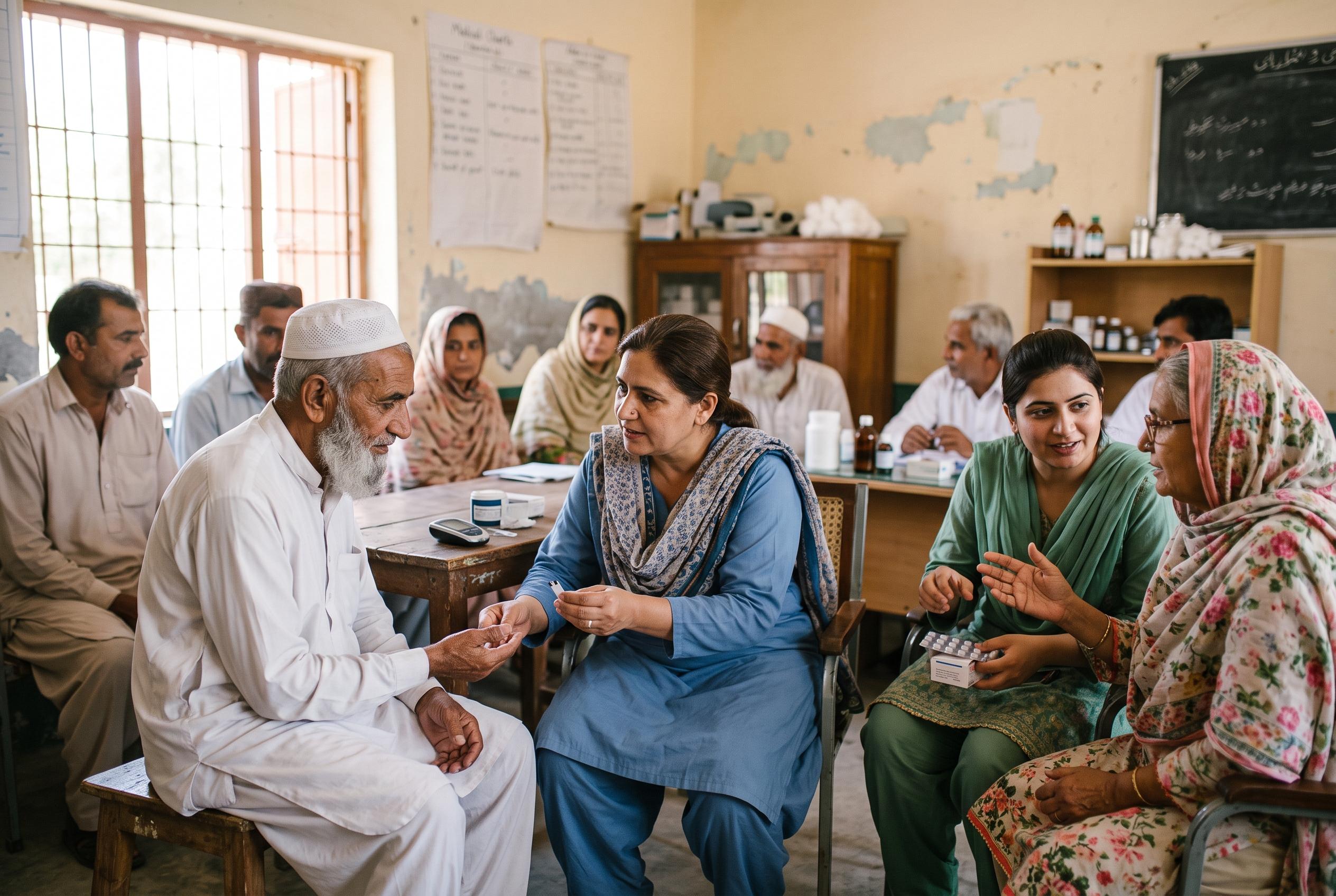

A visit by International Diabetes Federation leaders has highlighted the Dilawar Hussain Foundation’s network of subsidised clinics and outreach programmes as Pakistan faces one of the world’s highest diabetes rates.
The Dilawar Hussain Foundation has used a recent visit by International Diabetes Federation leaders to showcase its work in Pakistan, as the country continues to grapple with one of the world’s heaviest diabetes burdens. According to the Nation, the delegation toured the foundation’s centre on Ferozepur Road in Lahore to review its treatment, prevention, education and outreach programmes, underscoring the role of community-based care in a country where the disease affects 31.4% of adults.
The foundation, which became a full IDF member in 2025, has built a network of centres in Lahore and Kasur that provide medical consultations, endocrinology, nutrition advice, diabetes education, eye care, foot care, pharmacy support and laboratory testing. Its wider services include awareness campaigns and screening drives, aimed at reaching patients who might otherwise struggle to access specialist care. DHF says its model is designed to combine treatment with prevention, an approach that has become increasingly important in a country where more than 34 million adults are living with diabetes.
DHF’s own figures suggest the scale of that effort. The foundation says it has reached more than 1.5 million people and that 96% of its patients receive free or subsidised treatment. It also says 90% return for follow-up appointments and that 58% show better HbA1c and glucose control, a measure that points to improved long-term blood sugar management. Earlier material from the foundation said it had treated more than 466,000 patients and raised more than PKR 250 million in funds, reflecting both the cost and the reach of its work.
The foundation’s centres are spread across urban and semi-urban communities, with facilities in Gulberg, Garhi Shahu and Kasur. According to DHF, the Kasur site serves the city and surrounding villages, while the Lahore centres offer free and subsidised care, particularly for patients from lower-income backgrounds. The organisation has also said its centres handle thousands of patients each year and that some branches have reported meaningful improvements in blood sugar control, evidence it uses to support its case for more localised, continuing care.
The visit also highlighted the broader role of the International Diabetes Federation, which says it represents 264 member organisations in 163 countries and territories. The federation says 589 million adults aged 20 to 79 were living with diabetes globally in 2024, a figure it expects to climb to 853 million by 2050. It has also warned that more than four in ten adults with diabetes worldwide remain undiagnosed, reinforcing its emphasis on prevention, early diagnosis and education. For Pakistan, where the burden is especially severe, the meeting pointed to the potential value of pairing global expertise with local delivery.
Disclaimer: This content is for informational purposes only and is not intended to be a substitute for professional medical judgment, advice, diagnosis, or treatment.



