

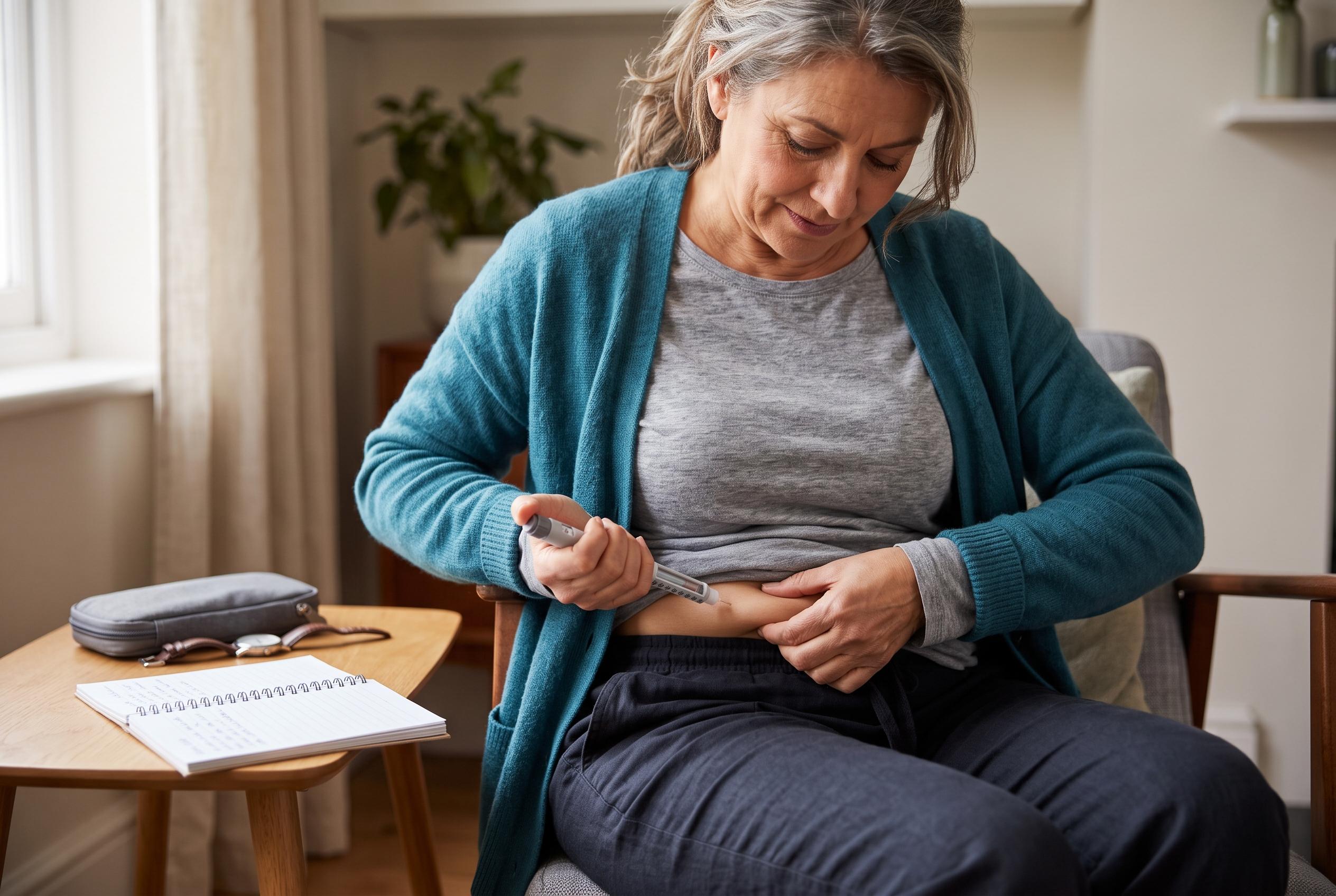

The abdomen is often the easiest starting point for injectable weight-loss medicines, but correct placement, site rotation and dose checks matter more than choosing one supposedly superior location.
For people using semaglutide, tirzepatide, or similar injectable weight-loss medicines, the question of where to inject often feels more important than it may actually be. According to RVA Revive’s guide, the abdomen is commonly recommended as a starting point because it is easy to reach, usually offers enough fatty tissue for a subcutaneous injection, and gives patients more room to rotate sites. But the broader message from the company’s educational material, echoed by consumer health guides from Healthline and Drugs.com, is that the best site is the one used correctly and consistently.
These medicines are meant to be injected into the subcutaneous layer, the fatty tissue just beneath the skin. Approved injection sites commonly include the abdomen, the front of the thigh and, for some products, the upper arm. Several patient guides note that studies of approved GLP-1 medicines have not shown meaningful differences in overall exposure between these sites when the medicine is placed properly into the fatty layer and the injection points are rotated over time. In practical terms, that means the site choice usually comes down to comfort, access and technique rather than dramatic differences in effect.
RVA Revive says the abdomen can be especially useful because it is simple to see and reach, which may help patients inject at the correct depth and repeat the process reliably each week. The same source advises keeping injections away from the navel, avoiding areas that are bruised, red, tender or hardened, and shifting the exact spot with each dose. Healthline and other guides make the same point: repeated injections into one small area can lead to irritation, bruising, lumps or thicker skin, which is why rotation matters as much as location.
The thigh remains an approved option, but it is not always the most convenient choice for every patient. RVA Revive notes that people with less fatty tissue in their legs, or those who find the area harder to access, may prefer the abdomen instead. Other patient resources reach the same conclusion, saying that no single injection site is universally superior. Rather, the priority is to place the drug into the correct layer of tissue and to follow the instructions for the specific device or prescription being used.
The guide also stresses safety details that are easy to overlook. Patients should confirm the medication name, dose, concentration and expiry or beyond-use date before injecting, use a fresh needle each time and avoid rubbing the area afterwards. RVA Revive adds a warning for patients using multi-dose vials: milligrams, millilitres and syringe units are not interchangeable, so a change in concentration can alter how much liquid is needed even when the prescribed dose stays the same. Persistent redness, swelling, warmth or drainage should prompt medical advice, while severe allergic symptoms need urgent care. The overall lesson is straightforward: for GLP-1 injections, careful technique matters more than searching for a magic spot.
Disclaimer: This content is for informational purposes only and is not intended to be a substitute for professional medical judgment, advice, diagnosis, or treatment.



