

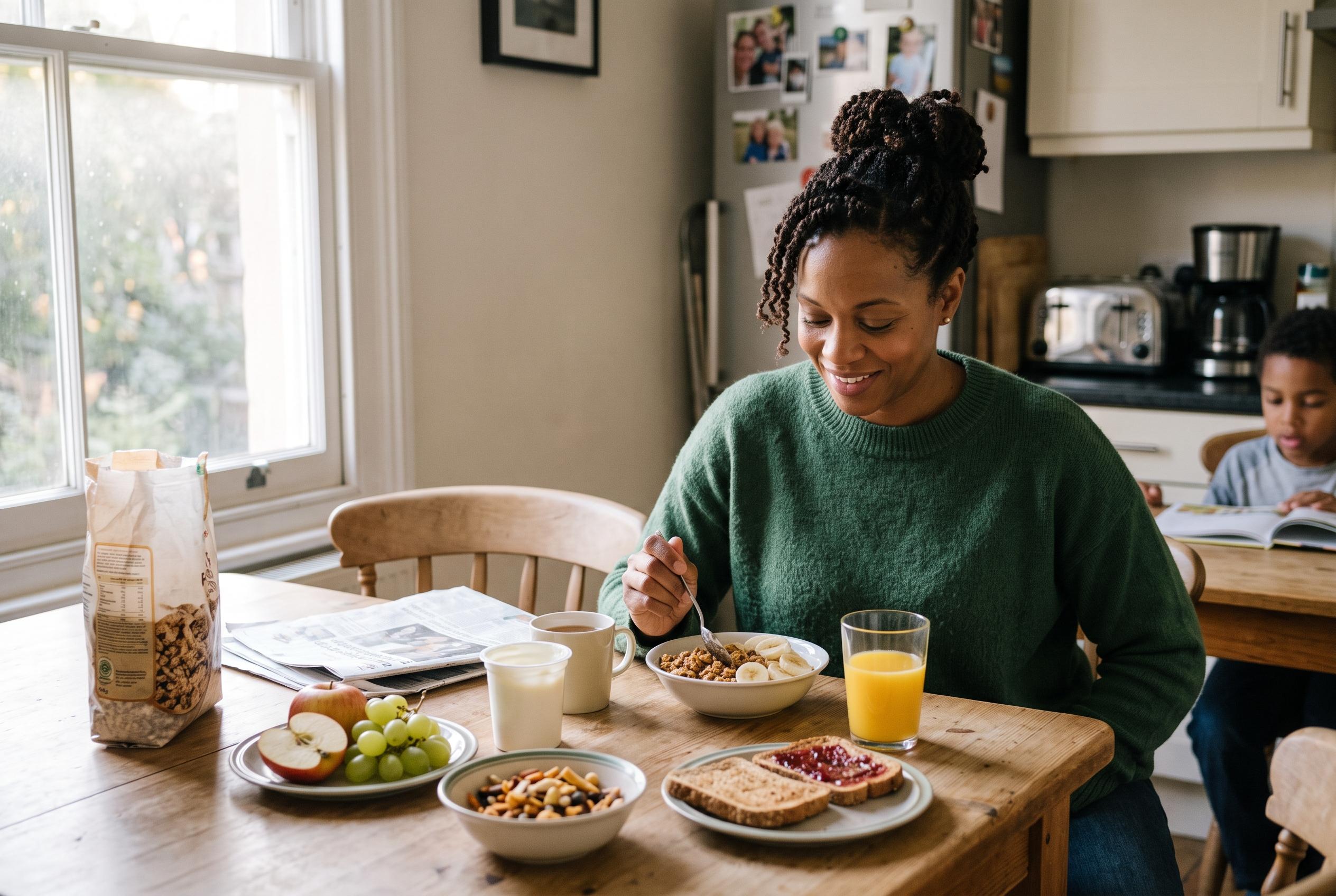

Free sugars can quickly add up through drinks, breakfast foods, snacks and savoury staples. Here is how to spot them and cut back without giving up occasional treats.
Sugar is not the enemy, but it is remarkably easy to take in more of it than intended. A slice of homemade cake, a little dark chocolate after dinner or ice cream on a hot day can all fit into a balanced diet. The harder-to-spot problem is the steady stream of free sugars hidden in everyday foods and drinks, from breakfast cereals to sauces and sweetened coffee. According to the NHS, free sugars are those added to food and drinks, as well as the sugars naturally present in honey, syrups, fruit juices and fruit juice concentrates.
UK advice recommends that adults keep free sugars to no more than 30g a day, roughly seven teaspoons. Yet many people go well beyond that. The British Nutrition Foundation says adults aged 19 to 64 average about 55.5g of free sugars a day, almost double the recommended amount. The World Health Organization also advises keeping free sugars below 10% of total daily energy intake, with additional benefits possible at 5% or less.
The health case for cutting back is not about moralising food. It is about the practical consequences of eating too much sugar too often. The NHS links excess sugar intake with weight gain and tooth decay, while broader public health advice points to a higher risk of type 2 diabetes and cardiovascular problems when sugary foods and drinks become a frequent habit. The issue is often less about an occasional dessert than about sugar appearing repeatedly throughout the day.
Drinks are one of the quickest routes to overdoing it. Fizzy drinks, energy drinks, squash and sweetened coffees can deliver a large hit of free sugars in a very short time. Fruit juice and smoothies also count, because blending or juicing releases sugars that would otherwise stay locked inside whole fruit. The NHS advises limiting fruit juice and smoothies to a combined 150ml a day, and notes that a single can of cola can contain around nine sugar cubes’ worth of sugar.
Breakfast can be another trap. Many cereals, granolas, flavoured yogurts and pastries carry a healthy image while containing more sugar than people expect. The same is true of snacks marketed as wholesome, such as cereal bars, breakfast bars and energy balls. Health organisations advise checking labels rather than relying on branding, because “low fat” or “natural” does not necessarily mean low sugar.
Sugar also hides in savoury foods. Ready meals, soups, breads, salad dressings and condiments can all contain added sugar, even when they do not taste obviously sweet. That makes the ingredient list as important as the nutrition panel. In UK labelling, more than 22.5g of total sugars per 100g counts as high, while 5g or less is low, so comparing products can quickly show which versions are the better choice.
The most effective response is usually not an all-or-nothing overhaul, but a gradual reset. Cutting back a little at a time, whether by taking less sugar in tea, choosing plain yogurt instead of flavoured, or swapping a sweet condiment for mustard or vinegar, gives the palate time to adjust. Nutrition guidance suggests that sweetness preferences can change within a few weeks, which makes it easier to keep the treats you genuinely enjoy while trimming back the sugar you barely notice.
Disclaimer: This content is for informational purposes only and is not intended to be a substitute for professional medical judgment, advice, diagnosis, or treatment.



