

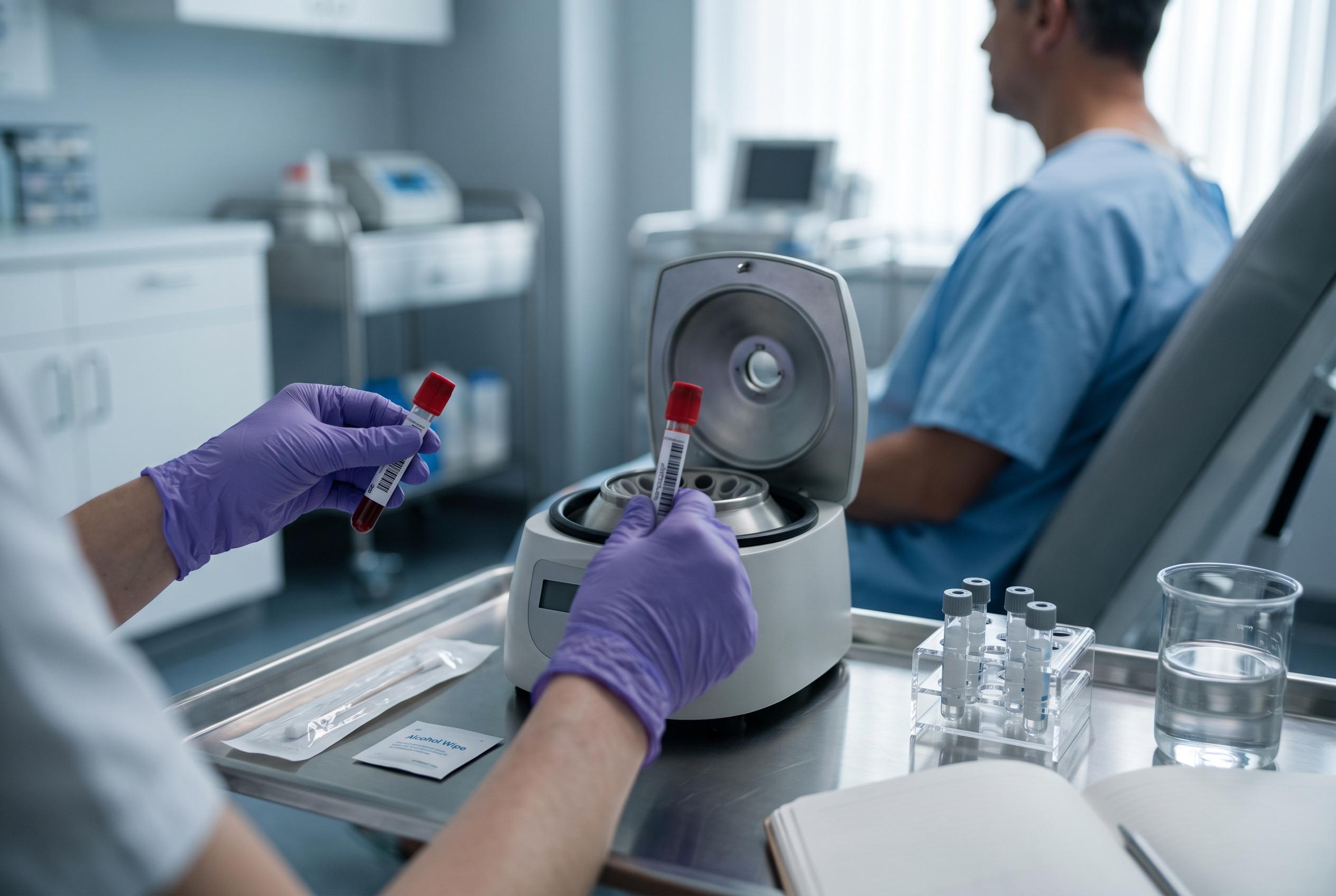

A new prediction model combining routine blood measures and fat tissue hormones aims to identify type 2 diabetes patients at risk of developing sight-threatening retinopathy earlier, though further validation is needed.
Researchers in China have built a prediction model that could help identify which people with type 2 diabetes are most likely to develop diabetic retinopathy, a sight-threatening complication that can progress quietly before symptoms appear. The study, published in BMC Endocrine Disorders, combines several routine blood measures with adipokines, the hormone-like signals released by fat tissue, in an effort to create an earlier warning system for a disease that usually requires specialist eye screening to detect.
The work, led by Xia Sun and Tianrong Pan at the Second Affiliated Hospital of Anhui Medical University with colleagues at Lishui Hospital of Traditional Chinese Medicine, analysed 150 patients treated at a tertiary hospital between January 2022 and December 2023. Of those patients, 92 already had diabetic retinopathy. The researchers used the dataset to compare people with and without the condition and then built a statistical model intended to estimate an individual patient’s risk.
Their findings add to growing evidence that diabetic retinopathy is driven by more than elevated blood sugar alone. The authors focused on markers linked to inflammation, vascular injury and metabolic stress, including red cell distribution width, or RDW, a measure of how much red blood cell size varies. They also examined adipokines such as omentin-1, adiponectin, apelin and nesfatin-1. In the final analysis, higher omentin-1 and apelin levels were linked with greater risk, while higher nesfatin-1 appeared protective. Several other factors also entered the model, including mean arterial pressure, liver enzymes and blood urea nitrogen.
The model performed well in distinguishing between patients with and without diabetic retinopathy. According to the paper in BMC Endocrine Disorders, its apparent area under the curve was 0.921, which fell to 0.873 after bootstrap validation, still a strong result for a clinical prediction tool. But the authors were more cautious about how well the model matched real-world risk. Calibration was uneven, with the tool tending to underestimate risk in some intermediate ranges and overestimate it at higher probabilities. They said that means the model is not ready for clinical use without further testing.
That caution is important because prediction models in diabetes have often shown promising results in development but weaker performance when tested elsewhere. The present study was retrospective, based on a single hospital cohort and not yet externally validated, so its findings remain provisional. Even so, the approach fits a wider trend in diabetes research: using inexpensive, widely available laboratory measures to identify patients who may need closer follow-up before irreversible eye damage develops. A related abstract presented at the American Diabetes Association’s Scientific Sessions pointed in a similar direction, while other recent studies, including work in Scientific Reports and on PubMed Central, have also explored predictive models for diabetic retinopathy and the potential role of adipokines and RDW in spotting risk earlier.
Disclaimer: This content is for informational purposes only and is not intended to be a substitute for professional medical judgment, advice, diagnosis, or treatment.



