

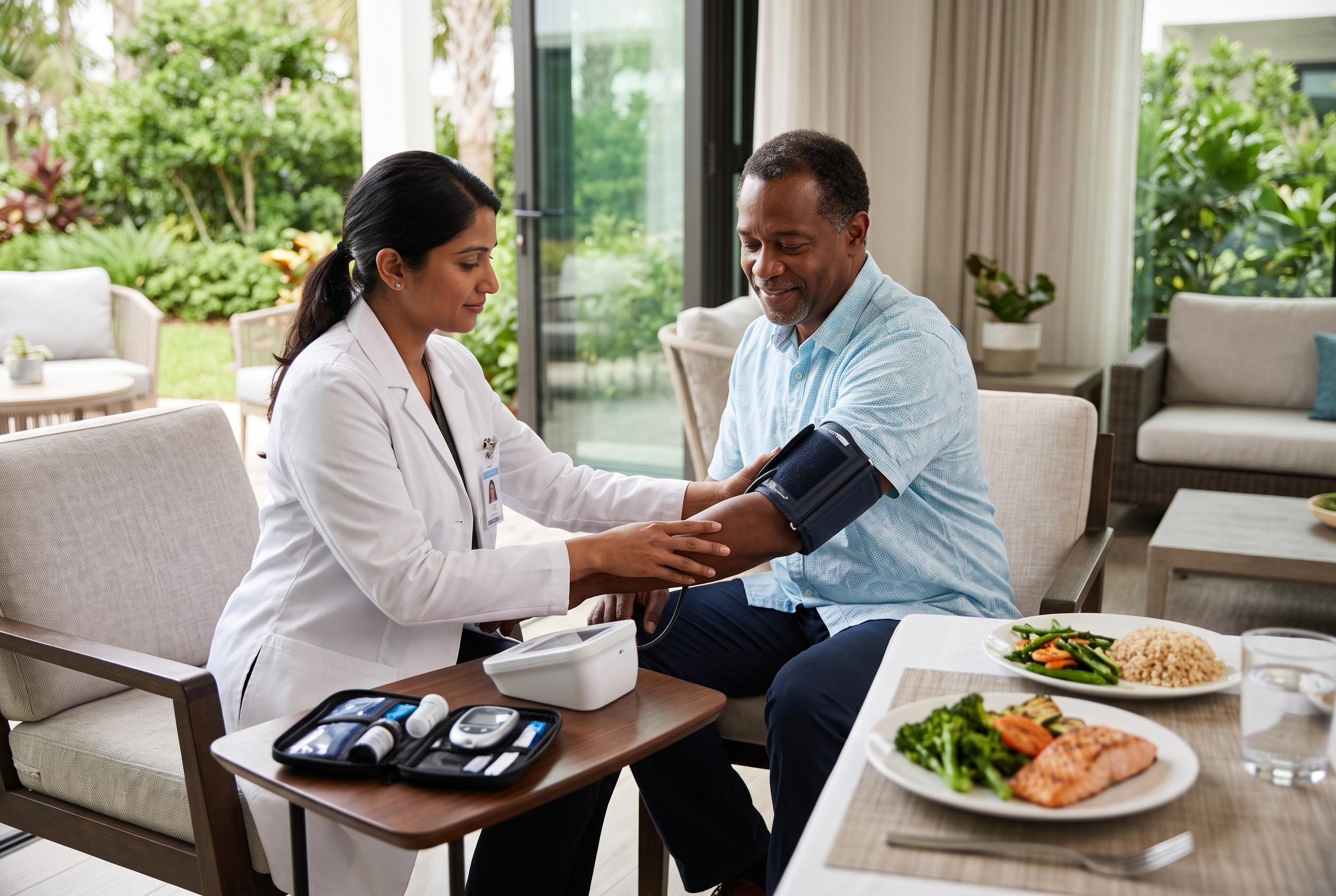

New approaches in resort-style health programmes emphasise clinical oversight and personalised care for individuals with type 2 diabetes and high blood pressure, offering a departure from traditional dieting plans.
Premier Fitness Camp’s guide frames a weight-loss spa as more than a place to slim down: for people living with type 2 diabetes and high blood pressure, it argues, the right retreat should function as a structured health programme with tightly controlled meals, supervised exercise and regular clinical checks. That emphasis is in line with other resort-style programmes, including Pritikin, which says its all-inclusive health resort format is built around obesity, heart disease, hypertension and diabetes, with physician care, education and exercise at the centre.
The core dietary argument is straightforward. Anyone trying to manage both conditions needs food that supports blood sugar control without pushing blood pressure higher. Premier Fitness Camp’s guide says that means keeping sodium down, choosing carbohydrates that are rich in fibre, using lean protein to help preserve muscle and favouring unsaturated fats such as those found in olive oil, nuts and avocados. Pritikin’s diabetes retreat makes a similar case, describing its approach as science-based education aimed at improving glucose control and supporting lasting weight loss.
That is why the programme’s kitchen matters so much. A spa or retreat that prepares food on-site can control salt levels in a way that is difficult to replicate at home, especially if meals are made from fresh ingredients and planned by a registered dietitian nutritionist. Several other medical weight-loss operators make the same point in their own way: Alquimia Med Spa says its programme uses body measurements, laboratory studies and meal planning, while LaserSkin MedSpa and Begin Salon Spa both promote medically supervised plans that combine nutrition guidance, coaching and ongoing monitoring.
Premier Fitness Camp argues that the best programmes go further than menu planning and treat clinical oversight as non-negotiable. Its guide says guests should expect glucose monitoring, blood-pressure checks, medication review and emergency protocols for low blood sugar or hypertensive episodes. That is a significant distinction, because weight loss can change how people respond to insulin, sulfonylureas and blood-pressure medication. In practice, the safer programmes are the ones that monitor more than just the scale.
Exercise structure also matters. The guide says a lower-impact, closely coached environment can help people who are not ready for standard gym programming, particularly when the aim is to protect lean muscle while weight is coming off. Premier Fitness Camp links that point to a case study from the University of California, San Diego, which it says found that 94% of the weight lost by participants was fat rather than lean tissue. That matters because skeletal muscle is central to insulin sensitivity and glucose disposal, so losing it can undermine some of the metabolic gains of dieting.
This is where residential programmes differ from ordinary meal plans and from many clinic-based services. An at-home DASH, Mediterranean or diabetes-friendly plan may be cheaper and easier to access, but it depends heavily on self-discipline, shopping, cooking and medication management. A medical weight-loss clinic can offer stronger clinical supervision and prescription support, but usually without the immersive daily structure of a retreat. Premier Fitness Camp positions itself as a hybrid, pairing a resort setting with what it describes as regular assessments, chef-prepared meals, supervised training and behavioural support.
The market for these programmes is clearly widening, and the language used by providers is increasingly similar: science-backed meals, personalised coaching, blood-work tracking and medication-aware care. Yet for people with diabetes and hypertension, the real question is not how luxurious a programme looks. It is whether the staff can control sodium, adjust food to the person rather than the brochure, and respond quickly if glucose or blood pressure moves in the wrong direction. On that measure, the safest choice is the programme that can show its work.
Disclaimer: This content is for informational purposes only and is not intended to be a substitute for professional medical judgment, advice, diagnosis, or treatment.



