

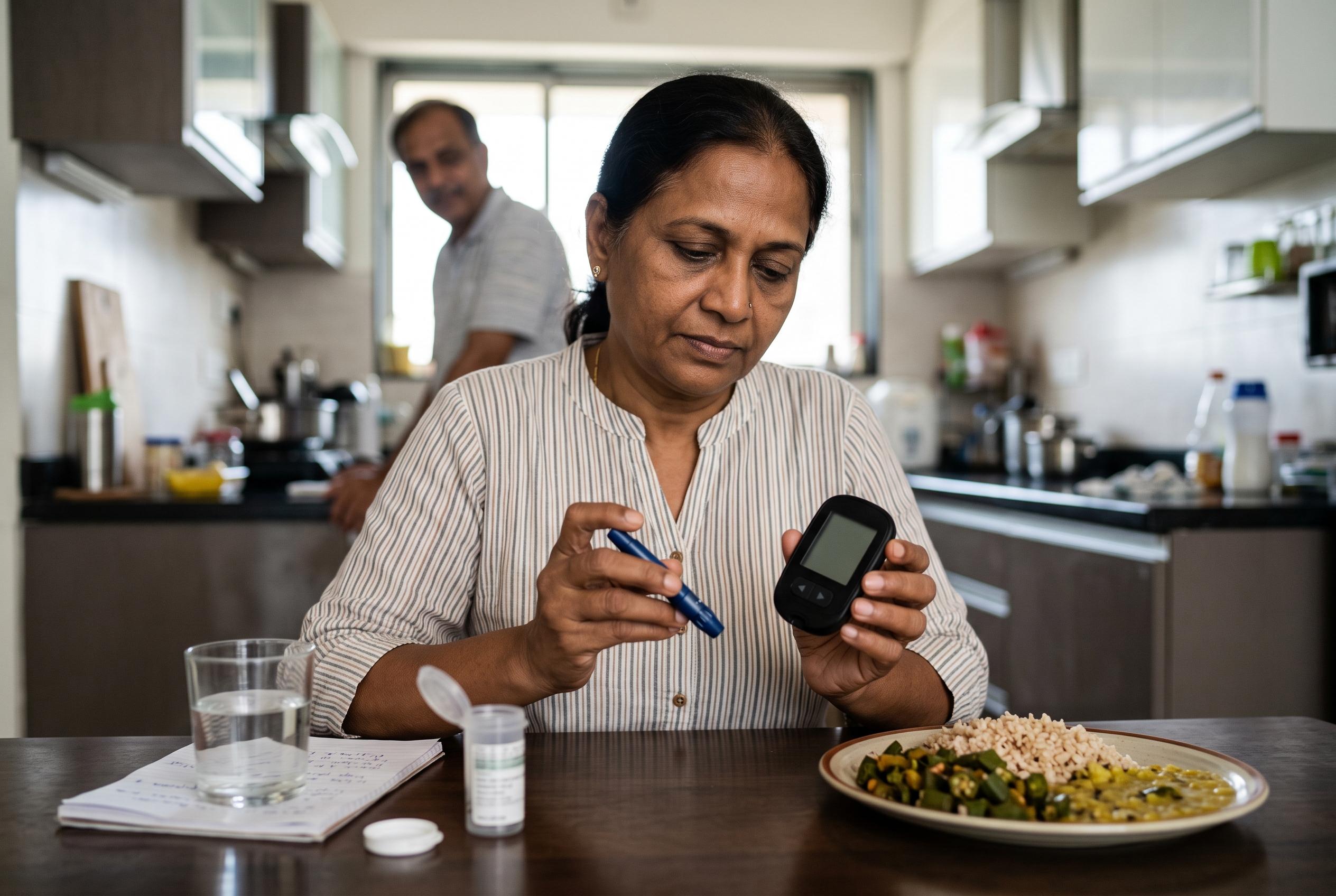

Loop Health’s India Workforce Health Index 2026 reveals Mumbai as the leading city with the highest prevalence of elevated blood-sugar levels among major Indian metros, indicating a growing metabolic health crisis across age and gender groups.
Mumbai has emerged as the most concerning of five major Indian metros in Loop Health’s India Workforce Health Index 2026, which found that 46.8% of 872 HbA1c test results from the city fell into the prediabetes or diabetes range. HbA1c is a measure of average blood sugar over the previous two to three months, and the report said Mumbai’s share was well above the overall figure of 38.7% across 7,088 reports analysed nationwide.
The city’s reading also exceeded Bengaluru’s by a wide margin and stood 8.1 percentage points above the overall sample, according to Loop Health’s city-level analysis. The report said 17.1% of Mumbai results were in the diabetes range, defined as an HbA1c level of 6.5% or higher, compared with 13.3% across the full dataset. Loop Health, a health benefits and preventive healthcare platform, said its findings are based on laboratory reports and a separate survey of working adults, rather than a direct estimate of disease prevalence across the wider population.
The pattern extended across age groups. Loop Health said Mumbai’s share of elevated blood-sugar results was higher than the report-wide average in every adult age band it examined, with around one in five reports among people aged 20 to 29 already elevated. The city registered its highest proportion among those aged 60 and older. Pune, meanwhile, showed higher elevated blood-sugar shares in the 20s, 30s and 40s, while Hyderabad led in the 50s, suggesting that the burden is not confined to one age group or one city.
The analysis also pointed to a pronounced gender gap in Mumbai. According to Loop Health’s data, nearly half of women’s blood-sugar reports in the city were elevated, the widest difference among the five metros studied. The report additionally said Mumbai had the highest proportion of low haemoglobin results among both men and women, while 78.1% of the city’s 442 HDL readings among women were below 50 mg/dL. HDL, or high-density lipoprotein, is often described as “good” cholesterol, although the report noted that a low reading on its own does not determine overall cardiovascular risk.
Other health indicators suggest a broader pattern of metabolic strain. Loop Health reported that 76.9% of 944 Mumbai vitamin D results were below 30 ng/mL, though that was still 4.5 percentage points lower than the figure for the wider sample. The city also recorded the highest share of short-sleep responses among the metros, with the survey defining short sleep as fewer than five hours or six hours a night. Loop Health said the laboratory and survey datasets are separate and should not be read as a citywide prevalence estimate, and the city classification is based on report pincodes rather than municipal boundaries, covering areas that include parts of Thane, Navi Mumbai, Kalyan, Raigad and Vasai-Virar.
Disclaimer: This content is for informational purposes only and is not intended to be a substitute for professional medical judgment, advice, diagnosis, or treatment.



