

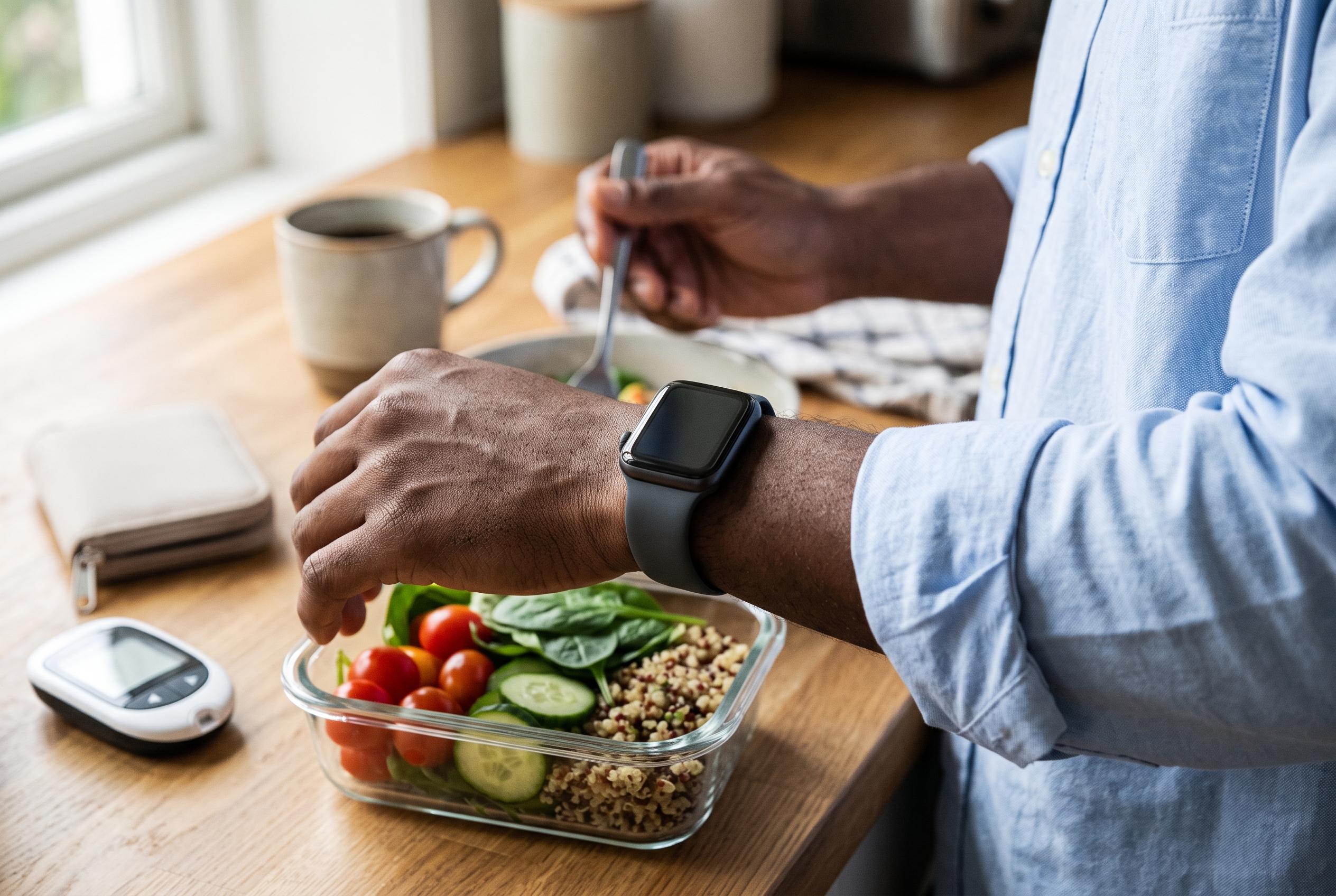

Huawei claims it is close to launching a consumer device capable of measuring blood sugar non-invasively, marking a potential breakthrough in health tracking technology after years of research and patent filings suggesting multiple innovative approaches.
Huawei says it is edging closer to a consumer device that can measure blood sugar without a needle, after years of research that could move the company beyond simple health estimates and into direct glucose tracking on a wrist-worn product.
He Gang, the head of Huawei’s consumer business, said at a recruitment event at Peking University that the company had spent four years working on blood-sugar testing and now regarded the latest results as mature enough for industrialisation, meaning the project can progress towards repeatable manufacturing and commercial production. He also confirmed that a consumer blood-sugar testing device is planned, although he did not say what form it will take or how it will work.
Huawei’s patent filings suggest the company has explored several routes to non-invasive glucose monitoring. One filing describes a wrist-based detector that uses mid-infrared light to pass through skin and infer glucose levels from the way the signal is absorbed and returned. The same material points to a graphene detector that could operate at room temperature, which would matter because many infrared sensing systems rely on cooling equipment that is harder to fit into compact wearables. The patent also describes automatic readings at set times, alongside user-initiated tests.
The company has not said whether that patented approach will power any future product, but the filing does show that wrist-based glucose sensing has been part of Huawei’s broader health research. Other work has examined optical signals already used in smartwatches, including photoplethysmography, or PPG, which measures blood-flow changes with light. Separate filings have also looked at linking glucose data with daily activities such as eating, exercise and sleep, suggesting Huawei is thinking about a broader metabolic-health platform rather than a single sensor alone.
For now, Huawei’s existing watches do not give users an actual blood sugar reading. In some supported markets, the company offers a Diabetes Risk Study that uses several days of physiological data, including heart rate and sleep patterns, to estimate the risk of elevated blood sugar. Compatible devices can also display readings from third-party continuous glucose monitors, but those devices still provide the real measurement. That means a Huawei watch with its own glucose sensor would mark a significant shift: the watch itself would collect the data, calculate the result and show the reading on the device.
That move would also bring scrutiny around accuracy, regulation and how often the watch could take readings. Huawei has already pushed into more specialised health hardware with the Watch D3, which uses a mechanised strap with inflatable bladders to measure blood pressure in a way more like a traditional cuff than a standard optical smartwatch. TechRadar reported that Huawei’s latest diabetes-related feature, meanwhile, is a non-invasive risk detector rather than direct glucose monitoring, and it is not available in the U.S. market. Together, those products suggest the company is continuing to treat health sensing as a major battleground in wearables, even if the long-promised blood sugar breakthrough has yet to reach consumers.
Disclaimer: This content is for informational purposes only and is not intended to be a substitute for professional medical judgment, advice, diagnosis, or treatment.



