

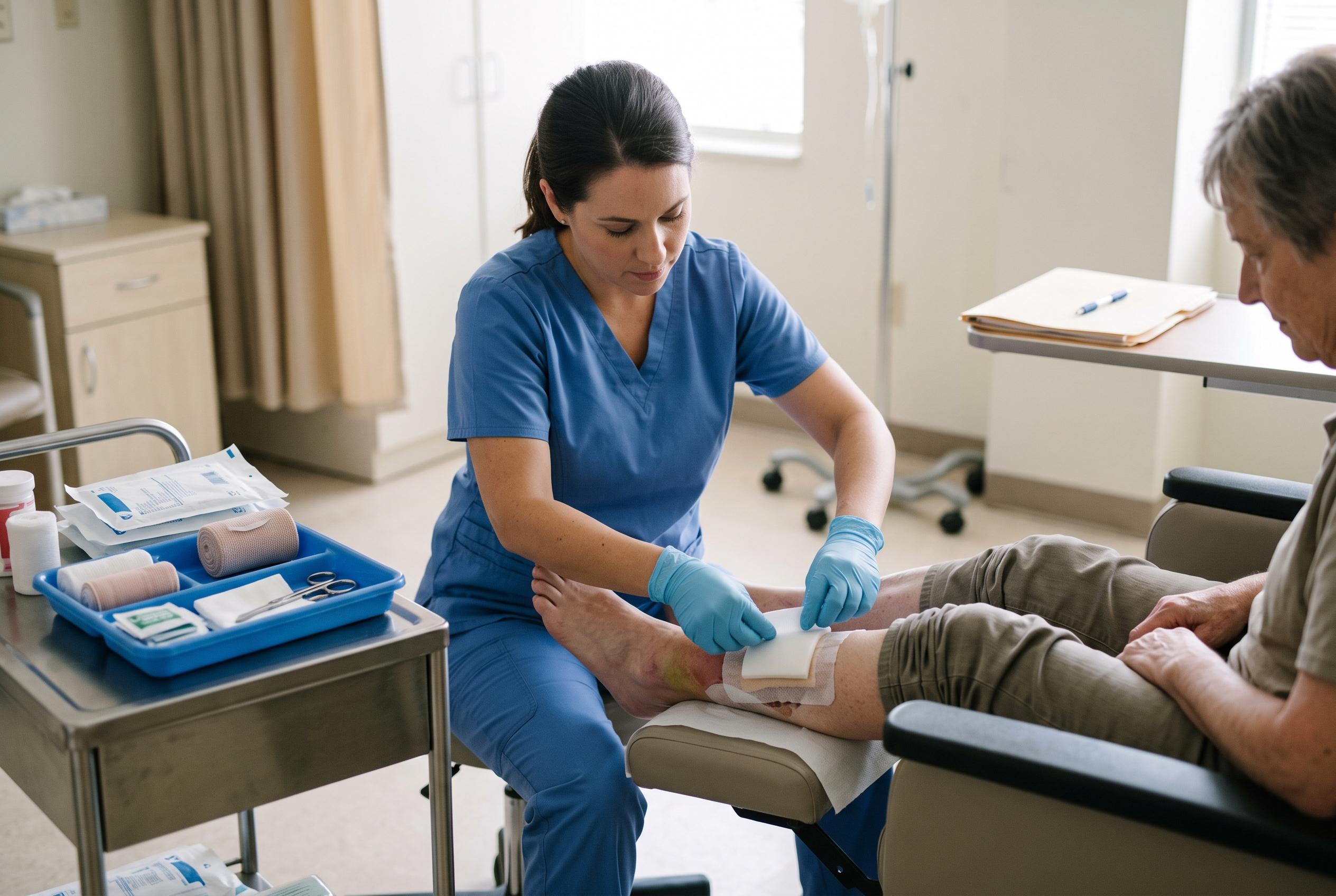

Multiple case studies suggest homoeopathic treatments may support wound healing and glycaemic control in diabetic foot infections, prompting discussions on complementary approaches alongside conventional care.
A case report published by Homeopathy 360 describes a 67-year-old woman with long-standing type 2 diabetes who arrived with fever, cellulitis and an infected ulcer on the top of her left foot, a combination that put her at high risk of limb loss. The article says her blood sugar was 500 mg/dl on presentation and that the ulcer was classified as Wagner grade 3, a staging system used to describe how deep and severe a diabetic foot wound is. The report says her condition improved after an individualised homoeopathic regimen and supportive dressings, with the fever easing, glucose levels falling and the wound gradually healing. PubMed has also recently indexed a separate case report describing a diabetic foot ulcer managed in an integrative model, with homoeopathy used alongside conventional care and associated with wound healing and better glycaemic control.
The Homeopathy 360 authors framed the illness as a serious complication of diabetes that can quickly become infected and lead to amputation, particularly in older patients. They noted that the woman had lived with diabetes for two decades and presented after several days of chills, weakness and a rapidly worsening blister that spread into redness and swelling in the lower leg. The report says the initial treatment included Pyrogenium, several plant-based preparations commonly used in homoeopathic practice, and Calendula dressing, followed by a second prescription of Nitric acid when the clinical picture evolved. A related evidence-based case report in PubMed described a different lower-leg ulcer complicated by cellulitis that also improved after homoeopathic remedies were added to wound care.
The broader pattern in the literature remains limited to case reports rather than controlled trials. An article in the International Journal of AYUSH Case Reports described a diabetic foot ulcer that healed after homoeopathic treatment, while another case report from the same journal said a chronic ulcer in a man with type 2 diabetes improved over three months after Sulphur was selected on the basis of case-taking and repertorisation. A further report in the Homoeopathic Journal described diabetic foot gangrene in an older woman treated in an integrative setting, with progressive wound contraction and eventual epithelialisation while conventional care continued. Another case report in the International Journal of Homoeopathic Sciences and a separate AYUSH report also described gradual healing when homoeopathic medicines and Calendula were used in addition to routine wound management.
Taken together, the reports present homoeopathy as a possible adjunct rather than a replacement for standard diabetic foot care, which typically depends on infection control, pressure relief, glucose management and close monitoring for deterioration. That is an important distinction, because diabetic foot ulcers are among the most serious complications of diabetes and are widely recognised as a major cause of infection-related amputation. These case reports may be of interest to readers following integrative medicine, but they do not establish that homoeopathy is effective on its own, and none of the material replaces the need for conventional assessment when a wound becomes red, swollen, painful or febrile.
Disclaimer: This content is for informational purposes only and is not intended to be a substitute for professional medical judgment, advice, diagnosis, or treatment.



