

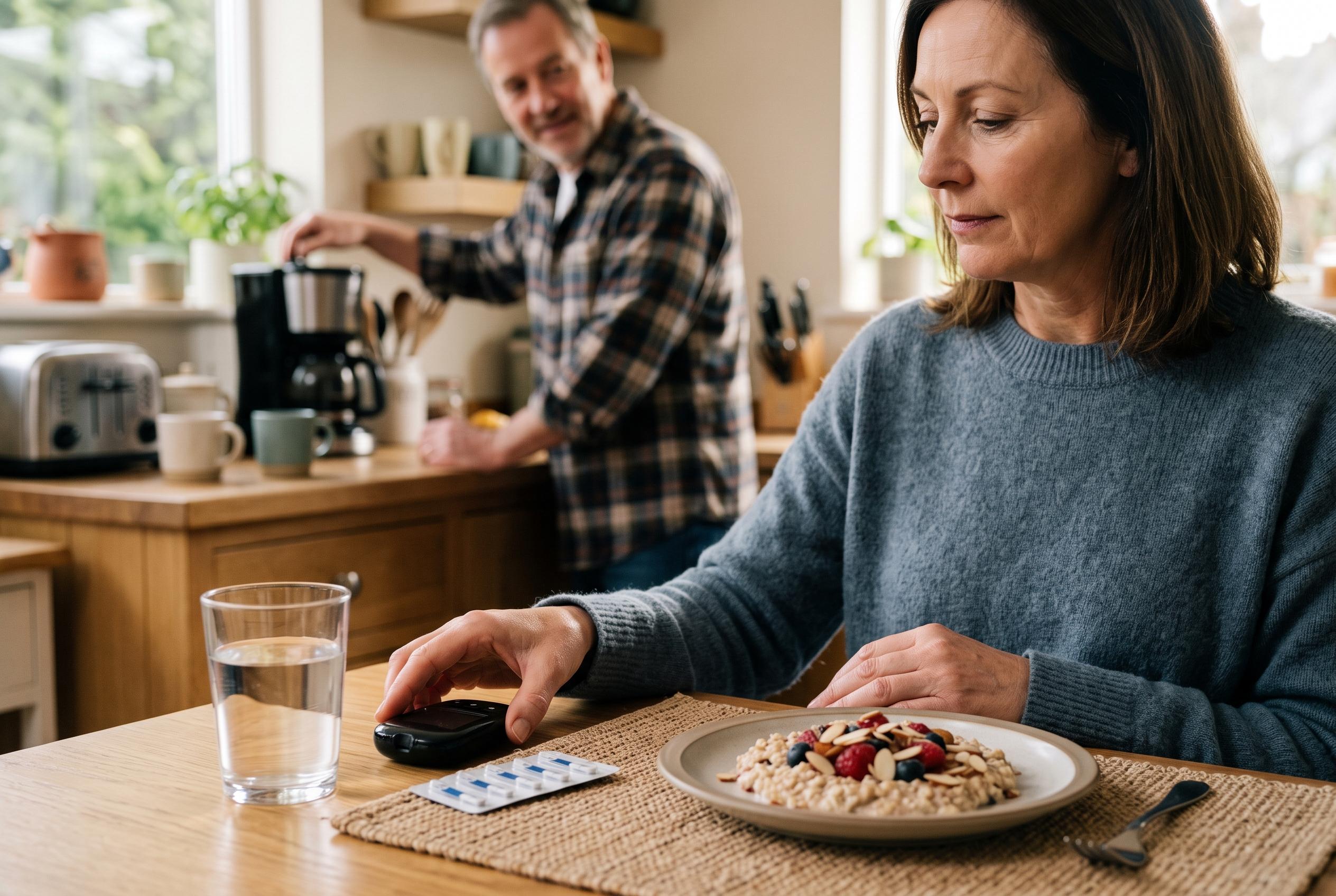

A new German observational study suggests that while staying within target glucose ranges is linked to better quality of life, increased glucose variability may also be associated with improved wellbeing, prompting a rethink of diabetes management goals.
A German research team has found an unexpected statistical link between glucose swings and how people with diabetes say they feel the next day. In a study of 400 adults with type 1 and type 2 diabetes, more time spent within the usual glucose target range on one day was associated with better quality of life the following day. But, counter-intuitively, a higher-than-usual level of glucose variability on the previous day was also linked with better next-day quality of life.
The findings, reported by SciTechDaily from work led by the Diabetes Research Institute in Bad Mergentheim, are due to be presented at the European Association for the Study of Diabetes annual meeting in Milan. Participants wore continuous glucose monitoring devices for 14 days and completed daily logs on quality of life, stress, mood and energy. According to the report, the researchers then compared each day’s glucose patterns with the quality-of-life measures recorded the next day.
The study did not find a significant next-day link between quality of life and time spent below 70 mg/dL or above 180 mg/dL. Instead, the clearest signal was that more time in the normal range of 70 to 140 mg/dL tended to line up with better reported wellbeing. The association with greater day-to-day glucose variability is harder to interpret, but the researchers suggested it may reflect the burden of trying too hard to flatten glucose curves, including having to restrict food, exercise or ordinary activities in order to keep readings steady.
That interpretation fits a broader body of evidence showing that continuous glucose monitoring can improve diabetes management, but also that treatment goals have to be weighed against day-to-day burden. A 12-month study indexed on PubMed found that intermittently scanned continuous glucose monitoring improved glycaemic control in people with type 1 diabetes, reduced glucose variability and showed that more time in range predicted better quality of life. Separate research in the Netherlands found that real-time continuous glucose monitoring was associated with better physical health, emotional wellbeing and energy, while a pragmatic trial in South Africa reported that CGM was acceptable and feasible in public-sector clinics and that diabetes distress fell during the intervention. At the same time, research published in Springer journals has underlined how recurrent severe hypoglycaemia can seriously damage quality of life, reinforcing the need to balance tighter control against safety and lived experience.
Because the German study is observational, it cannot show that glucose variability itself improves wellbeing, only that the two moved together in this sample. It has not yet been published in a peer-reviewed journal, so the results should be treated as preliminary. Even so, the work adds to a growing argument in diabetes care: the best control is not necessarily the flattest glucose trace, but the one that supports both medical outcomes and a sustainable daily life.
Disclaimer: This content is for informational purposes only and is not intended to be a substitute for professional medical judgment, advice, diagnosis, or treatment.



