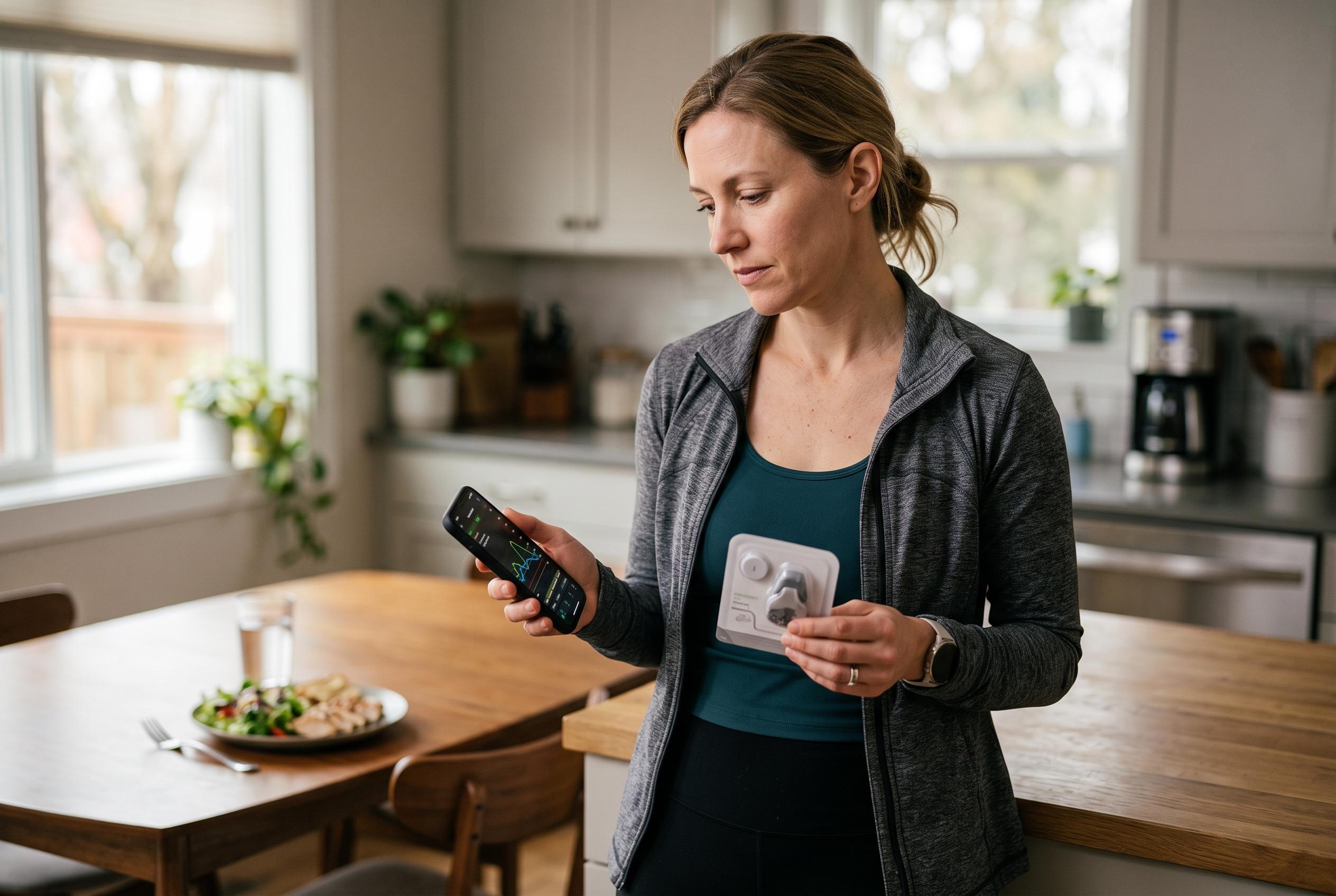

A two-week trial with a continuous glucose monitor enlightened Stay Fit Mom writer Tracy Gifford on how stress, movement, and meal timing impact glucose levels, challenging assumptions about health monitoring gadgets.
Tracy Gifford’s two-week experiment with a continuous glucose monitor did not turn up a dramatic health problem. Instead, the Stay Fit Mom writer found a more nuanced lesson: her glucose patterns were shaped not only by food, but also by timing, movement and stress. Although she used the device out of curiosity rather than medical need, the exercise gave her a live look at how her body responded across the day.
Continuous glucose monitors are generally used by people with diabetes, and medical sources such as WebMD, Harvard Health and the Cleveland Clinic say they provide frequent readings and trend data that can help users understand how glucose changes over time. In Gifford’s case, that constant feedback showed that eating more steadily through the day led to smoother results, while saving most of her food for later produced a bigger rise.
She also found that ordinary activity mattered more than she had expected. Short walks after meals, housework, stairs and simply spending less time seated all appeared to help keep her readings more even. By contrast, long stretches of grazing, such as at a mahjong gathering with snacks, a full meal and dessert in quick succession, created repeated spikes on her graph.
Her most surprising discovery was that stress alone could push glucose higher. While watching her son’s football game, she saw a rise even though she had not eaten much and was not exercising. The experience, she said, reinforced that glucose reflects a wider mix of influences, including sleep, stress, movement and meal timing, not just carbohydrates. She also said her overall variability remained relatively low, which reassured her that the occasional spike did not define the whole picture.
Gifford said she would wear a CGM again, but not to chase a perfectly flat line. Her conclusion was simpler: the device worked as a feedback tool, helping her notice habits she already valued and adjust a few others, especially eating more consistently and moving after meals. For readers curious about glucose, her experience suggests that the most useful lesson from a CGM may be the pattern it reveals, rather than any single reading.
Disclaimer: This content is for informational purposes only and is not intended to be a substitute for professional medical judgment, advice, diagnosis, or treatment.