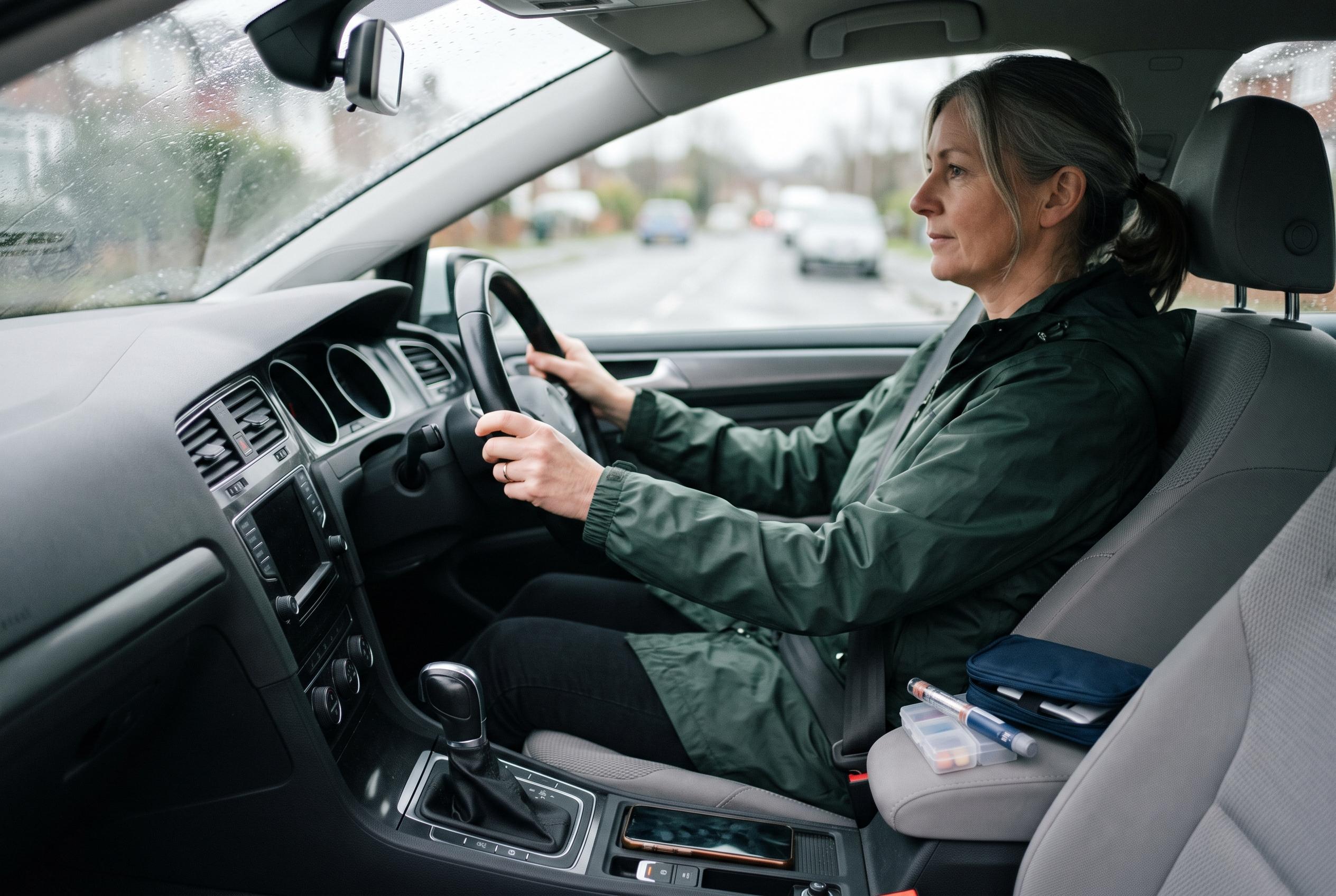

Drivers treated with insulin in the UK must now notify the DVLA if they meet specific criteria, with non-compliance risking fines of up to £1,000, as new rules aim to improve road safety.
Drivers with diabetes who are treated with insulin may need to notify the Driver and Vehicle Licensing Agency, or DVLA, under UK rules that can carry a fine of up to £1,000 if ignored.
Government guidance says the duty applies when insulin treatment lasts, or is expected to last, more than three months. It also covers people whose gestational diabetes requires insulin for more than three months after birth, as well as drivers who experience disabling hypoglycaemia, or who have been told by a health professional that they are at risk of it.
The DVLA says drivers can report diabetes online or by completing the relevant diabetes declaration form and posting it to the agency. It also points motorists to its leaflet for insulin-treated drivers, which explains the rules for cars and motorbikes in more detail.
Different rules apply to bus, coach and lorry licences. The government says those drivers must stop driving and tell the DVLA when insulin treatment begins, and they can only resume once the agency says it is safe to do so. Separate forms are used for larger-vehicle licences, depending on whether treatment involves sulphonylurea or glinide tablets, or other tablets and non-insulin injections.
For drivers of cars or motorbikes whose diabetes is controlled by tablets, non-insulin injections or diet, the DVLA says notification may not always be required and people should check with a doctor or nurse if they are unsure. The agency also says people can voluntarily surrender a licence if a medical condition means they should not drive for three months or more, although they must still inform the DVLA if they have not surrendered it.
Disclaimer: This content is for informational purposes only and is not intended to be a substitute for professional medical judgment, advice, diagnosis, or treatment.