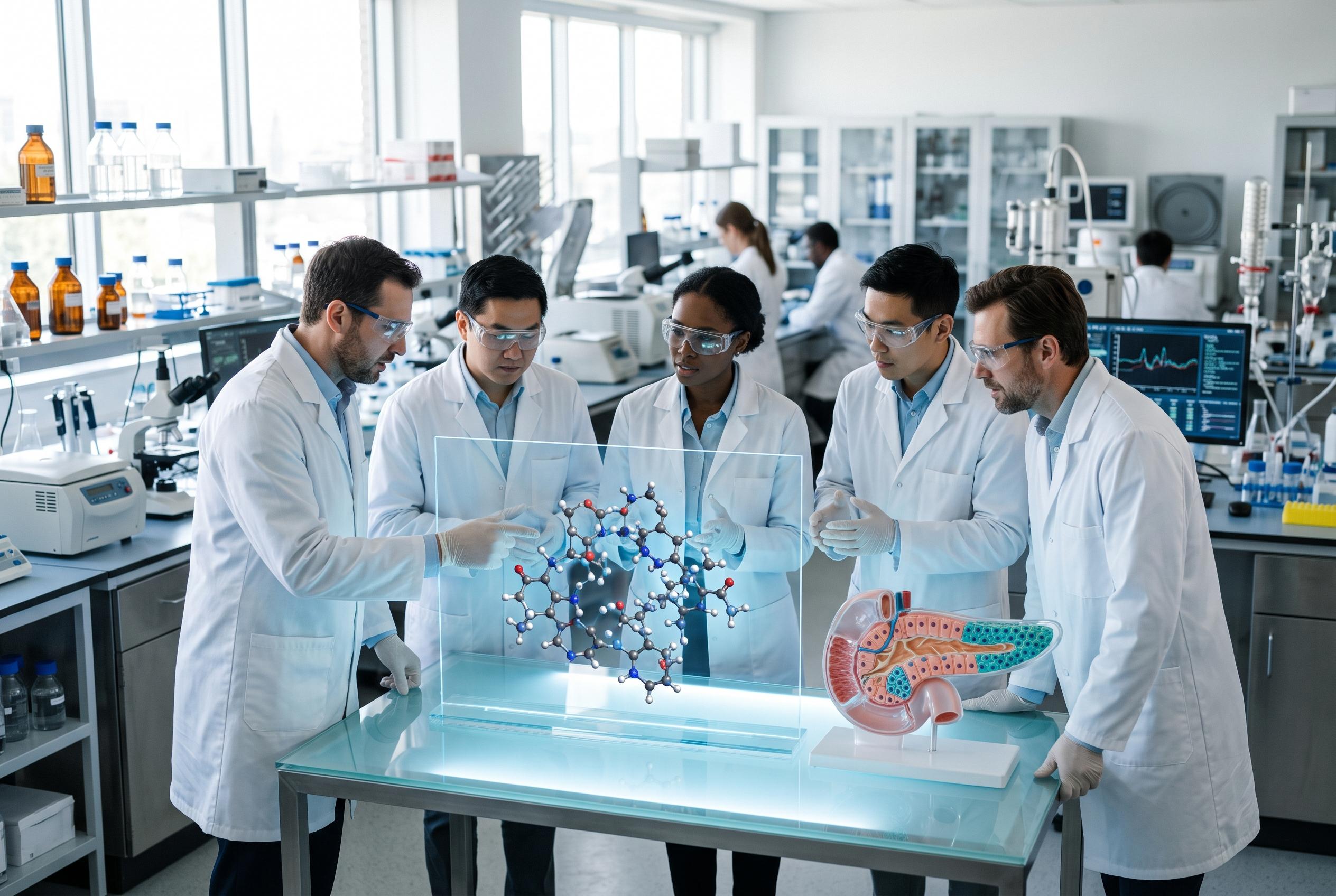

Researchers have pinpointed a gene, ALDH3B2, that acts as a molecular brake on converting pancreatic duct cells into insulin-producing beta-like cells, opening new avenues for diabetes treatment beyond transplants and stem cells.
A study now published in Science Translational Medicine suggests researchers may have found a new way to rebuild the insulin-making machinery lost in diabetes: by pushing some of the pancreas’s own duct cells to change identity. The Harvard Medical School and Joslin Diabetes Center team reported that shutting down a gene called ALDH3B2 was enough to turn human pancreatic duct cells into what the paper calls “functional beta-like cells”, and that those cells then lowered blood glucose after transplantation into diabetic mice.
That matters because both type 1 and type 2 diabetes ultimately involve a shortage of working beta cells, the specialised pancreatic cells that release insulin. Medical Xpress, summarising the work, noted that the number of people living with diabetes rose from 200 million in 1990 to 830 million in 2022. Existing care, including insulin and glucose monitoring, can keep blood sugar under control, but it does not fully recreate the minute-by-minute response of healthy beta cells. The paper’s authors set out to find an alternative to donor islet or stem-cell-based transplants, which can be constrained by limited supply and the need for immune suppression.
The researchers went looking for what was blocking that conversion in the first place. According to the full paper and a science-news account of the study, they built an immortalised human pancreatic duct cell line with a reporter that glowed when a cell began to adopt beta-cell features. They then used a genome-wide CRISPR screen across more than 19,000 genes. ALDH3B2 emerged as the key brake, described by Medical Xpress as a “molecular brake” that keeps duct cells locked into their ordinary role.
What followed was not a complete wholesale transformation of every cell, but it was a marked shift. In ordinary conditions, fewer than 1% of duct cells made the change. When ALDH3B2 was disabled, the proportion rose to about 8.5%, according to the paper and later coverage of it. The authors also validated the effect in primary human pancreatic duct cells, not only in a lab-grown cell line. JoVE’s synopsis of the study and the paper itself both say the reprogrammed cells switched on beta-cell marker genes and genes involved in insulin production and processing as they shed features typical of duct tissue.
The conversion also appears to happen in stages, which may prove important for anyone trying to turn the finding into a therapy. Rather than flipping directly from one mature cell type to another, the duct cells first passed through a temporary state resembling immature pancreatic precursor cells before maturing further. That intermediate step, highlighted in the English-language BB.LV report and reflected in the study’s account of transdifferentiation, suggests the process depends on reopening an earlier developmental programme rather than simply forcing insulin genes on inside a stable duct cell.
The most eye-catching evidence came from the animal work. PubMed’s abstract says the altered cells secreted insulin in response to glucose and reduced blood glucose when transplanted into diabetic mice. JoVE’s summary adds that the mice were streptozotocin-induced diabetic animals and that the cells were placed under the kidney capsule. Medical Xpress reported that the recipients were immune-deficient mice and that blood sugar fell to near-normal levels for six weeks. Taken together, those details indicate the cells were doing more than looking like beta cells under a microscope; they were carrying out at least part of the job beta cells are meant to do.
The study may also be hinting at a treatment route that does not rely on editing genes inside a patient. The team reported a similar effect with DEAB, a broad inhibitor of the aldehyde dehydrogenase family to which ALDH3B2 belongs, raising the prospect of a medicine that could influence the same pathway more selectively. That direction was already visible before the journal publication. Breakthrough T1D says it funded a Joslin project led by Jian Li from August 2023 to July 2026 with an award of $212,708.89, with goals that included screening for inducers of beta-cell neogenesis and exploring a gene-therapy strategy built around the target.
Even so, the findings do not amount to a near-term cure. The experiments were done in human cells outside the body and then tested in mice, not by regenerating beta cells inside a living human pancreas. There is also a particular problem in type 1 diabetes: newly made beta cells could still be attacked by the immune system unless that autoimmune assault is controlled. Breakthrough T1D argues that restoring beta-cell mass will remain essential for people with long-standing disease, even if immune therapies improve, and its background notes that cadaveric islet replacement has reversed diabetes in 87.5% of patients at one year but is far too limited by donor supply to serve as a broad answer. For now, ALDH3B2 looks less like a ready-made treatment than a promising new handle on one of diabetes research’s hardest problems: persuading the pancreas to make its own insulin again.
Disclaimer: This content is for informational purposes only and is not intended to be a substitute for professional medical judgment, advice, diagnosis, or treatment.