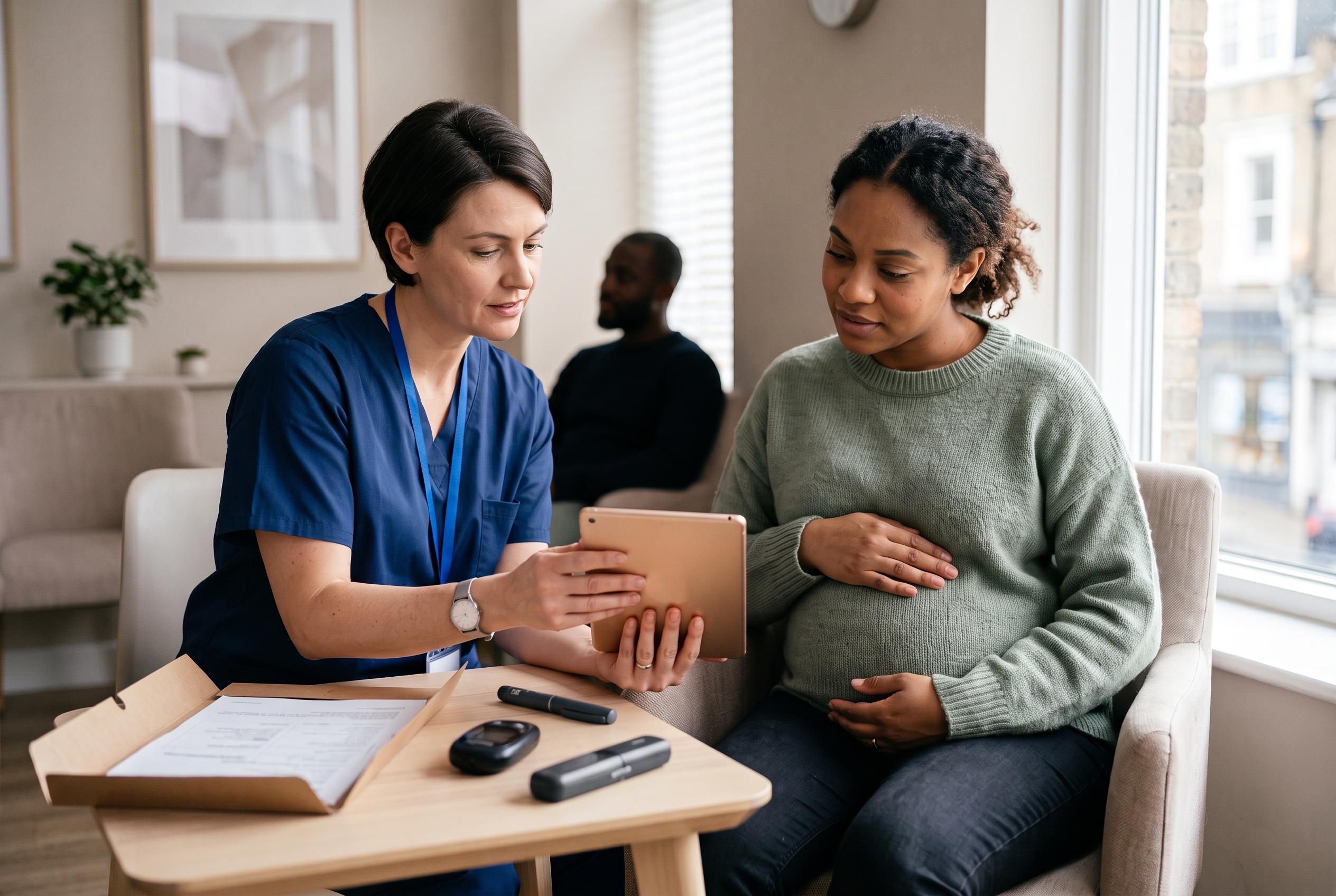

Researchers at University College Dublin are trialling a new digital health coaching programme to support pregnant women at risk of gestational diabetes within routine maternity services across Europe, aiming to evaluate real-world effectiveness and scalability.
Researchers at University College Dublin have set out the full design for Bump2Baby & Me+, a digital health coaching study that will test whether support for pregnant women at higher risk of gestational diabetes can work in everyday maternity care, not just under trial conditions. The protocol has been published in PLOS One as recruitment for the multi-country project closes after beginning in December 2025.
Gestational diabetes affects about one in seven pregnancies worldwide and carries serious risks for both mother and baby. According to the project material, women who develop it face a tenfold higher risk of type 2 diabetes than the general pregnant population. Health authorities in the UK have also recently reported a sharp rise in gestational diabetes, with rates up 60%, a trend linked in part to more women becoming pregnant later in life and with obesity or overweight.
The new study builds on the earlier Bump2Baby and Me trial, but shifts the focus from controlled research to routine hospital practice. It will run in maternity units in Dublin, Granada, Kristiansand and Szczecin, comparing periods when health coaching is available with periods of usual care. Women identified as being at risk will be linked with a coach through a smartphone app, given a Bluetooth-enabled weighing scale and followed from early pregnancy until nine months after birth.
Researchers will also examine which invitation methods are most effective at reaching eligible women, an important test of whether the programme can be delivered at scale. The results are intended to feed into a European implementation toolkit, giving other health services practical, costed guidance on how to introduce the model. Sharleen O’Reilly, the principal investigator at UCD, said the central question is whether the intervention still works once it becomes part of the daily workload of a busy maternity unit.
Disclaimer: This content is for informational purposes only and is not intended to be a substitute for professional medical judgment, advice, diagnosis, or treatment.