

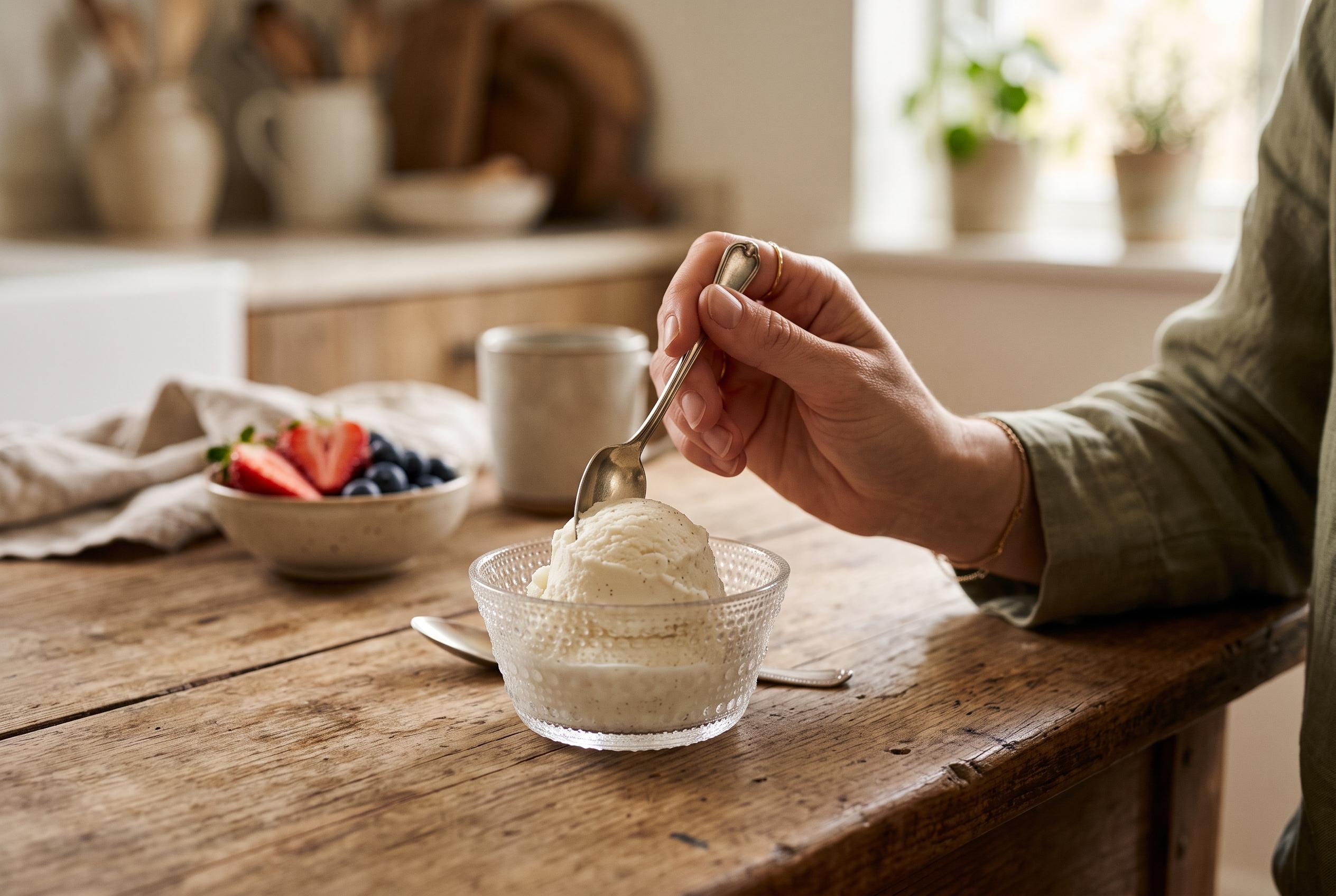

While frozen yoghurt is often perceived as a lighter dessert option, its sugar content and nutritional balance may challenge that assumption, with health experts urging moderation and mindful choices.
For anyone watching blood sugar, the choice between frozen yoghurt and ice cream is not as straightforward as the labels suggest. Healthline says frozen yoghurt is usually made from milk, yoghurt cultures and sugar, while ice cream relies more heavily on cream and other dairy fats. That means the popular assumption that frozen yoghurt is always the lighter option can be misleading.
A typical serving of frozen yoghurt may contain less fat than ice cream, but it can also carry a sizeable sugar load. Healthline notes that regular frozen yoghurt can contain around 4 grammes of fat, 3 grammes of protein and 22 grammes of carbohydrates per 100 grammes, while a standard vanilla ice cream portion has about 7 grammes of fat, 2 grammes of protein and 17 grammes of carbohydrates. Other health-focused explainers say many frozen yoghurt products are marketed as better-for-you desserts even though some varieties are high in added sugar.
That mix matters because fat can slow digestion and soften the rise in blood glucose after eating. ScienceInsights says the fat and protein in ice cream can delay gastric emptying, which may lead to a more gradual glucose response than people expect. The article also says reduced-fat frozen yoghurt can have a low glycaemic index, though that benefit may be offset if manufacturers add more sugar to compensate for flavour and texture.
Dietitians quoted in the lead article make much the same point: the better pick depends on the full nutritional balance, not the dessert’s reputation. Frozen yoghurt may look healthier because it is lower in fat, but extra sugar can wipe out some of that advantage. Ice cream, meanwhile, is not a health food, yet a modest portion may produce a steadier blood sugar response than a low-fat yoghurt product loaded with sweeteners. Both experts recommend keeping portions small and choosing toppings such as nuts or berries to add protein, healthy fats and fibre.
Disclaimer: This content is for informational purposes only and is not intended to be a substitute for professional medical judgment, advice, diagnosis, or treatment.