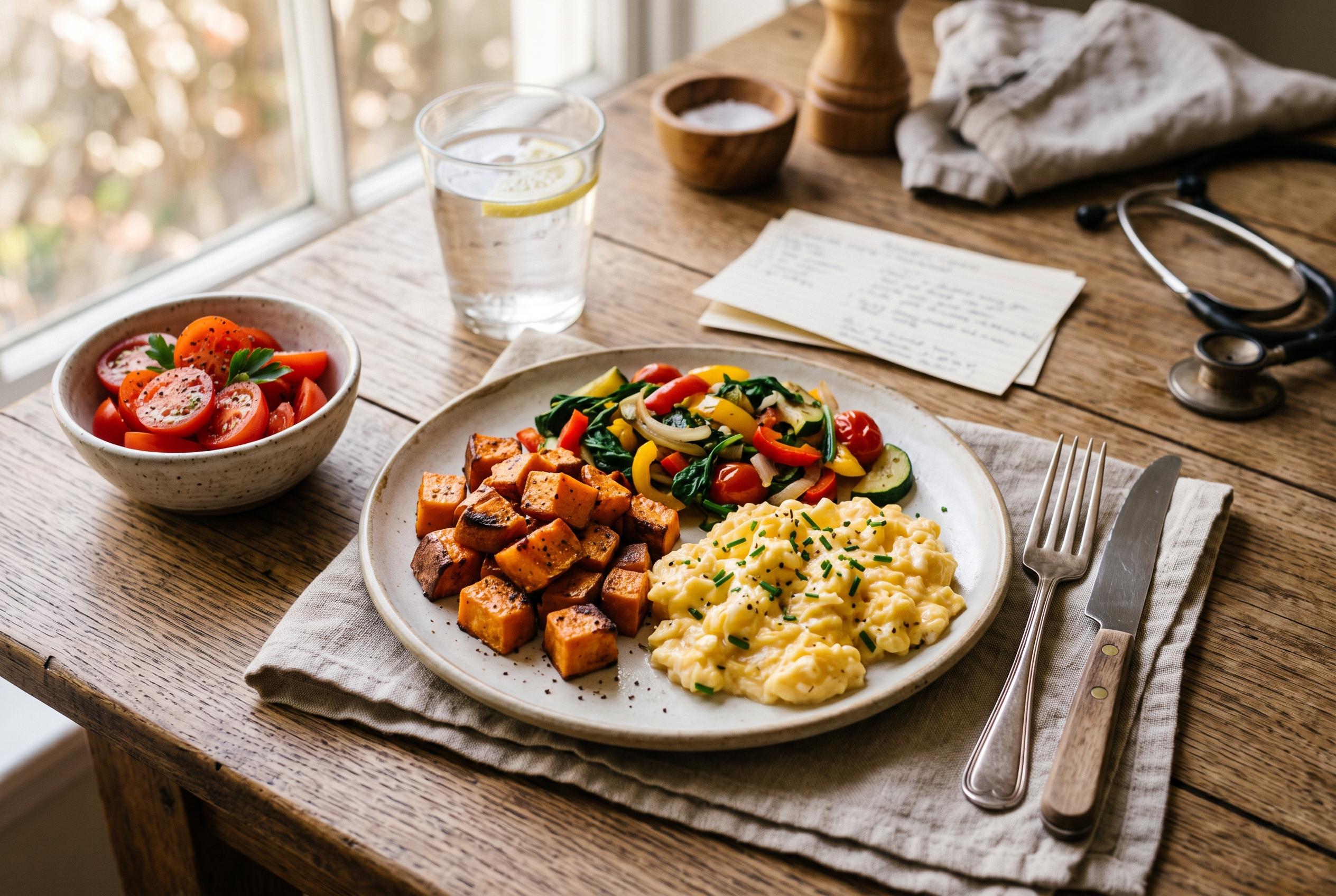

A simple breakfast featuring eggs, sweet potatoes and vegetables may help regulate blood pressure and blood sugar levels, emphasising the importance of minimally processed foods, fibre, and balanced nutrients in a heart- and diabetes-friendly diet.
A simple breakfast built around eggs, sweet potatoes and vegetables may do more than fill the stomach: it can also support healthier blood pressure and blood sugar levels. That idea is broadly in line with advice from the American Heart Association, which says a heart-friendly diet should emphasise vegetables, fruit, whole grains and healthy sources of protein, while keeping salt, added sugar and highly processed foods to a minimum. It is also consistent with dietary guidance commonly used for people trying to manage diabetes.
The combination is straightforward. Boiled eggs provide protein, sweet potatoes supply carbohydrate and fibre, and fresh or lightly cooked vegetables add volume, fibre and potassium. Nutrition guidance from the American Heart Association and the American Diabetes Association both point towards pairing carbohydrate-rich foods with protein and other nutrient-dense choices, because that can help slow digestion and soften spikes in blood glucose.
The main warning is what gets added on top. A healthy plate can quickly become less helpful if the sweet potato is loaded with sugar, or if the eggs are eaten with processed meats, salty sauces or other high-sodium extras. The American Heart Association says reducing sodium is important for blood pressure control, while potassium-rich foods such as vegetables are generally encouraged as part of a balanced pattern of eating.
The broader lesson is that there is no need to eat the same breakfast every day. Wholemeal bread or brown rice can stand in for sweet potatoes, while fish, beans or lean meat can also provide protein. The key, according to the American Heart Association, is consistency: a diet built around minimally processed foods, enough fibre and limited salt and sugar is more useful than chasing any single so-called superfood.
Disclaimer: This content is for informational purposes only and is not intended to be a substitute for professional medical judgment, advice, diagnosis, or treatment.