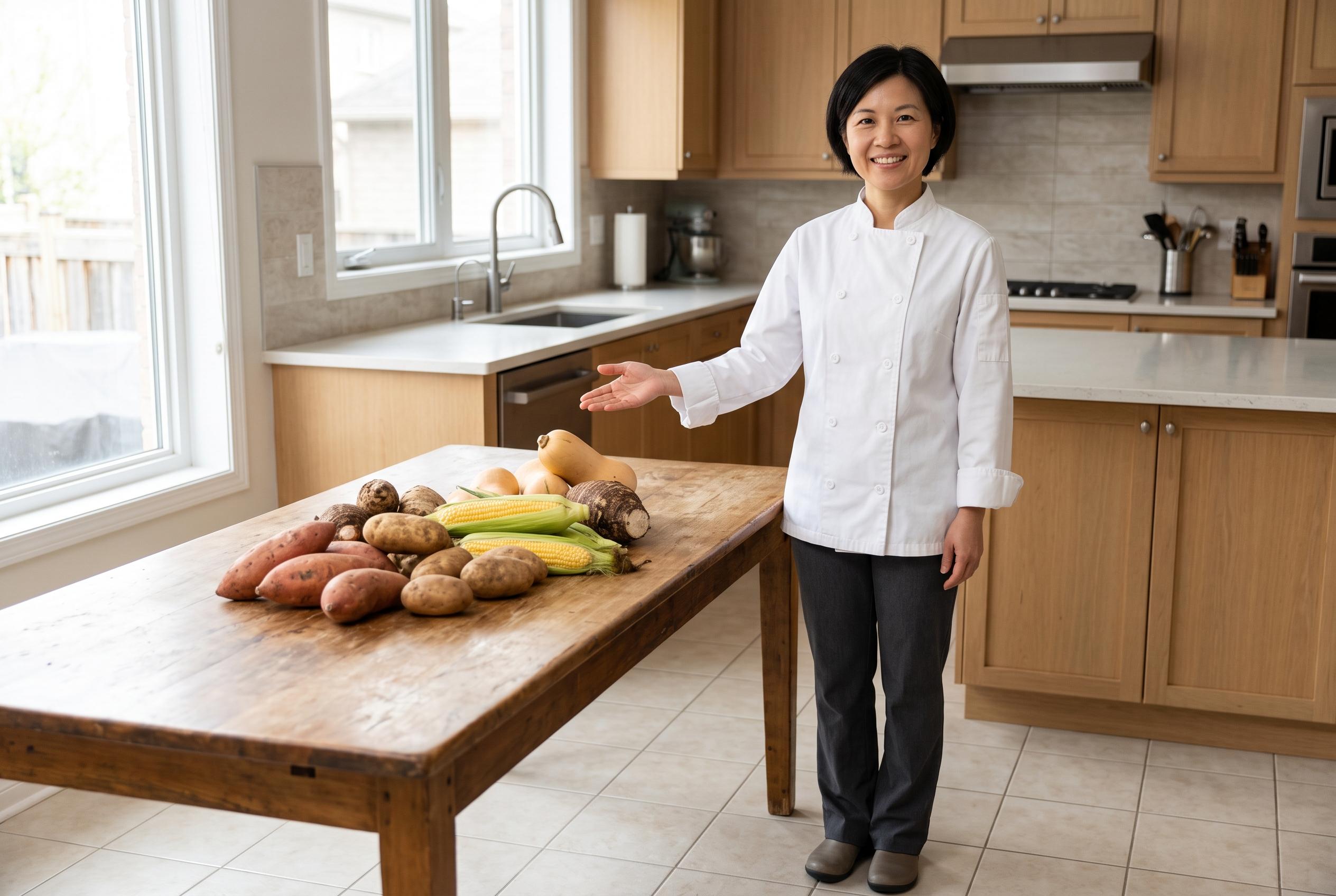

Taiwanese dietitian Tsai Cheng-liang highlights how preparation, texture, and portion size influence the impact of starchy foods like sweet potatoes, potatoes, corn, taro, and squash on blood sugar levels, challenging the assumption that choosing ‘natural’ foods alone ensures glucose stability.
Nutritionists often encourage people to choose whole, minimally processed starches such as sweet potatoes, potatoes, corn, taro and squash, but Taiwanese dietitian Tsai Cheng-liang says that does not automatically mean they will keep post-meal blood sugar steady. The key, he argues, is not simply choosing a natural starch, but paying attention to texture, preparation and portion size.
Writing on Facebook, Tsai said many health-conscious meals now feature root vegetables and other starchy foods in place of white rice, especially in lunches marketed as low-GI, or low glycaemic index. That assumption, he said, is only partly correct. How a starchy food is cooked can matter just as much as the food itself.
Healthline notes that the glycaemic impact of sweet potatoes, for example, changes with cooking method: boiling tends to produce a lower effect on blood sugar than baking, while longer boiling can reduce it further. The reason is partly resistant starch, which is less readily digested and has a smaller effect on glucose levels. Nutrition coverage from the same outlet also highlights sweet potatoes’ fibre and beta-carotene content, while noting that regular potatoes and sweet potatoes differ in nutrient profile and blood-sugar response.
Tsai said starch structure also matters. Foods higher in amylose, a more tightly packed form of starch, tend to digest more slowly than those rich in amylopectin, which breaks down more easily. When starch is heated, it gelatinises; the softer, hotter and sweeter it becomes, the faster the body is likely to absorb it. Cooling cooked starch can also increase resistant starch, which may blunt the glucose rise that follows a meal.
He pointed to five common starchy foods and the ways they are often best eaten. Sweet potatoes are better boiled or chilled than baked, and leaving the skin on adds fibre. Potatoes are less blood-sugar-friendly when mashed, fried or baked into soft dishes, while cold potato salad may be steadier because chilling increases resistant starch. Corn is generally slower to digest when eaten as whole kernels, whereas corn soup, corn paste and corn-flour products can raise blood sugar more quickly. Taro is usually preferable in chunk form rather than as taro paste, taro balls or sweet soup. Squash, meanwhile, can become more rapidly absorbed if cooked until very soft or blended into soup.
Prevention has similarly reported that whole, minimally processed forms of potatoes and corn are generally better choices for people trying to manage blood sugar, alongside sensible portion control. Taken together, the advice from these nutrition sources points to the same basic rule: keep starchy foods as whole, firm and lightly processed as possible if blood sugar control is the priority.
Disclaimer: This content is for informational purposes only and is not intended to be a substitute for professional medical judgment, advice, diagnosis, or treatment.