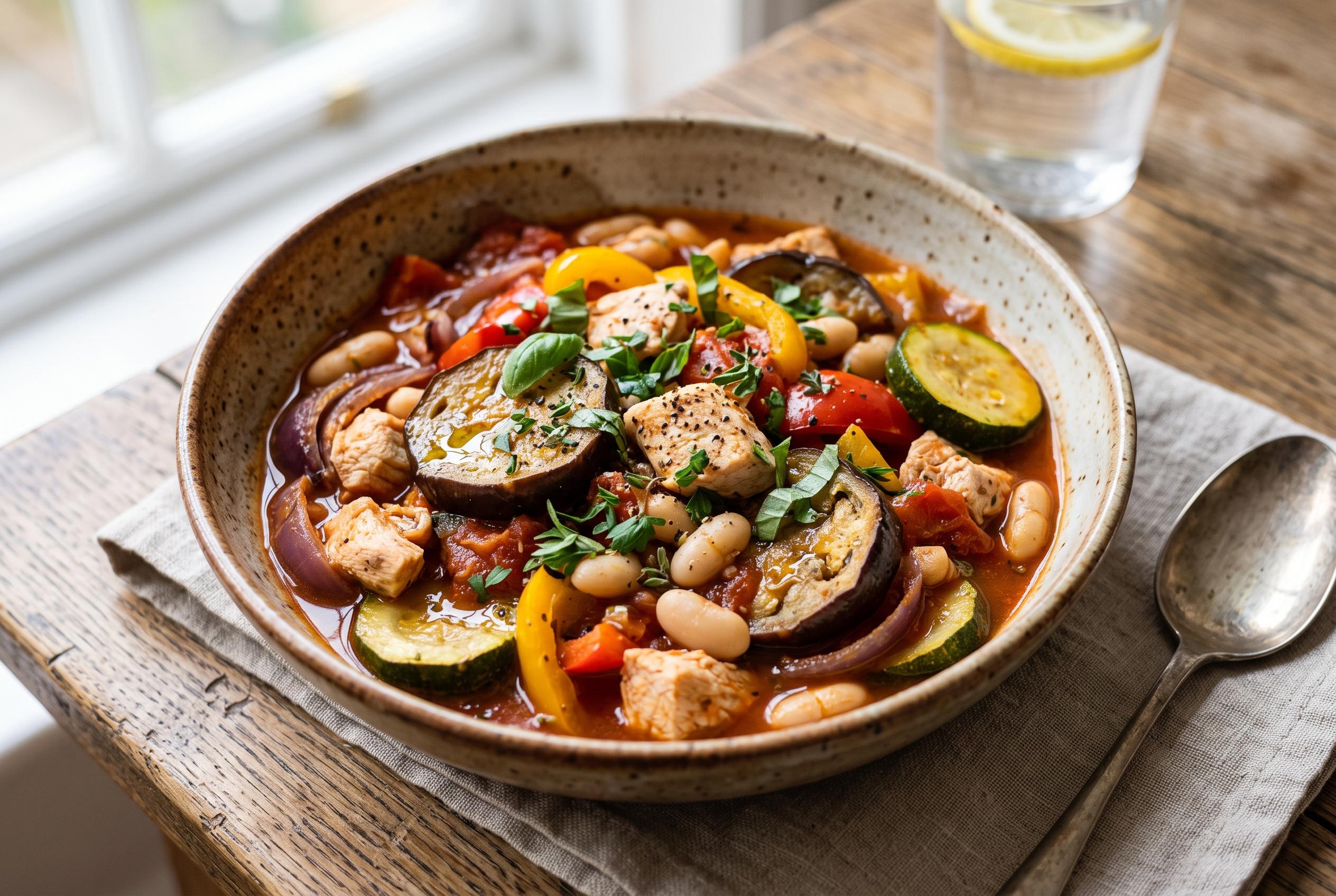

A timeless Provençal vegetable dish is being adapted into a flexible, health-conscious meal scheme, offering new varieties that prioritise flavour, fibre, and protein for those managing diabetes.
Ratatouille, the Provençal vegetable stew, makes an easy lunchtime option for people looking for a lighter meal that still feels substantial. The Sweet Life recipe keeps the method simple: onion is softened in olive oil, aubergine is added first, then tomatoes, red wine vinegar and seasoning, before courgettes go in near the end so the vegetables hold some texture. The dish can be eaten on its own or served with wholemeal bread or salad.
Its appeal lies in its flexibility. Diabetes Deutschland’s version adds garlic, peppers and herbs such as rosemary, thyme and basil, while the Mayo Clinic’s take uses roasted peppers and lemon zest for extra brightness. Both approaches show how ratatouille can be adapted without losing its central strength: a mix of non-starchy vegetables, slow-cooked until sweet and tender, with vinegar or herbs lifting the flavour.
Other diabetes-focused recipes take the dish further by adding protein or extra fibre. Diabetes.no includes beans and suggests serving ratatouille with whole-grain bread or rice, while the American Heart Association pairs it with red kidney beans and whole-grain penne in a Creole-style version. Those additions can make the meal more filling, which may help it work as a complete lunch rather than just a side dish.
The Sweet Life recipe also encourages home cooks to treat the dish as a template rather than a fixed formula, suggesting basil, thyme, chilli, smoked paprika, celery, leeks, butternut, chickpeas or lentils. That kind of variation is part of ratatouille’s long appeal: it is economical, adaptable and easy to build around what is already in the kitchen, while still fitting neatly into a diabetes-friendly way of eating.
Disclaimer: This content is for informational purposes only and is not intended to be a substitute for professional medical judgment, advice, diagnosis, or treatment.