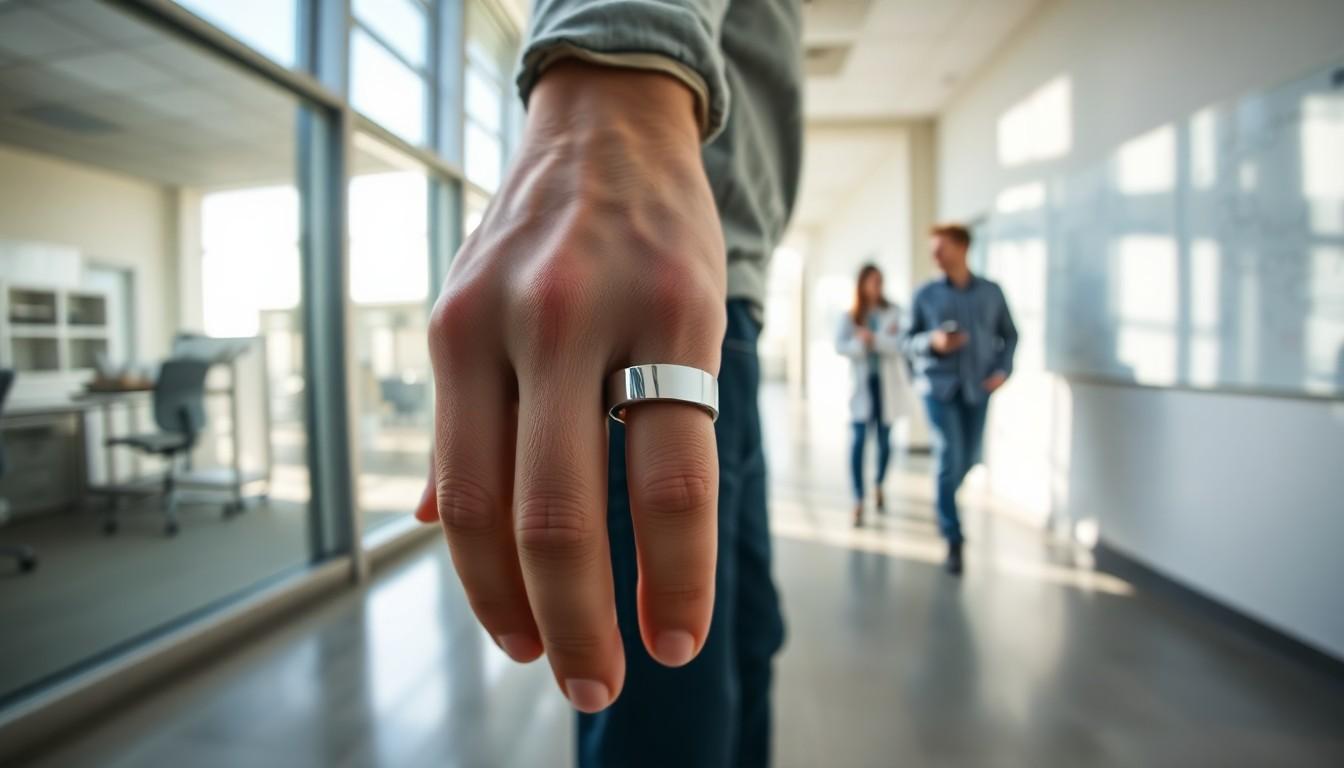

A new smart ring developed by UC San Diego researchers can continuously track multiple chemical signals in sweat, offering a potential breakthrough in non-invasive health monitoring, especially for diabetes management.
Researchers at the University of California San Diego have developed a smart ring that can continuously measure several chemical signals in sweat, moving wearable technology beyond heart rate and movement tracking into biochemical monitoring. According to a university release and the study in Nature Communications, the device can pick up glucose, ketones, vitamin C, uric acid, lactate and alcohol from finger sweat, then send the readings to a smartphone app in real time.
The ring works by using an osmotic hydrogel that passively pulls out tiny amounts of sweat, so it does not require strenuous exercise to generate a reading. Inside the ring, an electrochemical sensor array analyses the sample, while a flexible zinc-silver oxide rechargeable battery powers the system for about 12 hours. University of California San Diego said the design makes the device compact enough for daily use, while still integrating the collection, sensing and transmission functions into a single wearable.
The most important potential use case is diabetes care. The study, published in Nature Communications, found that the ring’s glucose measurements aligned closely with commercial continuous glucose monitors, while its ketone readings matched standard blood-prick tests. Researchers said simultaneous tracking of glucose and ketones could be especially useful for people with type 1 diabetes, where monitoring both markers may help inform insulin decisions and reduce reliance on invasive checks.
The work also points to a wider shift in consumer health wearables. By validating the device in both healthy participants and people with type 1 diabetes, the researchers showed that the ring can perform under everyday conditions, not just in the lab. Still, there are clear limits: a 12-hour battery life falls well short of mainstream smart rings, and the device has not yet reached the market. Even so, the prototype suggests that passive sweat analysis may soon become a practical route to continuous, non-invasive biochemical tracking.
Disclaimer: This content is for informational purposes only and is not intended to be a substitute for professional medical judgment, advice, diagnosis, or treatment.