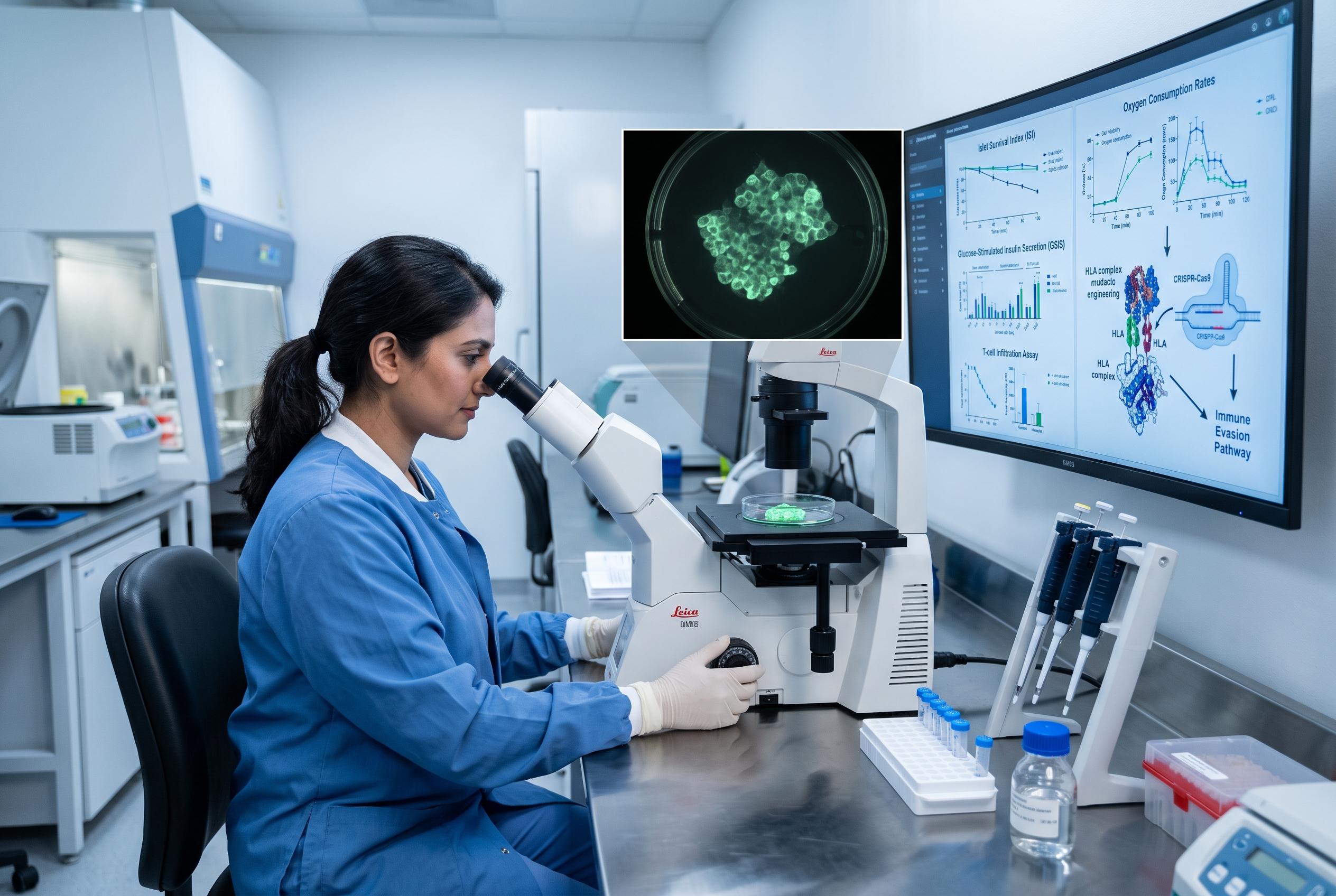

Sana Biotechnology reveals early clinical success with gene-modified pancreatic islet cells that can survive without immunosuppression, marking a potential breakthrough in diabetes treatment.
Sana Biotechnology is advancing what it believes could become a functional cure for type 1 diabetes by trying to solve a problem that has long limited islet cell transplantation: immune rejection. In a recent interview with BioPharm International, chief executive Steve Harr said the company’s clinical work is built around a deliberately narrow question , whether gene-modified cells can survive in a human body without immunosuppression , rather than around an immediate commercial therapy.
That strategy has now produced early clinical evidence. Sana said its first-in-human study showed that hypoimmune-engineered primary pancreatic islet cells could persist and function after transplantation into a patient with type 1 diabetes without the use of immunosuppressive drugs. The company said circulating C-peptide, a marker of insulin production, remained detectable and rose after a mixed meal tolerance test, while imaging suggested graft survival after transplantation into muscle tissue. Follow-up data presented later by the company and the University of California, San Francisco indicated the cells remained safe and well tolerated at six months and continued to produce insulin.
Harr told BioPharm International that Sana’s trial design was intentionally conservative. The company used cadaveric islets at a low dose to isolate one key translational question: whether immune evasion seen in animals would hold up in people. He said the answer appears to be yes, and argued that the field is now facing an execution challenge rather than a scientific dead end.
The broader case for that view rests on three strands of evidence, according to Harr: decades of insulin independence in transplanted islets under immunosuppression, other work showing stem-cell-derived islets can sustain insulin production for years and Sana’s own demonstration that transplanted cells can evade rejection without immunosuppressive therapy. Sana’s longer-term aim is a scalable, gene-modified stem-cell-derived islet product that could be transplanted broadly and, in the company’s telling, eliminate the need for insulin, immunosuppression and ongoing monitoring. Harr also said success in type 1 diabetes could create a platform for other diseases caused by missing or damaged cells.
Disclaimer: This content is for informational purposes only and is not intended to be a substitute for professional medical judgment, advice, diagnosis, or treatment.