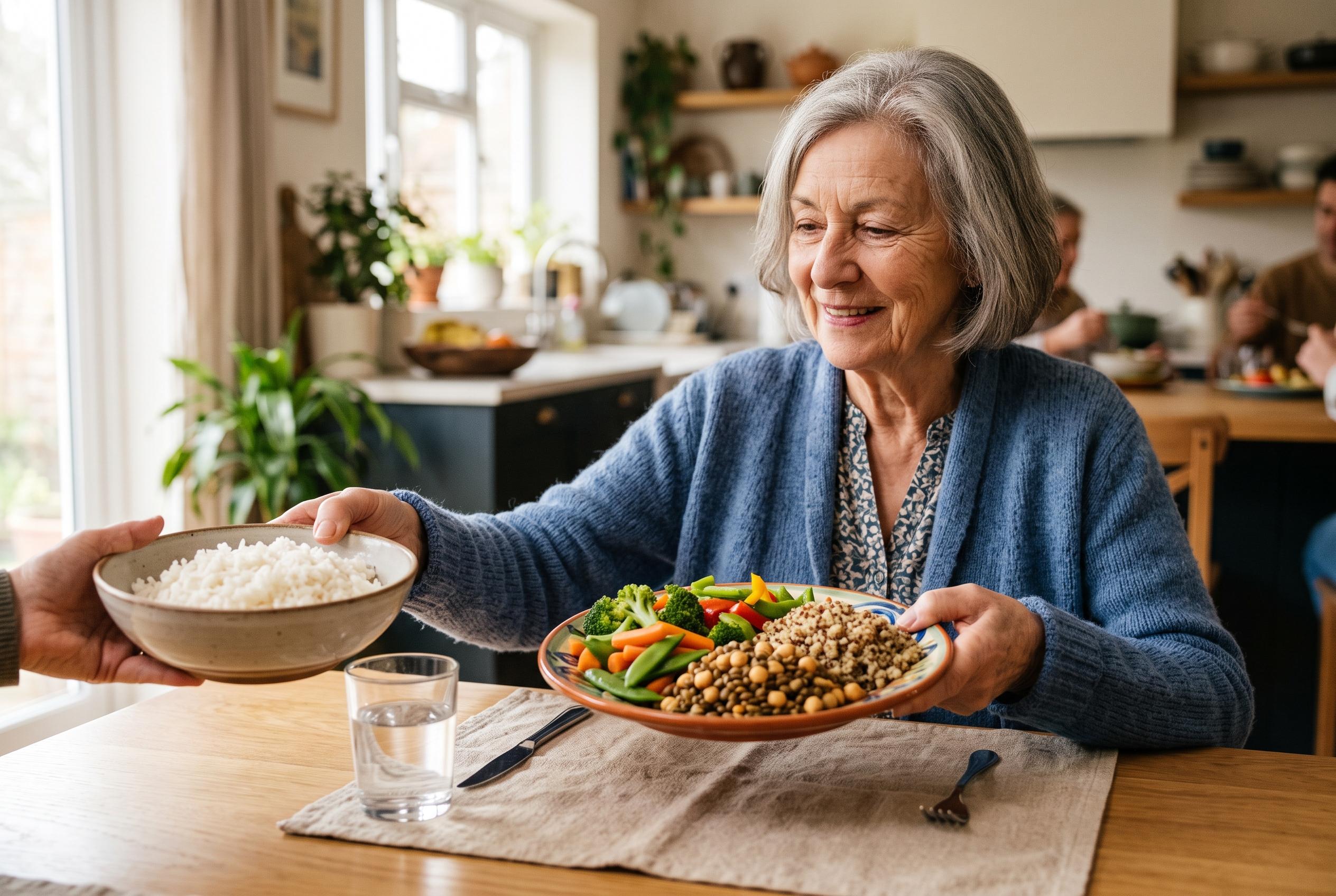

Experts suggest reducing white rice intake and increasing vegetables, pulses, and whole grains for better digestion, blood sugar control, and long-term wellbeing among seniors.
For many older people, white rice remains the anchor of a familiar meal, but nutrition experts increasingly point out that trimming back the portion can bring meaningful health benefits. As people age, digestion tends to slow and the body often becomes less tolerant of large servings of refined starch. Replacing part of the rice with vegetables, pulses, potatoes or whole grains can ease the load on the gut while improving the overall balance of the plate.
One of the clearest gains is digestive comfort. White rice is easy to digest, but it provides little fibre, which means it does less to support regular bowel movements than whole grains do. Healthline notes that foods richer in fibre can help promote satiety and improve bowel regularity, while Harvard Health says brown rice keeps the bran and germ intact, giving it more nutritional value than polished white rice. For older adults struggling with constipation or bloating, that shift can make meals feel lighter and more comfortable.
Blood sugar control is another major reason to reconsider the size of the rice serving. Healthline reports that high white-rice intake has been associated with a greater risk of type 2 diabetes, particularly in Asian populations, while brown rice’s lower glycaemic index may help blunt blood sugar spikes. Harvard Health also points out that brown rice is less processed and more nutrient-dense, making it a more favourable option for most people who want steadier glucose levels. Pairing any rice with vegetables and protein can further slow the release of sugar into the bloodstream.
Portion control may also help with weight management. Healthline says studies have not proved that white rice alone causes weight gain, but it is easier to overeat when the meal is dominated by refined carbohydrates. By contrast, whole grains tend to be more filling because of their fibre content, which can reduce overall calorie intake. Over time, that can support a healthier waistline and make it easier to maintain weight in later life, especially when meals are built around vegetables, beans and lean protein rather than large helpings of rice.
There may be broader benefits too. Harvard Health and other reviews emphasise that whole grains deliver more fibre, vitamins and minerals than white rice, and diets richer in whole grains are linked with better long-term health outcomes. That does not mean older people must cut rice out altogether. A smaller serving, combined with more diverse foods, is usually the more realistic and sustainable approach, offering a gentler way to support digestion, metabolism and overall wellbeing without abandoning a staple entirely.
Disclaimer: This content is for informational purposes only and is not intended to be a substitute for professional medical judgment, advice, diagnosis, or treatment.