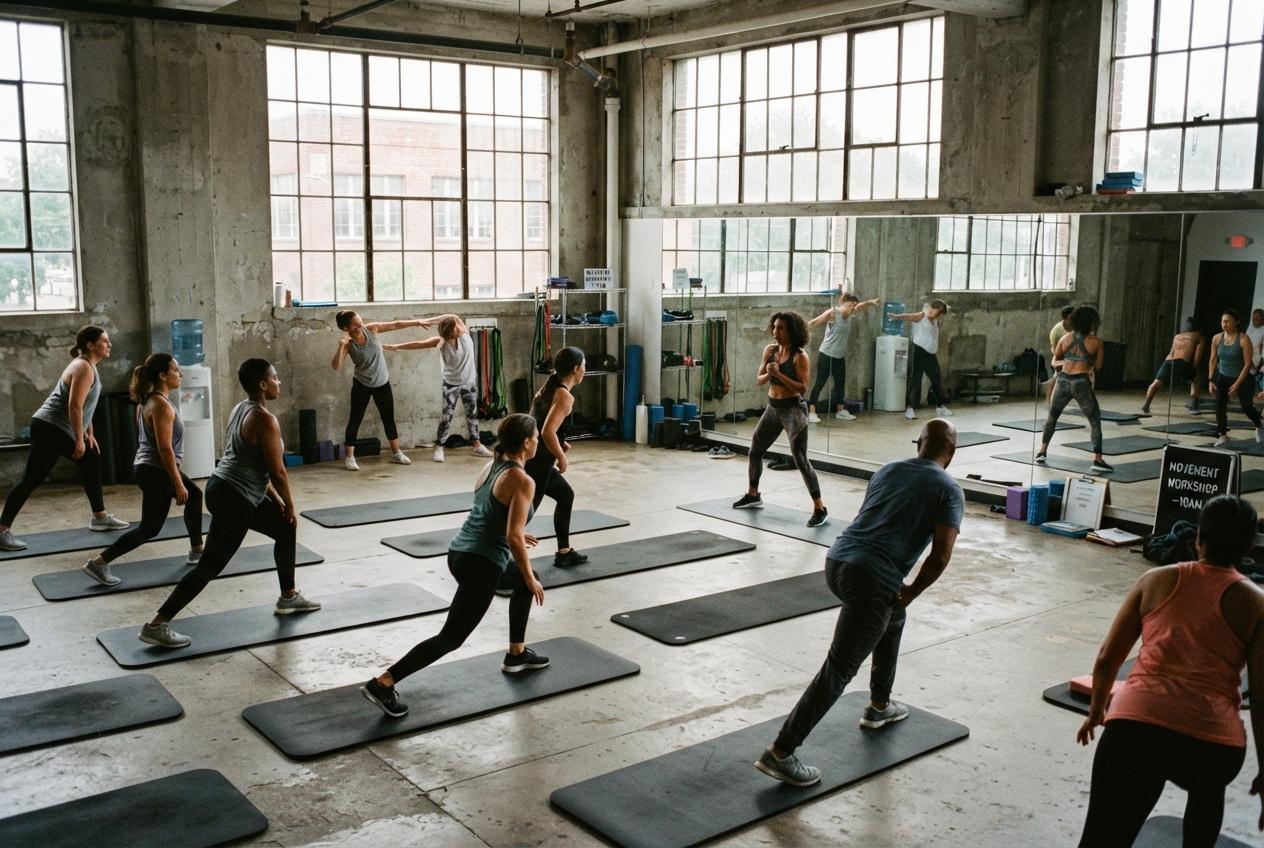

Emerging research shifts the emphasis from traditional gym metrics to holistic assessments of mobility, strength, and metabolic health, promoting a lifelong approach to fitness over aesthetic achievements.
For years, fitness has often been discussed as though it were a single number: the scale, the barbell, the stopwatch or the calorie counter. Yet a growing body of evidence suggests that this narrow view misses what matters most. Good health is less about how much weight someone can lift in a controlled setting and more about whether they can move through everyday life with strength, balance and confidence. Mayo Clinic, for example, frames fitness as a blend of aerobic capacity, muscle strengthening, core work, balance and flexibility, rather than any one measure alone.
That broader understanding reflects a shift in how muscle itself is viewed. Rather than treating it purely as something that shapes appearance or improves athletic performance, researchers now describe skeletal muscle as an active organ with wider effects on metabolism, inflammation and insulin sensitivity. Studies highlighted by El País also point to cardiorespiratory fitness as a stronger predictor of longevity than body weight alone, reinforcing the idea that health cannot be read from body size in isolation.
This is why functional training has gained such traction. Its appeal lies in what it asks the body to do: push, pull, lift, carry, squat, jump and stabilise under fatigue. Those are the movements that matter in daily life, whether climbing stairs, picking up a child or reaching into an overhead locker. In that sense, the most valuable training is not the kind that produces the most impressive gym numbers, but the kind that keeps a person capable in the real world.
The discussion around load is also changing. Recent coverage in Infobae noted that heavier weights are not automatically better for strength or muscle growth, and that technique, control and effort often matter more than simply adding plates. That view fits with older reporting from El País, which explained that muscle adapts to mechanical stimulus, but only when training is done with the right quality and consistency. In practice, the lesson is simple: progress does not depend on suffering or maximal loading, but on the right stimulus for the individual.
Seen this way, fitness becomes less about chasing extremes and more about preserving independence over time. The goal is not to turn everyone into an athlete, but to help people remain strong, steady and resilient as they age. That is the quiet revolution behind functional training: it shifts the focus from appearance to capability, and from what the body can do for an hour to what it can do for a lifetime.
Disclaimer: This content is for informational purposes only and is not intended to be a substitute for professional medical judgment, advice, diagnosis, or treatment.