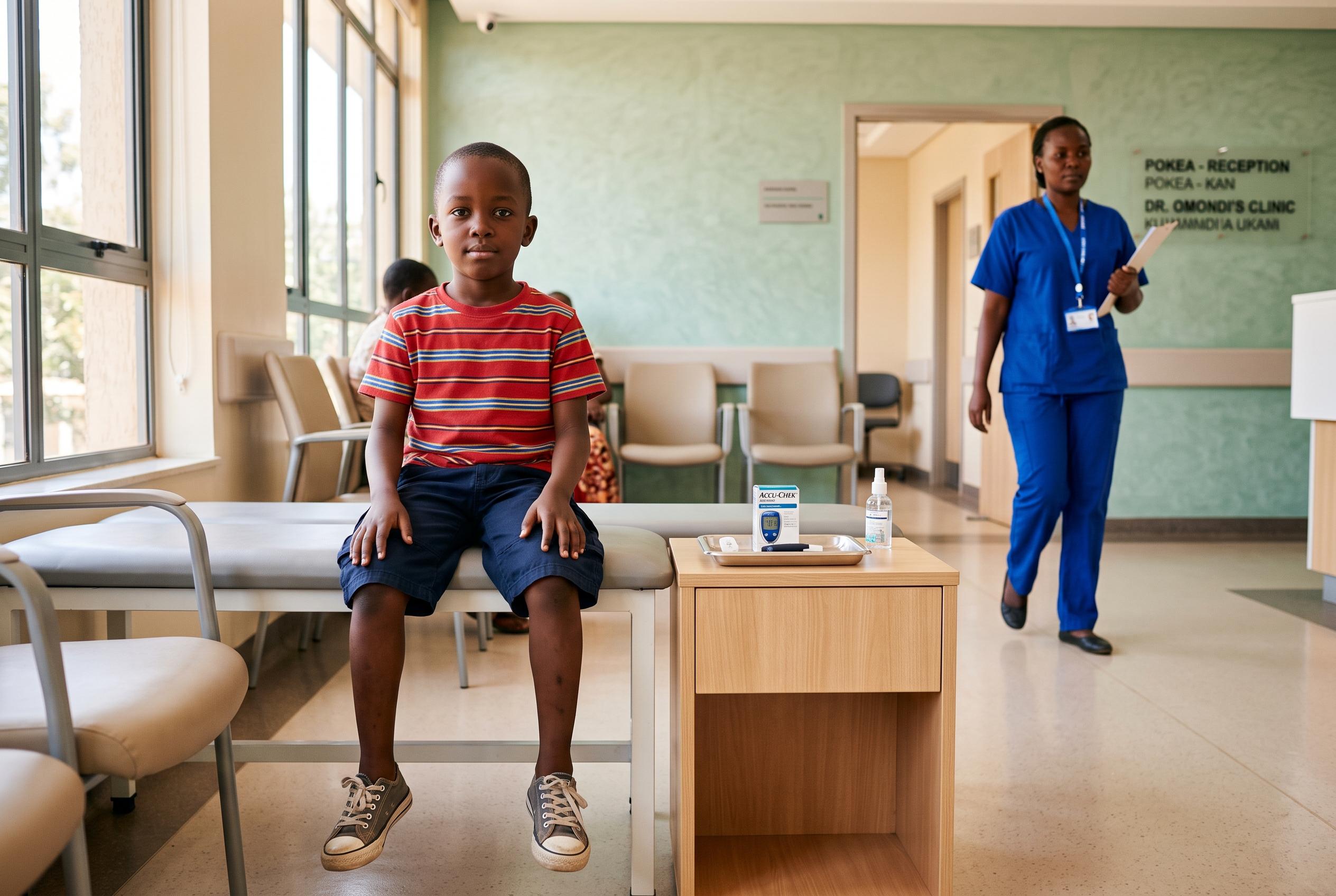

Kenya faces a surge in childhood Type 1 diabetes, with thousands affected and diagnoses often delayed until life-threatening complications occur. Experts emphasise the importance of early detection and improved healthcare access to save young lives.
Childhood hormone disorders are often missed until they have already caused serious harm, and in Kenya the most urgent warning is the rise in Type 1 diabetes among children and young people. The condition now affects an estimated 6,500 children in the country, with 1,380 new cases and 570 deaths recorded in 2024, figures that underline both the scale of the problem and the cost of delayed diagnosis and poor access to insulin. The Standard reported that Kenya ranks 44th among 113 low- and middle-income countries for Type 1 diabetes prevalence in the under-20 age group, a reminder that the disease is a growing public health issue rather than a rare childhood complaint.
Type 1 diabetes is an autoimmune illness in which the body destroys the insulin-producing cells in the pancreas, leaving a child unable to regulate blood glucose properly. The symptoms are often plain to see once clinicians and families know what to look for: intense thirst, frequent urination, weight loss and exhaustion. Yet these signs are commonly mistaken for a minor infection, stress or simple dehydration. By the time many children are finally brought for care, they are already in diabetic ketoacidosis, a medical emergency that can be fatal. Research from Gertrude’s Children’s Hospital and Aga Khan University Hospital, presented at the Joint Congress of the European Society for Paediatric Endocrinology in 2025, found that more than half of children diagnosed in Nairobi’s private hospitals were already in that state at first presentation, with the average age at diagnosis eight years old.
The problem is not confined to diabetes. Endocrine disorders in children also include thyroid disease, growth hormone deficiency, vitamin D deficiency and abnormalities in the timing of puberty. Global reviews from the National Center for Biotechnology Information show that Type 1 diabetes remains the most common form of diabetes in children and adolescents in many countries, and that the number of cases continues to rise as incidence increases and mortality falls. These conditions can quietly affect growth, learning, mood, concentration and physical development, and are often mistaken for behavioural or academic problems rather than medical ones. When caught early, however, most respond well to treatment.
That is why awareness matters as much as medicine. Families may delay seeking help because of myths that childhood diabetes is caused by sugar, can be managed by diet alone, or is somehow contagious or supernatural. Health workers, too, may miss early signs if endocrine conditions are not front of mind in primary care. Schools can make a difference because teachers often notice changes before anyone else: a child who is always thirsty, losing weight, or struggling to focus may be signalling a treatable disorder. Specialist services, better insulin formulations and tools such as continuous glucose monitors are improving care, but the central lesson remains unchanged: early detection saves lives.
Disclaimer: This content is for informational purposes only and is not intended to be a substitute for professional medical judgment, advice, diagnosis, or treatment.