

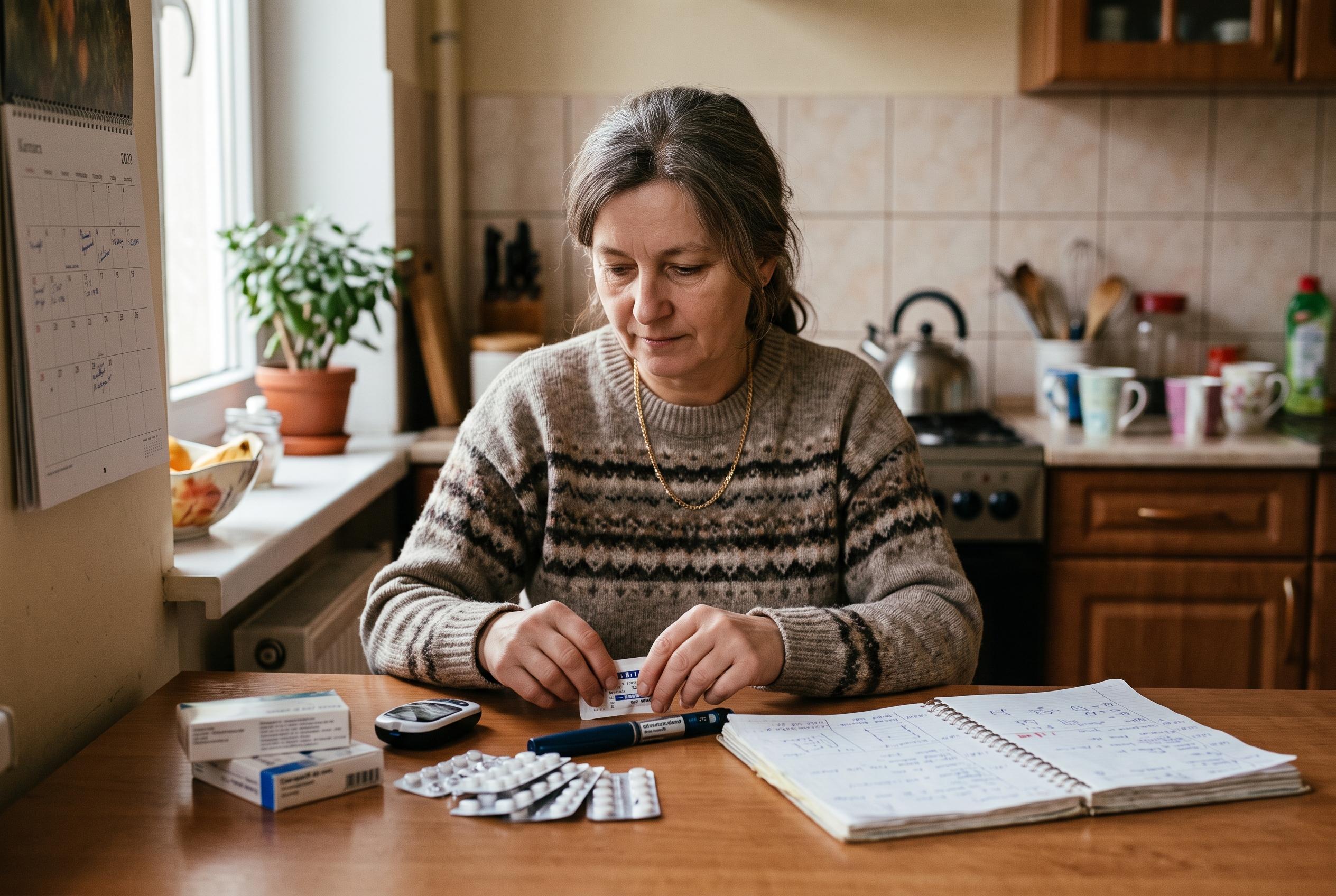

Keeping treatment on track in Poland involves more than taking medicines: patients must monitor supplies, book follow-up care and navigate changing reimbursement rules.
For people living with type 2 diabetes, the everyday challenge is often less about the diagnosis itself than about staying ahead of the routine it demands. In a Focus.pl explainer on diabetes management, the emphasis is on planning supplies early: checking how much medicine is left, noting when prescriptions expire and making sure test strips and pen needles do not run out before the next appointment. That practical advice matters because treatment continuity depends on more than a single prescription; it relies on keeping track of medication, monitoring equipment and the timing of follow-up care.
The article’s central message is simple: do not wait until the last tablet or injection is gone before acting. A fixed weekly check of stock, along with a written list of drug names, doses, remaining packs, expected finish dates and the next consultation, can help prevent gaps in treatment. The piece also stresses that patients should not reduce doses or stretch medication to make it last longer. If supplies are running low and a repeat prescription is not yet available, the patient should contact the clinic as early as possible.
Prescription timing is not always automatic, even when treatment is continuing. According to the Focus.pl guide, doctors may need current glucose readings, test results or information about side effects before issuing another prescription, particularly where insulin or several diabetes medicines are involved. Remote consultations can be useful, but they do not remove the need for clinical judgement; if a fuller assessment is needed, an in-person visit may still be required. The article also reminds readers that an e-prescription is not valid indefinitely: in Poland it is usually valid for 30 days, though in some cases a doctor may set a longer realisation period, up to 365 days. For a year-long prescription, the first pack must still be collected within 30 days, and pharmacies can usually dispense only up to 120 days of treatment at once.
Refund rules add another layer of complexity. Receptopunkt explains that common medicines such as metformin are generally inexpensive and widely reimbursed, while newer treatments, including flozins and incretin-based drugs, may qualify for reimbursement only when specific medical criteria are met. The same source notes that the main ongoing cost for many patients is not the medicine itself but the consultation needed to renew treatment. That makes planning appointments just as important as planning medication purchases, especially for people whose therapy changes over time.
The rules for strips and needles are different again. Receptopunkt and Walkazcukrzyca.pl both say these items are treated as medical devices rather than medicines, and reimbursement depends on the type of diabetes and the treatment method. People using insulin may need strips, pen needles or other accessories, but the exact entitlement should be confirmed with a doctor or pharmacist because the reimbursement list and conditions can change. Focus.pl’s advice is to monitor those supplies alongside medicines and to seek help early if a shortage is looming, rather than waiting until the next appointment becomes urgent.
Recent reporting from Nasza Polska suggests the financial pressure on patients may be increasing, after changes to Poland’s reimbursement list that took effect on July 1, 2026, pushed up prices for several widely used oral diabetes medicines. Separately, the National Health Fund has said reimbursed diabetes drugs such as Ozempic and Trulicity remain available under specific criteria, with patients paying part of the cost. Together, those developments underline the same broader point: for people with type 2 diabetes, good control is not only a medical issue but also an administrative one, requiring careful tracking of prescriptions, supplies and reimbursement rules.
Disclaimer: This content is for informational purposes only and is not intended to be a substitute for professional medical judgment, advice, diagnosis, or treatment.



