

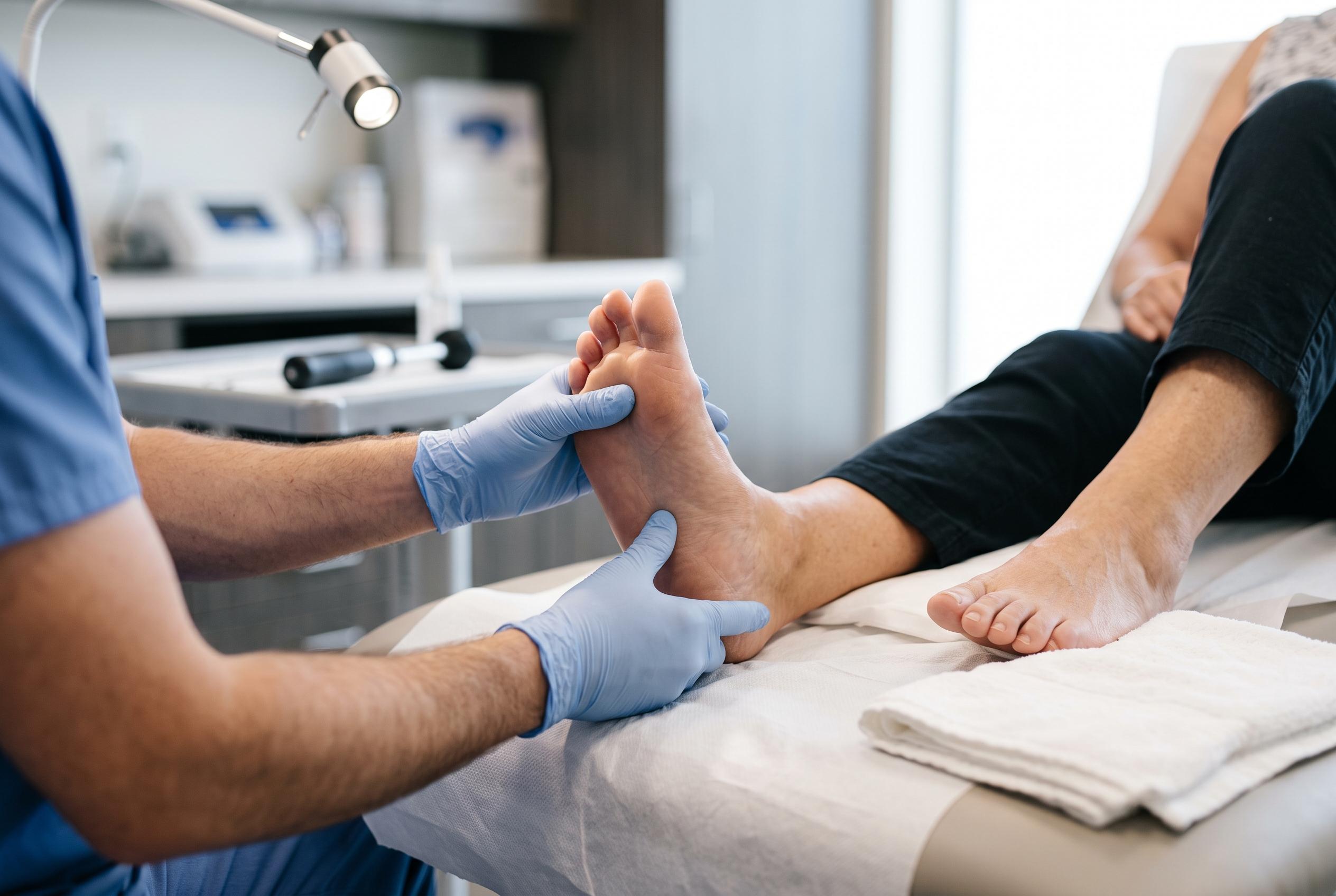

Regular foot screenings, whether at home or by healthcare professionals, are crucial in detecting early signs of nerve damage and circulation issues in diabetics, helping to prevent ulcers, infections, and amputations.
A diabetic foot exam can reveal early signs of trouble long before a patient notices pain or visible damage. Diabetes can affect nerves and blood vessels, reducing feeling in the feet and slowing healing, which means small injuries may become serious if they are missed. MedlinePlus says that even people who think their feet are fine can benefit from routine screening, because some complications develop gradually and without obvious warning signs.
During the check-up, a podiatrist typically looks for reduced sensation, poor circulation, skin damage, nail problems, changes in foot shape and issues with walking mechanics. Healthline notes that people with diabetic neuropathy may not feel an injury when it happens, while Griffin Health says providers also look for infection, bone abnormalities and other signs that could point to more advanced disease.
The reason for that caution is straightforward: diabetes raises the risk of numbness, ulcers, poor blood flow and infections that can spread if they are not treated. WellMed Healthcare says an untreated ulcer can progress to infection, bone involvement or even amputation. The Indian Health Service has also said that foot ulcers and amputations linked to neuropathy or peripheral arterial disease are common but preventable causes of disability in adults with diabetes.
Experts say regular foot checks, whether done at home or by a clinician, are part of wider diabetes care rather than a one-off precaution. Munson Healthcare says annual podiatry visits and routine wellness checks can help identify nerve damage early, while keeping blood sugar in target range remains central to prevention. Simple habits such as inspecting feet daily, wearing well-fitting socks and choosing supportive shoes can also help reduce risk.
Disclaimer: This content is for informational purposes only and is not intended to be a substitute for professional medical judgment, advice, diagnosis, or treatment.



