

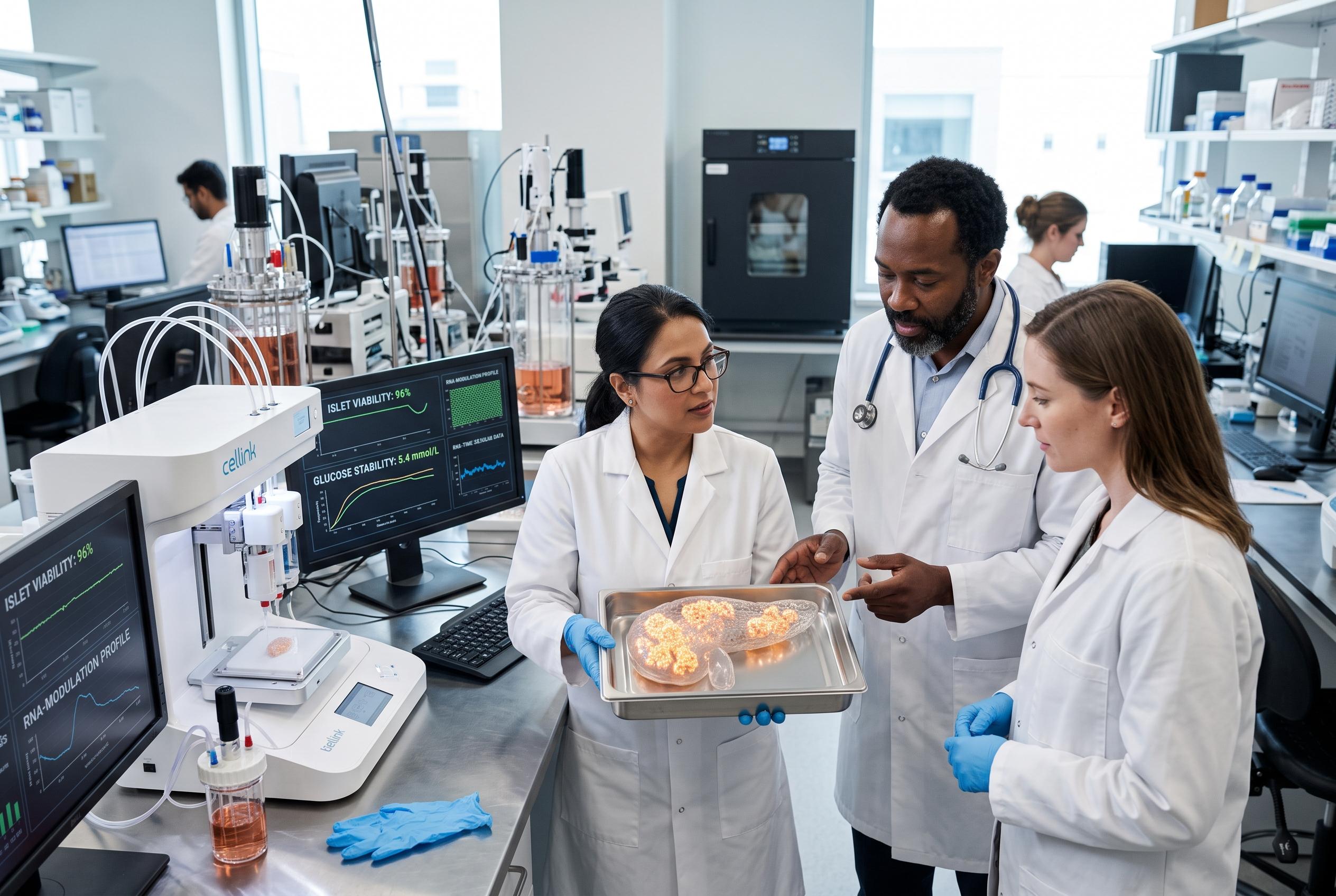

Researchers at Karolinska Institutet have developed a novel RNA-based approach to improve the survival of transplanted insulin-producing cells, potentially alleviating the global donor tissue shortage for type 1 diabetes patients.
Researchers at Karolinska Institutet have developed a targeted RNA-based method designed to help pancreatic islet cells survive transplantation more effectively, a step that could ease the shortage of donor tissue for people with insulin-dependent diabetes. In preclinical work, the treatment briefly switched on a gene linked to blood vessel growth before transplantation, allowing grafts to reconnect to the circulation more quickly and reducing the oxygen-starved period that usually follows implantation.
The study, published in Signal Transduction and Targeted Therapy, builds on a long-standing problem in islet transplantation: many transplanted cells are lost before they can establish a new blood supply. Earlier research has shown that vascular endothelial growth factor-A, or VEGF-A, plays a central role in islet vascular development and revascularisation, and that disrupted VEGF-A signalling can impair glucose-stimulated insulin secretion. Other groups, including Weill Cornell Medicine, have also explored ways to improve graft survival by adding blood-vessel-forming cells to islet transplants.
What distinguishes the Swedish team’s approach is its use of RNA aptamers to target insulin-producing beta cells directly, combined with small activating RNA molecules that transiently increase VEGF-A activity. The researchers said this left the cells unchanged permanently, but gave them a short-lived biological boost before transplantation. According to the study authors, the preconditioned islets showed less cellular stress, restored blood flow more rapidly and preserved more functional beta cells after implantation.
In mouse experiments, the treated islets produced better glucose control and delayed the return of diabetes, while achieving the same effect with fewer donor islets than untreated grafts. That is a significant point in a field constrained by limited donor pancreases. The researchers say the platform could eventually be adapted to other cell therapies, since the targeting component and the activated gene can be changed depending on the cell type and clinical need.
Disclaimer: This content is for informational purposes only and is not intended to be a substitute for professional medical judgment, advice, diagnosis, or treatment.