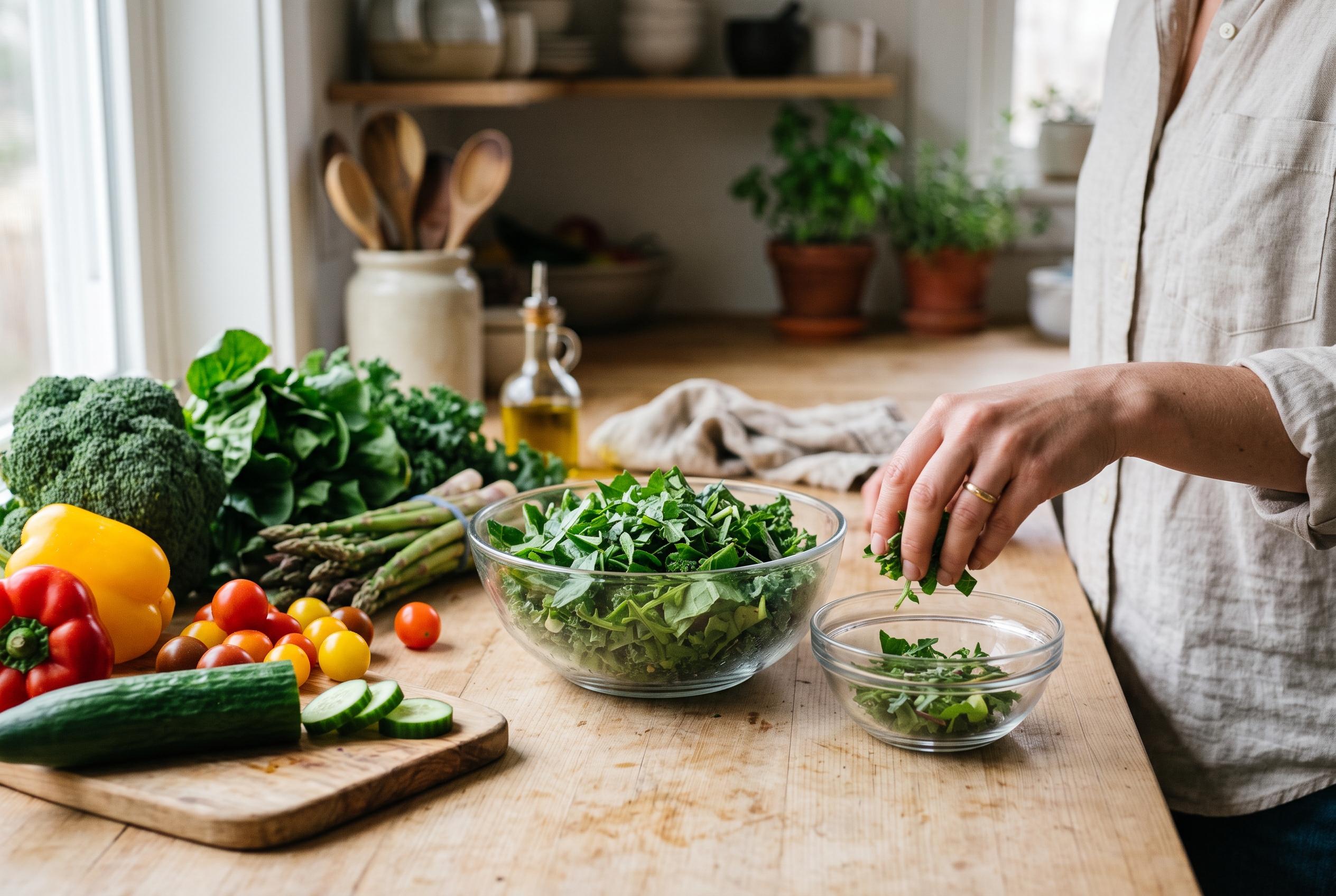

Emerging guidance advocates for a balanced intake of non-starchy vegetables, with a focus on variety and portion control, to better support blood glucose stability for people with diabetes.
Broccoli, Brussels sprouts and kale all have a strong case for a place on a diabetes-friendly plate, but the clearest message from mainstream guidance is broader than any one “best” vegetable. For people trying to keep blood glucose steadier or lower their risk of worsening insulin resistance, the most consistent advice is to eat more non-starchy vegetables overall, and to treat higher-carbohydrate vegetables differently from leafy greens and brassicas.
That matters because blood glucose is driven largely by carbohydrate intake, while fibre, protein and fat can slow how quickly levels rise after a meal. MedlinePlus explains that in type 2 diabetes the body does not make or use insulin well, and the CDC says a good meal plan should include more non-starchy vegetables and fewer added sugars and refined grains. Both sources also stress that there is no single eating plan that suits everybody, particularly for people already taking diabetes medication.
If there is a group of vegetables that stands out most clearly, it is cruciferous vegetables. The American Diabetes Association lists broccoli and Brussels sprouts among common non-starchy choices, alongside greens such as kale. Cleveland Clinic goes a step further, putting cruciferous vegetables among its “best foods” for people with diabetes and describing the group as low on the glycaemic index, high in fibre and rich in potassium, folate and vitamin C. The ADA’s practical benchmark is also more ambitious than many people manage: at least six servings of vegetables a day, with a serving defined as 1/2 cup cooked or 1 cup raw.
Leafy greens get similar backing, and the official advice is notably practical. Boston Medical Center uses the same basic serving rule of 1 cup raw or 1/2 cup cooked for non-starchy vegetables and recommends choosing plain fresh, frozen, low-sodium or canned varieties more often. The ADA likewise says fresh, frozen and canned vegetables can all fit, as long as they do not come loaded with added sodium, fat or sugar, and advises draining and rinsing salted canned vegetables to reduce the sodium left on them.
The murkier part of popular round-ups is what to do with vegetables that are wholesome but starchier. Green peas and butternut squash are good examples. The CDC places peas with carbohydrate foods and names peas and potatoes as starchy vegetables. Nebraska Medicine similarly groups peas and winter squashes such as butternut with corn, potatoes and sweet potatoes, while contrasting them with broccoli, cauliflower and Brussels sprouts, which it describes as very low-carb, high-fibre options. Boston Medical Center also puts peas and winter squash in its complex carbohydrate section rather than its non-starchy vegetable list. In other words, these foods do not need to be avoided, but they do need to be counted differently.
That distinction also helps explain why edamame can be nutritious without being interchangeable with broccoli. Official diabetes meal guides often place beans, chickpeas and lentils in carbohydrate sections, while MedlinePlus also lists beans, lentils and tofu among useful protein foods. Taken together, that suggests edamame, a young soybean, may work well in a balanced meal because it brings protein as well as carbohydrate, but it is best thought of as part of the meal’s structured carbohydrate or protein component rather than as a limitless non-starchy vegetable.
For day-to-day eating, the plate method remains the simplest way to turn that advice into something usable. The CDC recommends starting with a 9-inch plate and filling half with non-starchy vegetables, one quarter with lean protein and one quarter with carbohydrate foods. Nebraska Medicine offers a near-identical rule, saying roughly a quarter to a third of the plate should be carbohydrates, with the rest split between protein and non-starchy vegetables. Boston Medical Center makes the idea even more concrete with portion examples, including 1 1/2 cups of raw broccoli as a snack-sized vegetable serving.
The overall takeaway is less “eat this miracle vegetable” than “build a reliable pattern”. Broccoli, Brussels sprouts, kale and other greens deserve their reputation because multiple diabetes organisations and health systems place them firmly in the low-carbohydrate, high-fibre camp. But the same sources also make clear that variety, portion size and the balance of the whole meal matter more than chasing one ingredient. For anyone with diabetes or prediabetes, the safest long-term approach is to eat a wider range of vegetables, be more deliberate with starchy ones such as peas and winter squash, and work with a doctor or registered dietitian to tailor carbohydrate targets to their own medicines, lifestyle and health goals.
Disclaimer: This content is for informational purposes only and is not intended to be a substitute for professional medical judgment, advice, diagnosis, or treatment.