

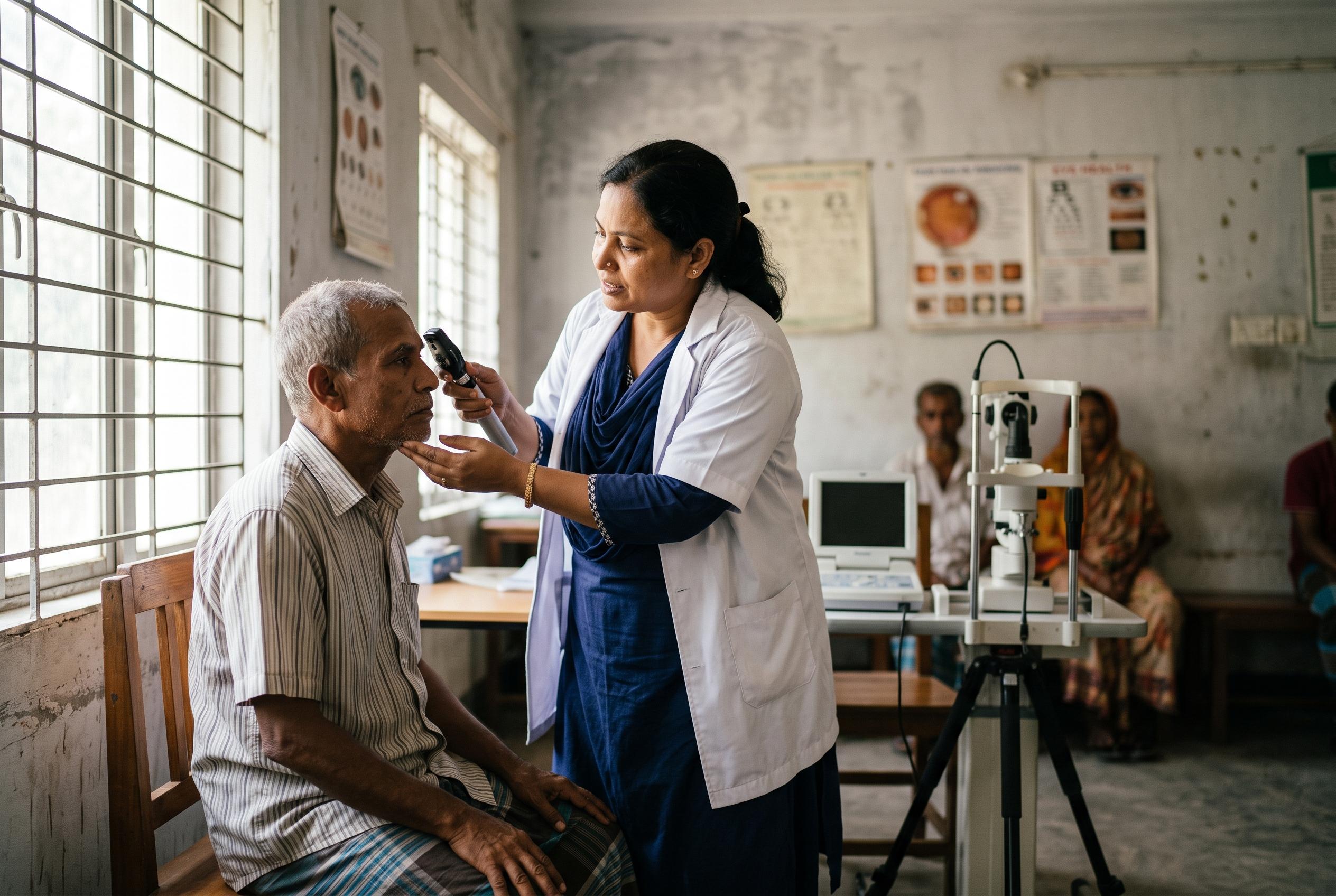

A review of 129 reports from 58 countries finds that digital screening and task-sharing are expanding access to diabetic eye checks, but weak referral and treatment pathways leave many patients at risk of avoidable sight loss.
A new scoping review published in BMC Health Services Research suggests that diabetic retinopathy services in lower-resource countries are expanding through improvisation rather than through fully built national programmes, with screening increasingly pushed into primary care and supported by digital tools, while treatment remains concentrated in specialist centres. The review examined 129 reports from 58 low- and middle-income countries and found that the strongest evidence came from lower-middle-income and upper-middle-income settings, leaving the poorest countries comparatively under-represented.
The pattern that emerges is one of partial integration. In many programmes, screening for diabetic retinopathy was delivered alongside routine diabetes care, often at primary-care level, rather than as a separate eye service. According to the review, opportunistic screening , in which patients are checked when they attend a clinic for another reason , was still the most common approach. That matters because it shows how service design is being shaped by limited resources: rather than building stand-alone eye screening networks, many health systems are trying to add retinal checks to existing diabetes visits.
The workforce model has also shifted. The review found substantial use of task-sharing and task-shifting, with nurses, general practitioners and community health workers taking on roles that would otherwise fall to ophthalmologists, who remain in short supply across much of the developing world. Digital retinal imaging is now central to that model. Fundus photography featured in most of the reports, while telemedicine and artificial intelligence-assisted grading were also increasingly used to move images from the point of care to remote specialists or algorithmic readers. A related scoping review focused on screening models in low- and middle-income countries reported similar trends, including community-based programmes, store-and-forward telemedicine systems and smartphone-based imaging, alongside persistent problems with training and follow-up.
The review also highlights a stark imbalance between detection and treatment. Screening has become more decentralised, but treatment is still largely centralised in tertiary hospitals and specialist eye centres. That means patients identified with sight-threatening disease may still face long journeys, delays or missed appointments before receiving laser treatment, injections or surgery. The evidence base is thin on what happens next: only a small number of studies reported whether patients actually attended referrals, began treatment or maintained useful vision afterwards. In other words, many programmes can detect the disease, but far fewer can show that they have completed the care pathway.
There are, however, signs that organised programmes can be cost-effective. The review found that combined screening and treatment models were often reported to deliver value for money, including examples from Malawi and India. That is an important message for health ministries weighing whether to invest in systematic services or continue with ad hoc screening. The researchers argue that the economic case strengthens the argument for building structured programmes, especially where diabetes prevalence is rising and the risk of preventable blindness is growing with it.
The wider policy lesson is that many countries are already testing workable pieces of a solution: primary-care screening, digital imaging, remote grading and expanded roles for non-specialist staff. But the review suggests that these components are not yet joined together consistently enough to guarantee that patients move smoothly from diagnosis to treatment. For policy makers, the challenge is no longer simply whether screening is possible in low-resource settings. It is whether health systems can make the full pathway reliable enough to protect sight on a much larger scale.
Disclaimer: This content is for informational purposes only and is not intended to be a substitute for professional medical judgment, advice, diagnosis, or treatment.



