

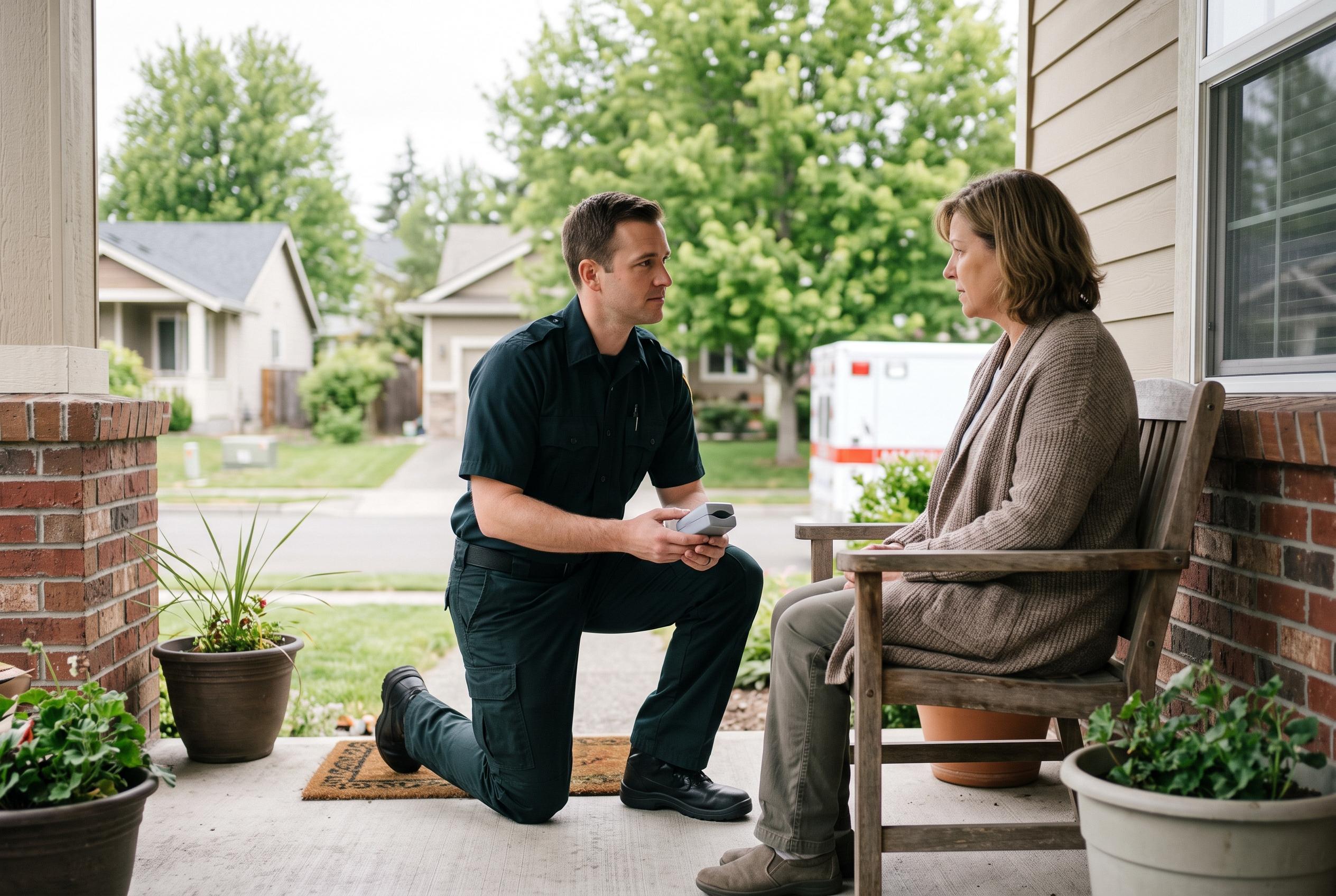

A coroner has urged urgent action after warning that a flaw in national ambulance guidance could allow patients treated for severe hypoglycaemia to be sent home without further assessment.
A coroner has warned that current ambulance guidance for severe hypoglycaemia may leave some patients at risk of being sent home without hospital assessment, following the death of Jane Lawrence, 60, in February 2025. In a prevention of future deaths report published on the Judiciary website, area coroner Sonia Hayes said there is a danger that patients treated under the Joint Royal Colleges Ambulance Liaison Committee, or JRCALC, flowchart may not be directed on to further care once their blood glucose has been restored.
Lawrence, who died in hospital on 14 February 2025, had suffered a severe hypoglycaemic episode on 24 January, when she was found to have altered consciousness. According to the report, a paramedic gave three intravenous glucose boluses over about 24 minutes, followed by complex carbohydrates, in line with JRCALC guidance. She was not taken to hospital at that stage, was given safety-netting advice, then later ate and took her usual medication before going to sleep. She was found unresponsive the next morning and later suffered a catastrophic neurological injury that did not respond to treatment.
Hayes said the concern lies in how the severe hypoglycaemia pathway is structured. Once blood glucose returns to above 4 mmol/L, the flowchart sends clinicians back to the mild section, which does not clearly direct them towards the separate part of the guidance dealing with patients who may need additional care. The coroner said that could be especially risky for people taking sulphonylureas, a class of diabetes medicine linked to a higher chance of repeat low-blood-sugar episodes. She also noted that the flowchart appears to set out different time thresholds for giving intravenous glucose in different sections, which could create confusion in an emergency. JRCALC says its guidance is reviewed on a rolling basis and is used across UK ambulance services as a national clinical resource for paramedics.
The East of England Ambulance Service NHS Trust has already issued a Red Patient Safety Notice on 9 July 2026, warning of the non-conveyance risk and setting out extra considerations to avoid patients being missed, according to the report. Hayes said other ambulance trusts may not be aware of the same discrepancy and urged urgent action to prevent similar deaths. She has asked for a response within 56 days, by 10 September 2026, setting out what steps will be taken and on what timetable. More broadly, the case underlines a long-running safety challenge in ambulance care: research has found that non-conveyance decisions are complex and can carry risk, particularly when guidance is not clear enough to support safe decision-making.
Disclaimer: This content is for informational purposes only and is not intended to be a substitute for professional medical judgment, advice, diagnosis, or treatment.



