

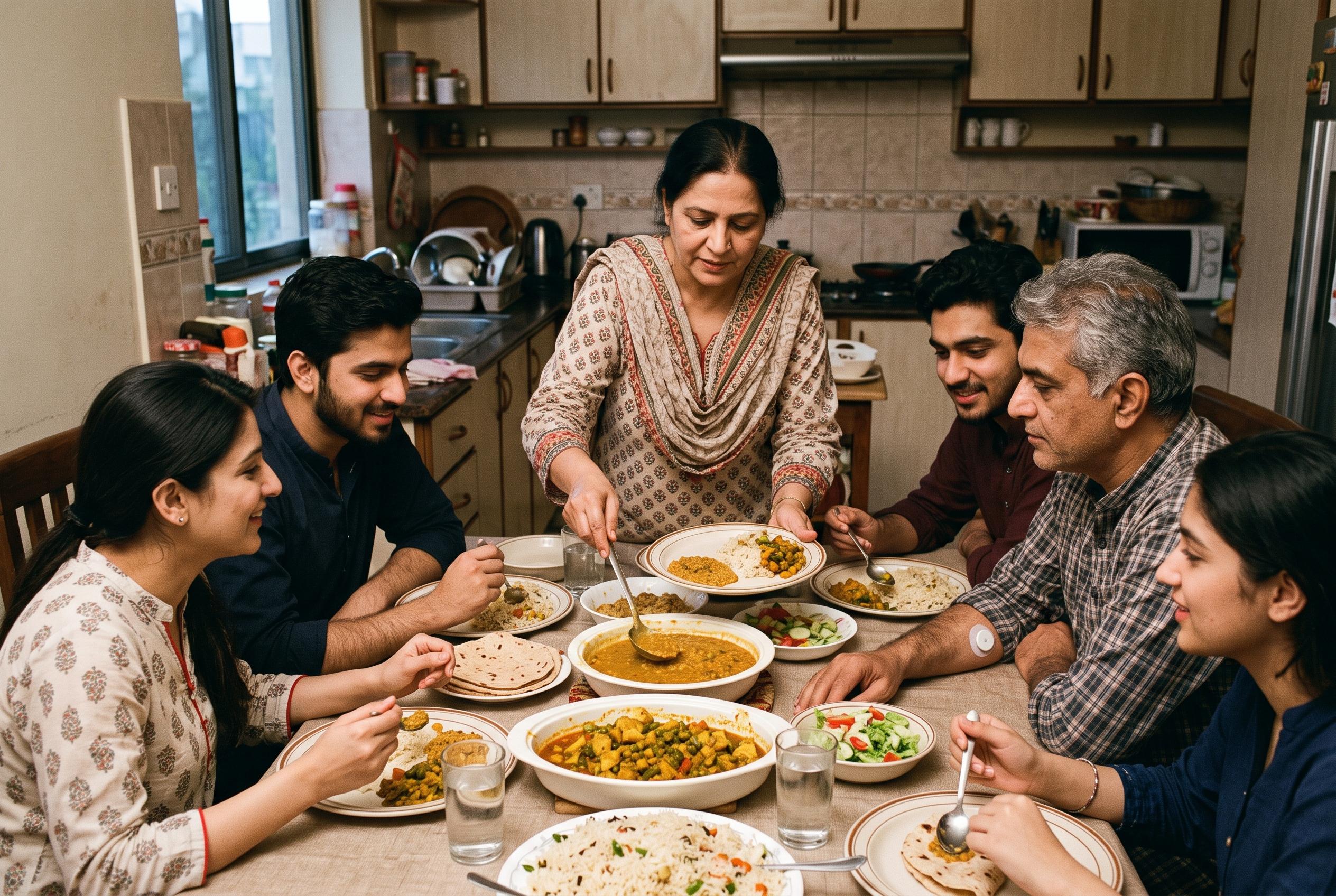

With nearly one in three Pakistani adults already living with diabetes, experts say changing the order and portions of familiar foods could help curb blood sugar spikes and a projected rise to 70 million cases by 2050.
Pakistan is facing one of the world’s most severe diabetes crises, and the scale of the problem now appears to extend well beyond hospitals and clinics into everyday family meals. In a report published by The Nation, Dr Fayaz Shawl said the International Diabetes Federation estimates that 34.5 million Pakistani adults were living with diabetes in 2024, equal to an age-adjusted prevalence of 31.4 per cent, or nearly one in three adults. The same figures suggest around 9.3 million people have not yet been diagnosed, while more than 10 million others have impaired fasting glucose, a warning sign that often comes before diabetes. If prevention does not improve, the burden could rise to roughly 70 million adults by 2050.
That outlook matters because diabetes is not a single-condition problem. It raises the risk of heart attack, stroke, kidney failure, vision loss, nerve injury and amputation, making early action essential. A separate report in The News said the International Diabetes Federation has warned that Pakistan’s diabetes burden may more than double by mid-century, underscoring how quickly the challenge could intensify without stronger prevention. Research published in the journal Diabetes Research and Clinical Practice has also reinforced how widespread the disease and prediabetes have become in Pakistan, adding weight to calls for targeted public health measures.
The practical message in Shawl’s piece is that prevention does not require abandoning familiar Pakistani food. Instead, it begins with changing portions and the order in which foods are eaten. He recommends starting meals with vegetables, such as palak, methi, bhindi, lauki, tinday, karela, gobhi or band gobhi, or with a cucumber salad, then moving on to protein-rich foods like daal, chana, chicken, fish, eggs or lean meat, and finishing with a smaller share of roti or rice. The idea is to slow the rise in blood sugar after a meal, since carbohydrate-heavy staples such as roti, naan and rice are quickly broken down into glucose.
He also points to a few modest adjustments that may help some people, while noting that the evidence remains limited. Small studies suggest that vegetables and protein eaten before carbohydrates can reduce immediate glucose spikes, but that does not make a large serving of rice or bread safe for someone with diabetes. Shawl says a small portion of unsalted almonds and walnuts before a meal may blunt the rise in blood sugar, although he stresses that this observation from continuous glucose monitor use is not the same as controlled research. A small randomised study in Asian Indians with prediabetes found a benefit from almonds eaten before meals, though it did not test the same nut combination.
Other details in the piece are more firmly grounded in food safety than in diabetes management. Shawl writes that cooling cooked rice and reheating it later may slightly reduce its impact on blood sugar because some starch turns into resistant starch, which is digested more slowly. But he also cautions that the effect is modest and does not eliminate carbohydrates. More importantly, cooked rice should be refrigerated promptly, kept cold, reheated thoroughly and eaten soon after, because unsafe storage can create a risk of food poisoning. His broader point is that diabetes management should fit the way Pakistanis already eat, not demand an unrealistic break from it.
Disclaimer: This content is for informational purposes only and is not intended to be a substitute for professional medical judgment, advice, diagnosis, or treatment.



