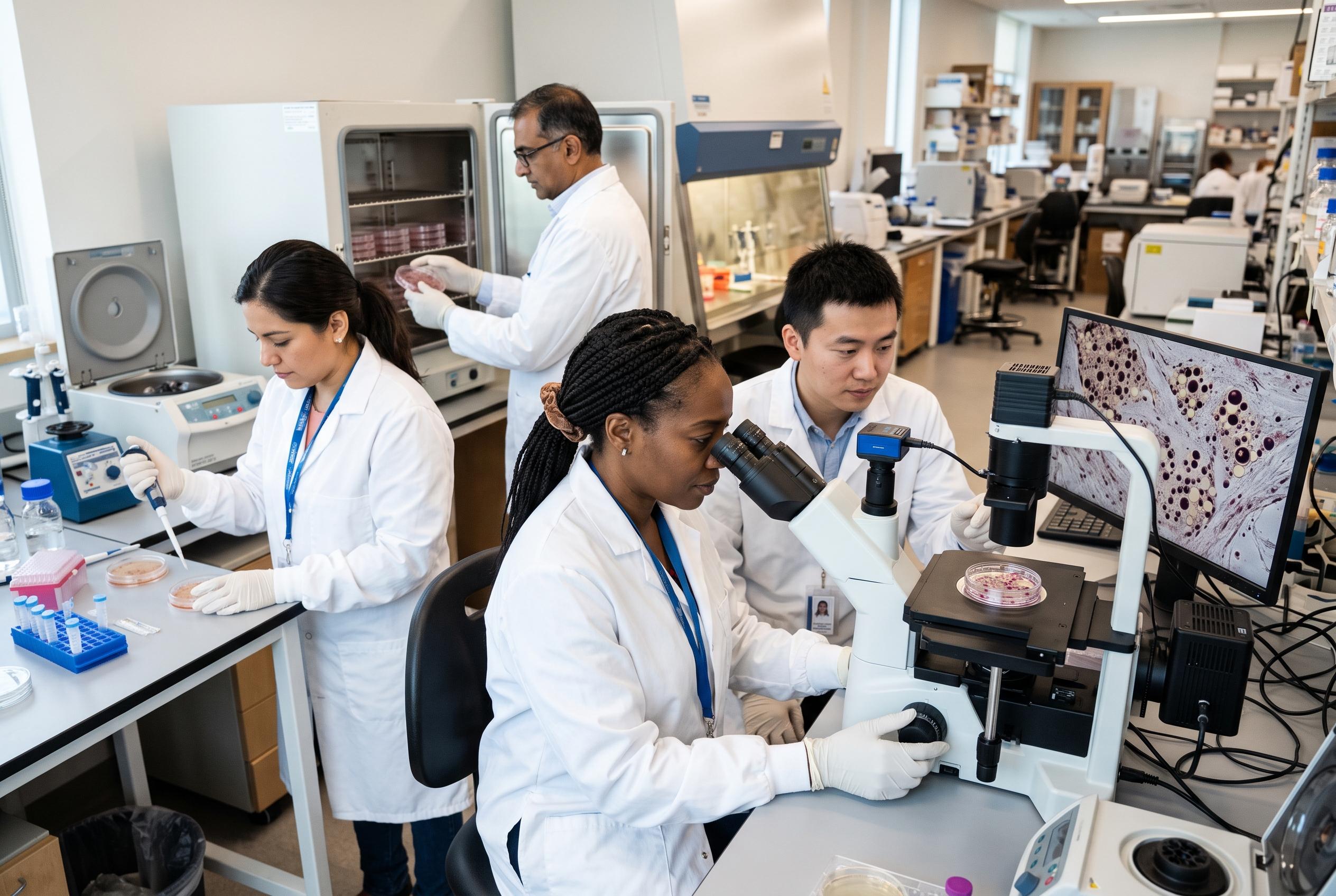

A $3.7 million NIH grant will support research into how genetic variants disrupt fat cells and trigger severe metabolic complications in people with partial lipodystrophy.
Stephen Stone, an assistant professor of paediatrics at WashU Medicine, has received a $3.7 million grant from the National Institute of Diabetes and Digestive and Kidney Diseases to investigate partial lipodystrophy, a rare inherited disorder that alters the way fat is distributed in the body. The condition can lead to severe insulin resistance, difficult-to-control diabetes and elevated cholesterol, according to WashU Medicine.
Stone will work with Elif Oral, a professor in metabolism, endocrinology and diabetes at the University of Michigan, on a project that builds on earlier work through the NIH-funded Rare and Atypical Diabetes Network. In that network, researchers recruited five participants and identified the genetic changes linked to their disease, providing the foundation for the new study.
The next phase will use induced pluripotent stem cells, a laboratory technique that reprogrammes ordinary cells back into a stem-cell-like state. The team plans to use those cells to examine how the genetic variants seen in partial lipodystrophy may affect fat cells and contribute to the metabolic complications associated with the disorder.
Lipodystrophy can take different forms. University of Michigan researchers have described partial lipodystrophy as a condition in which fat is lost from certain areas, often the limbs and buttocks, while it may accumulate elsewhere, including the face, neck or abdomen. In more general forms of the disease, fat tissue can be nearly absent throughout the body. Oral has previously helped advance research into the role of leptin in rare lipodystrophy syndromes, work that contributed to the development and approval of metreleptin as a treatment.
Disclaimer: This content is for informational purposes only and is not intended to be a substitute for professional medical judgment, advice, diagnosis, or treatment.