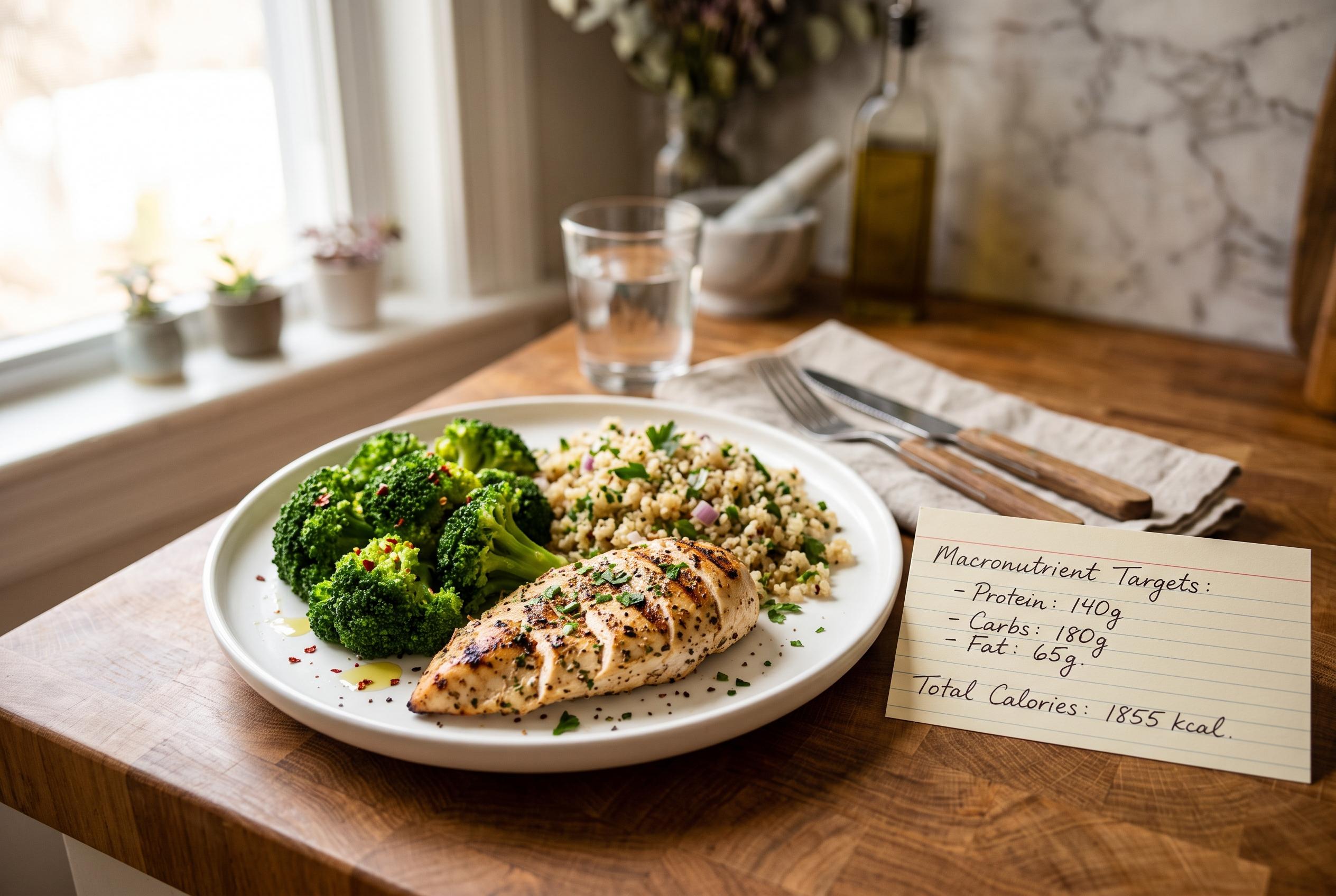

A guide to understanding macronutrients and meal planning that can help you adopt a flexible diet without costly specialised products, emphasising practicality and personalised adjustments.
Changing the way you eat can be expensive if the first thing you do is fill your kitchen with specialist products. Low-carb bread, almond flour and every item labelled “keto” may look like shortcuts, but they can quickly push up the weekly shop without necessarily helping you eat better. A more practical approach is to work out what you are actually aiming for before you start replacing ordinary food with branded alternatives.
That starts with understanding macronutrients: protein, fat and carbohydrates. Healthline explains that counting macros usually begins with estimating your energy needs, often through a Total Daily Energy Expenditure calculation, before setting targets based on activity level and goals. The idea is not that everyone must follow a strict formula, but that having clear numbers can be more useful than a vague instruction to “eat fewer carbs”.
Once you know your target, the next step is to look at the food you already buy. Many everyday staples, including eggs, chicken, tinned fish, cheese and frozen vegetables, already fit neatly into a lower-carb or higher-protein plan without any special label at all. That matters because, as flexible-dieting guides from Healthline note, a diet works best when it is built around realistic meals rather than a long list of rules that require constant reinvention.
Meal planning can help make that process much easier. Instead of starting from scratch, it makes sense to compare a normal week’s meals with the numbers you are trying to hit. You may find that most meals need little or no change, while a few only need a smaller portion or a simple swap. That approach is central to flexible dieting, sometimes called “if it fits your macros”, which focuses on meeting nutrient targets without banning entire food groups.
It can also help to weigh food for a short period. Rice, pasta, cereal and yoghurt are easy to misjudge by eye, and Medical News Today notes that macro tracking often requires some early measuring to get a realistic picture of portion sizes. You do not need to do that forever, but even a brief spell with kitchen scales can make it much easier to see how your usual meals line up with your goals.
The important caveat is that no single way of eating suits everyone. Healthline and Medical News Today both note that macro counting can be useful for some people, but it is not a substitute for medical advice, especially if someone has diabetes, is pregnant, is breastfeeding or takes medication. In those cases, any major change to diet should be discussed with a healthcare professional first. The simplest lesson is also the most useful: work from the meals you already know, change only what needs changing and avoid paying extra for ingredients you do not actually need.
Disclaimer: This content is for informational purposes only and is not intended to be a substitute for professional medical judgment, advice, diagnosis, or treatment.