

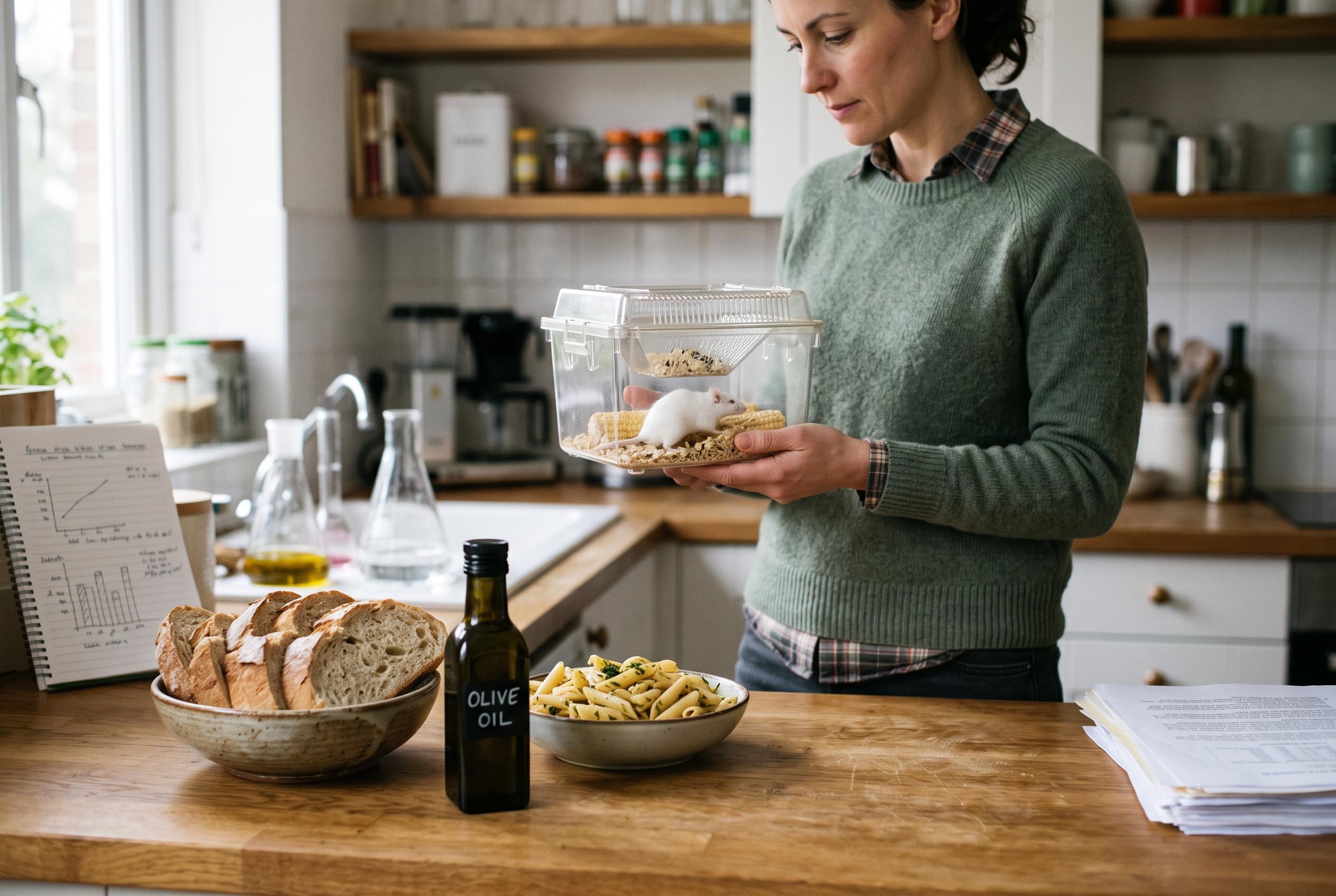

Giving mice olive oil 15 minutes before glucose temporarily reduced their early blood-sugar surge, with researchers linking the effect to slower stomach emptying and hormonal and vagus-nerve signalling.
A new study from Kyoto University suggests that drinking olive oil before carbohydrates may blunt the early surge in blood sugar, at least in mice, adding to evidence that the sequence in which foods are eaten can affect glucose control. The paper, published in Diabetes on October 8, found that animals given olive oil 15 minutes before a glucose solution had a smaller rise in blood sugar than those given glucose first or water before the sweet drink.
According to the study as reported in PubMed and covered by ScienceAlert and Diabetes.co.uk, the effect was strongest in the first 15 to 30 minutes after glucose intake. By about 60 minutes, blood sugar levels between the groups had become more similar, indicating that the benefit was temporary rather than a lasting change in overall glucose handling.
The researchers linked the response to slower stomach emptying, which delayed the movement of food into the small intestine, where glucose absorption begins. They also recorded higher levels of several hormones, including glucagon, glucose-dependent insulinotropic polypeptide, or GIP, and glucagon-like peptide-1, known as GLP-1. GLP-1 helps boost insulin release and reduce appetite, and medicines that mimic its action are already used in diabetes and obesity treatment.
To test the mechanism, the team blocked the glucagon and GLP-1 pathways separately and together. When only one pathway was interrupted, olive oil still partly dampened the glucose rise, but when both were disrupted, the effect weakened or disappeared. The scientists then examined the vagus nerve, which carries signals between the digestive tract and the brain. When that nerve signalling was altered, the protective effect of the oil was lost even though the hormone changes remained, suggesting that both hormonal and neural pathways were involved.
Daisuke Yabe, an endocrinologist at Kyoto University, said the findings indicate that the order in which nutrients reach the intestine can trigger a co-ordinated hormonal and neural response that changes how quickly glucose moves from the stomach to the gut. Even so, the authors did not present the work as a treatment for diabetes, and the evidence remains limited to animal experiments. The result may help explain why meal order can influence post-meal blood sugar, but it is not proof that olive oil alone can control glucose levels in people.
Disclaimer: This content is for informational purposes only and is not intended to be a substitute for professional medical judgment, advice, diagnosis, or treatment.



