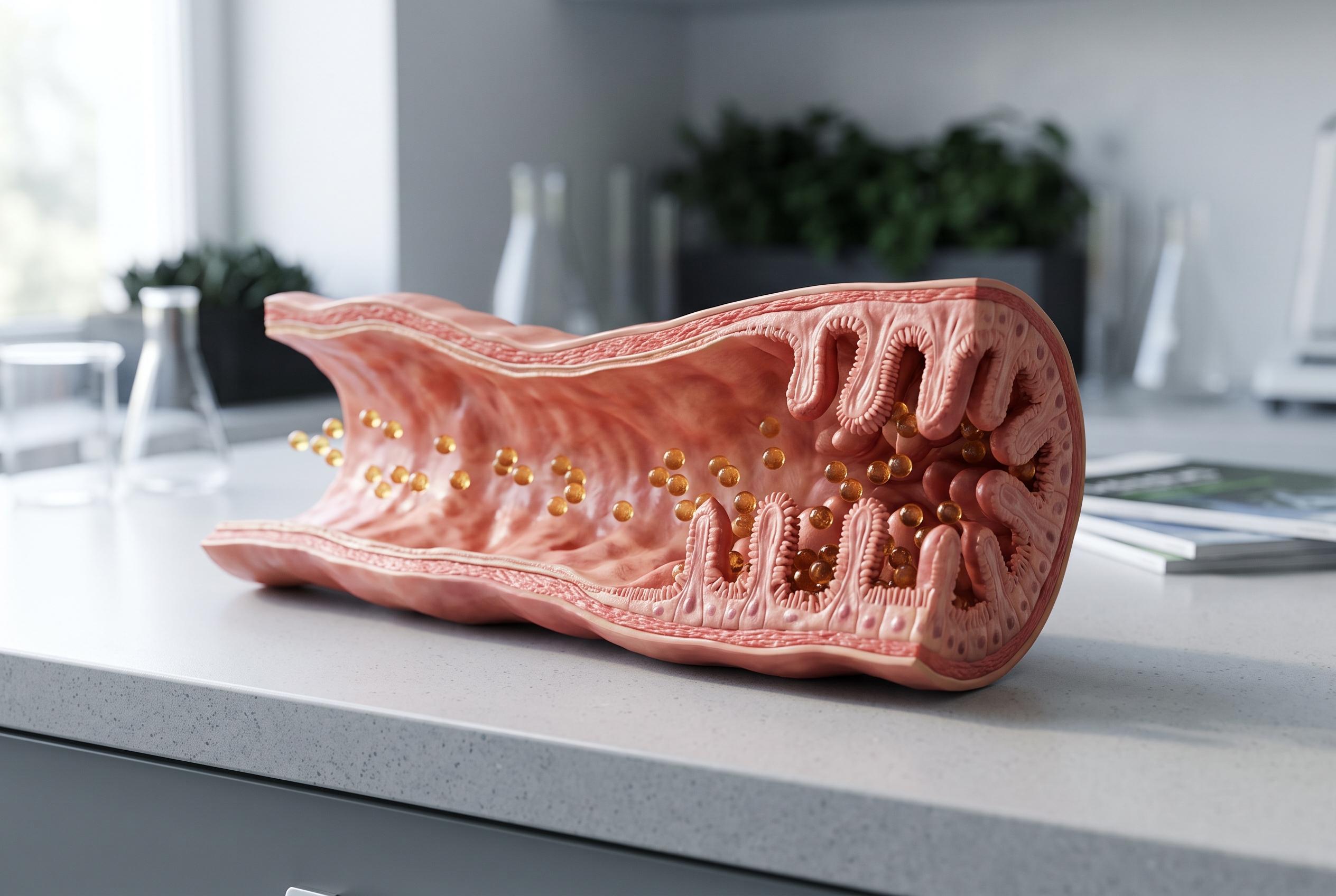

A groundbreaking study reveals that metformin, a widely used drug for type 2 diabetes, may work mainly by turning the gut into a sugar sink, challenging long-held beliefs about its mechanism.
Metformin, one of the most commonly prescribed drugs in the U.S. for type 2 diabetes, may work less like a liver-targeting medicine and more like a gut-level glucose trap, according to new research published in Nature Metabolism. The findings add a fresh layer to a long-running scientific puzzle: why a drug discovered generations ago remains so effective despite years of uncertainty about its precise mechanism.
For much of the modern era, researchers focused on the liver, where metformin appeared to suppress glucose production. But evidence pointing to the intestine never fully disappeared. A 2018 review in Nature Reviews Endocrinology described how the drug changes gut bacteria and bile acid levels, while earlier work in Diabetes Care found that metformin builds up in the intestine at far higher concentrations than in blood, suggesting the gut may be central to its glucose-lowering action.
The new study, led by Northwestern University researcher Navdeep Chandel, links those observations to mitochondria, the cell structures that generate energy. In mice, the team altered a key respiratory enzyme so that metformin could no longer block the same pathway in the gut. When that happened, the drug’s blood sugar-lowering effect disappeared. The researchers concluded that metformin pushes intestinal cells to shift into a different energy mode that consumes far more glucose, effectively turning the gut into a sink for excess sugar.
That idea fits with other recent work. Research in Scientific Reports found that metformin can increase glucose uptake and glycolysis in intestinal cells while also raising levels of GDF15, a hormone linked to appetite and energy balance. A separate review in Diabetes, Obesity and Metabolism also noted that the drug appears to boost intestinal glucose use, lactate production and GLP-1, a hormone that helps control blood sugar. Together, the studies suggest metformin’s benefits may come from several overlapping effects in the digestive tract, not just one pathway.
The mechanism may also help explain why metformin has drawn attention beyond diabetes care, including in discussions of aging and metabolism. Chandel told Scientific American that the broader lesson is that mitochondrial inhibition can be useful if it happens in the right cells for the right amount of time. For patients, the practical message is simpler: a medicine long thought to act mainly through the liver may, in large part, be working through the gut.
Disclaimer: This content is for informational purposes only and is not intended to be a substitute for professional medical judgment, advice, diagnosis, or treatment.