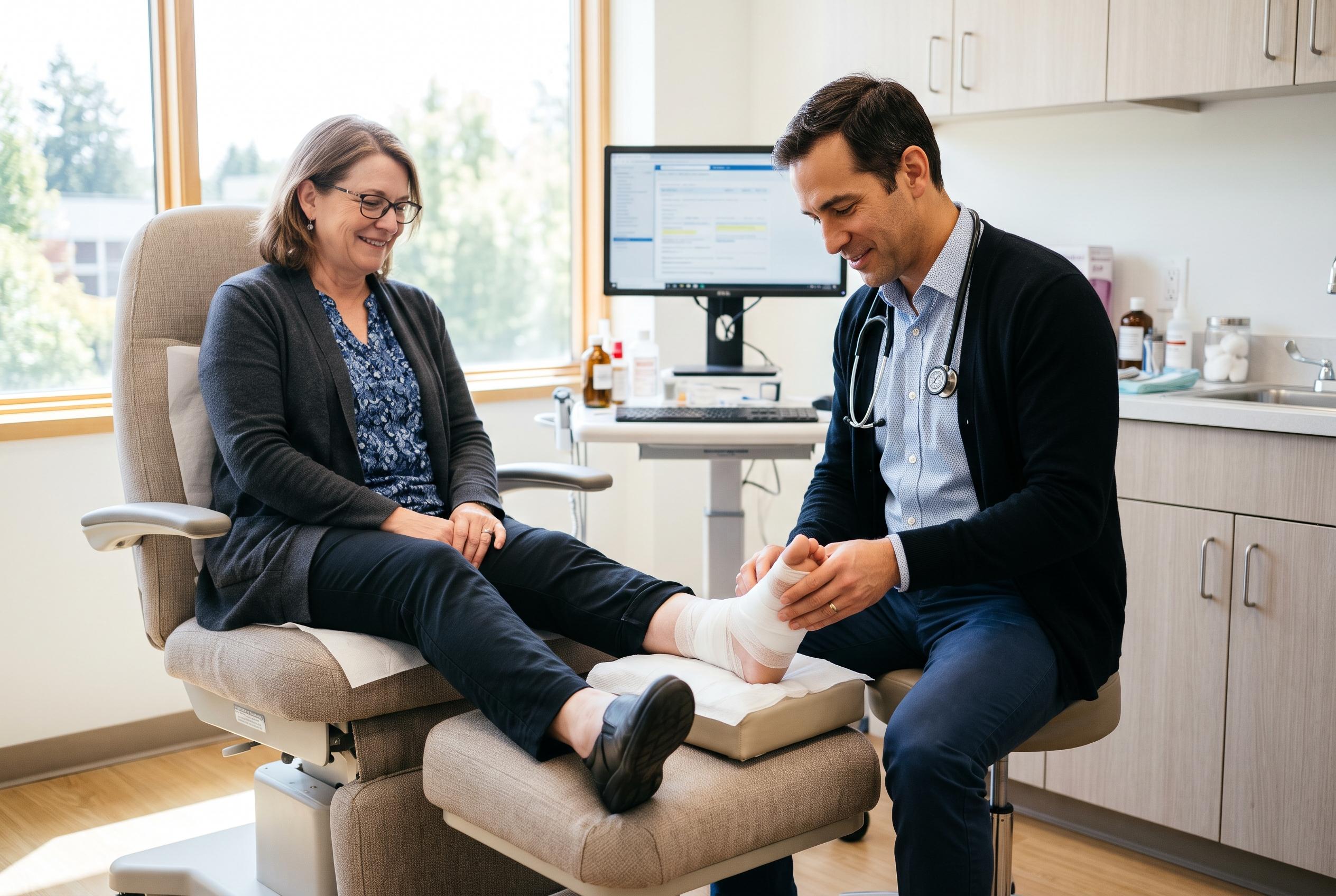

A review of seven small studies found encouraging healing outcomes from methylene blue combined with red light, while researchers cautioned that larger controlled trials are still needed.
Methylene blue photodynamic therapy may offer a useful option for some of the hardest-to-treat diabetic foot ulcers and other chronic wounds, according to a review published in JAAD Reviews. The analysis found that the treatment, which combines methylene blue with red-light exposure, was associated with encouraging healing outcomes in a small body of clinical research, including some cases of complete closure of long-standing wounds.
Michelle Pavlis, associate professor of dermatology at Duke University, told Healio that interest in methylene blue has expanded in recent years because of its popularity in the wellness market, but that many of those wider claims remain unproven. She said the team wanted to examine a much narrower question: whether methylene blue, used as part of photodynamic therapy, might help with cutaneous wound healing. In the studies she and her co-authors reviewed, wound care emerged as the area with the strongest signal.
The evidence base remains limited. The review identified only seven studies involving 102 patients, with four focused on diabetic foot ulcers and three on chronic infected ulcers. Most were small and non-randomised, and treatment approaches varied widely. Across the studies, methylene blue was typically used at a concentration of 1%, although two trials used 0.01%. Light sources ranged from light-emitting diodes to low-power diode lasers, generally in the 635nm to 660nm range, and the number of sessions varied from study to study.
Even with those limits, the results were notable. The review reported complete healing in a case series of two superinfected lower-extremity ulcers, a prospective series of five infected ulcers and a non-randomised controlled trial involving 57 patients with grade 3 diabetic foot ulcers. In the other diabetic ulcer studies, wound area fell by between 36% and 75%. In the one study that compared methylene blue therapy with standard care, the treated group had a larger reduction in wound area after 22 days, at 38.6% versus 10.8%. No serious adverse events were reported, although some patients experienced temporary blue staining of the skin or urine.
The findings add to earlier reports suggesting the approach may have antimicrobial and wound-healing effects. A 2022 case report in Photodiagnosis and Photodynamic Therapy described substantial wound-size reductions and fewer signs of infection in patients with complex chronic wounds treated with methylene blue and 660nm light. More recently, a 2026 randomised, double-blind clinical trial reported improved wound quality and tissue repair in patients receiving standard care plus antimicrobial photodynamic therapy. Pavlis said the latest review was encouraging, but she also stressed that the field still lacks the larger, better-controlled trials needed to determine how the treatment compares with existing wound-care options, and which protocol, if any, works best.
Disclaimer: This content is for informational purposes only and is not intended to be a substitute for professional medical judgment, advice, diagnosis, or treatment.