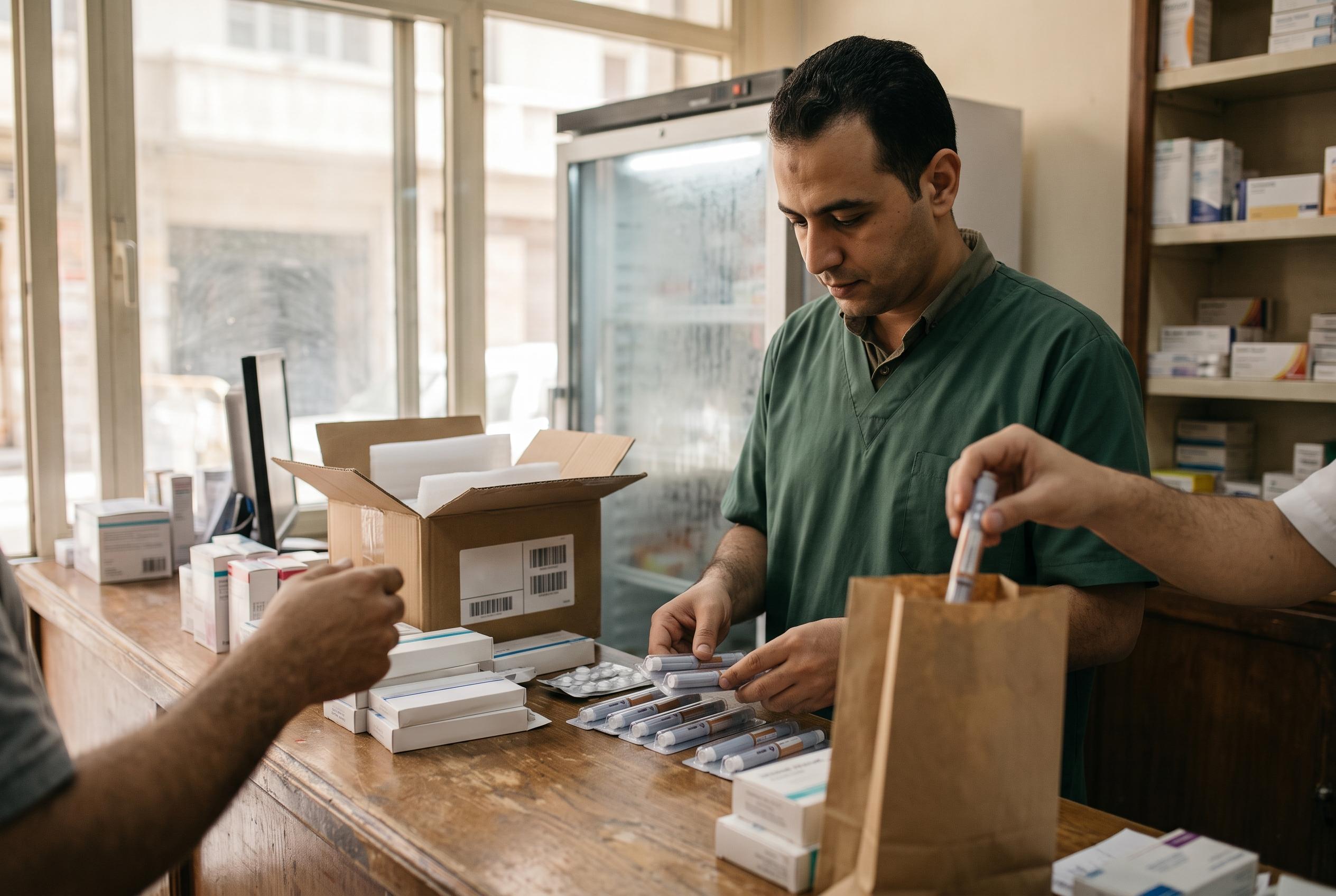

The Egyptian Drug Authority has confirmed that insulin remains widely available across the local market, dispelling rumours of shortages and emphasising ongoing imports and production even as it boosts domestic manufacturing efforts.
The Egyptian Drug Authority has said insulin is widely available across the local market, with supplies steady across different formulations and strengths. In a statement carried by Cairo24, the authority said it is continuing routine monitoring of stocks and supply flows with manufacturers and importers to keep patient needs covered and preserve strategic reserves.
The authority said the Egyptian market offers insulin in vials, cartridges and pre-filled pens, and gave detailed stock figures to underline that point. For mixed rapid- and intermediate-acting insulin, it said distributors held more than 2.14 million imported packs, against monthly use of about 600,000, while new imports of about 705,000 packs were expected in September. Local factories are also said to be producing 1 million packs a month, supported by raw materials for around five more months of output.
It added that mixed insulin cartridges, short-acting insulin, intermediate-acting insulin and their cartridge forms were all available in quantities above current consumption rates. For long-acting insulin, the authority said monthly use is about 185,000 packs, while stocks at distributors exceed 630,000, with another 140,000 due in September. It also said stocks of mixed ultra-long and rapid-acting insulin and ultra-long-acting insulin were sufficient to meet domestic demand.
The EDA also sought to dismiss concerns that imports were being halted. According to El Watan, the authority said there is no decision to stop importing any type of insulin, and that greater reliance on local production for government procurement reflects a policy to strengthen domestic manufacturing where alternatives already exist. The authority said patients should consult doctors or pharmacists about equivalent products with the same active ingredient, and urged the public not to rely on rumours about shortages.
Disclaimer: This content is for informational purposes only and is not intended to be a substitute for professional medical judgment, advice, diagnosis, or treatment.