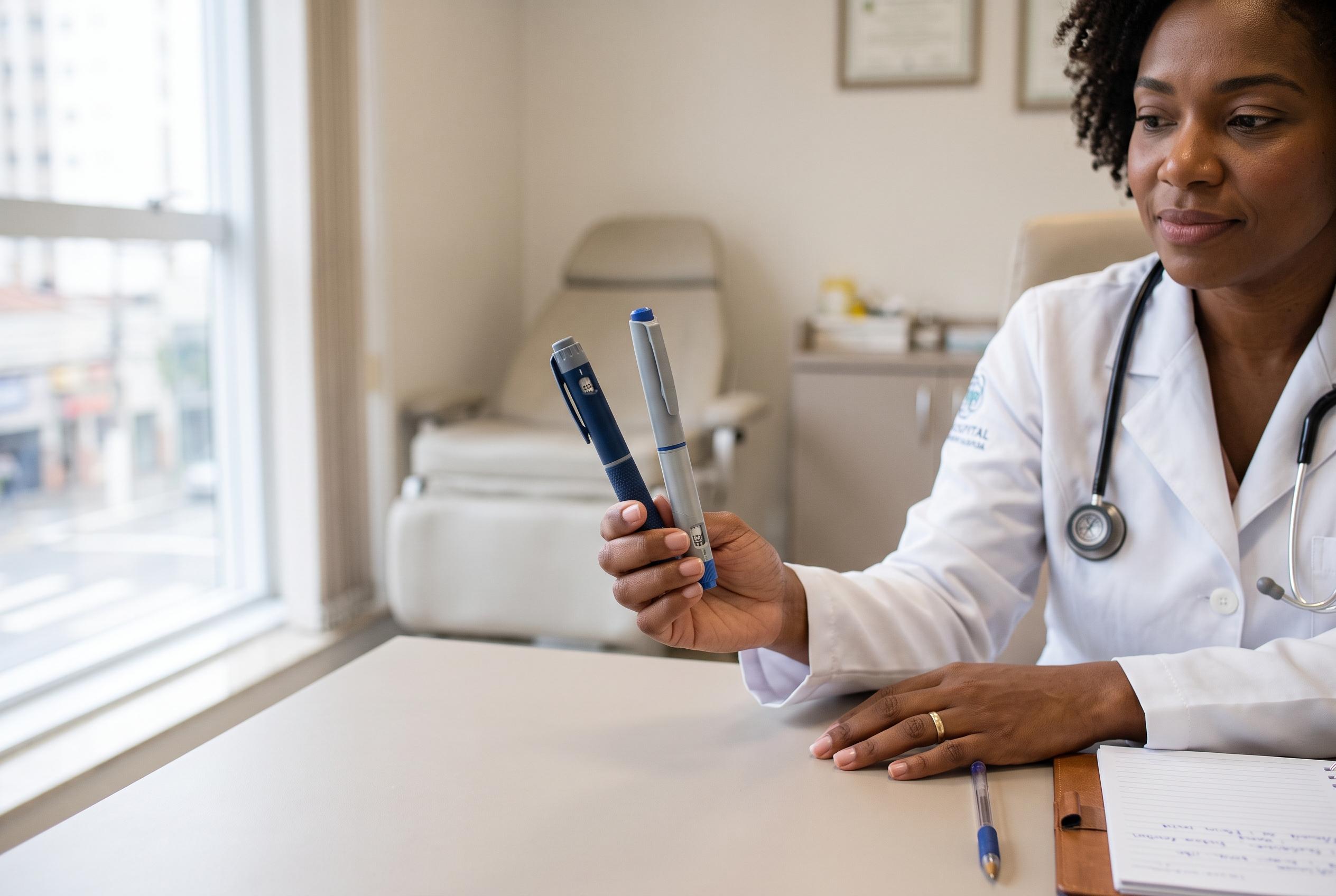

As the use of semaglutide and tirzepatide for weight management gains global attention, Brazilian authorities stress that these drugs are not interchangeable, urging careful medical assessment amid rising demand and concerns over safety and misuse.
Semaglutide and tirzepatide have turned weight-loss injections into one of the most discussed corners of modern medicine, but Brazilian regulators and doctors continue to stress that these drugs are not interchangeable. According to a report by Campo Grande News, the latest conversation around so-called slimming pens has been sharpened by growing interest in products such as Ozempic, Wegovy and Mounjaro, alongside newer or experimental names that should not be treated as equivalent. An individual assessment remains essential, because the purpose, dose and safety profile of each medicine depend on the patient’s condition.
The distinction begins with the active ingredient and the approved use. Anvisa says Wegovy, which contains semaglutide, is authorised as an add-on to reduced-calorie diet and exercise for adults with obesity, or for overweight adults with at least one weight-related condition. The regulator later expanded semaglutide’s role in 2026, approving Wegovy to cut the risk of major cardiovascular events in adults with established heart disease and excess weight, while Ozempic gained an indication for people with type 2 diabetes and chronic kidney disease. Mounjaro, which contains tirzepatide and acts on GIP and GLP-1 receptors, was first registered for glucose control in type 2 diabetes and then received approval in 2025 for chronic weight management in selected adults.
Other medicines in the same broad family are aimed primarily at diabetes, even if some patients may lose weight while using them. According to Anvisa and other medical sources, Victoza contains liraglutide, Trulicity contains dulaglutide and Byetta contains exenatide, all of which are used for type 2 diabetes rather than as first-line obesity treatments. Saxenda, also based on liraglutide, is specifically indicated for weight control in eligible patients. Ozivy, a newer semaglutide product, was approved in Brazil in 2026 for adults with type 2 diabetes, not simply as a slimming drug. That is why specialists warn against choosing a pen by reputation alone or by weight-loss stories shared online.
The caution is even stronger when it comes to experimental or irregular products. Campo Grande News noted that retatrutide is still under study and has not been approved for use in any country, while Anvisa warned in July 2026 that internet sales using that name offer no guarantee of origin, concentration, safety or effectiveness. The regulator has also moved to tighten control over GLP-1 medicines, requiring retained prescriptions because of concerns over misuse and adverse events, including acute pancreatitis. In practice, doctors say the right choice depends on the patient’s full clinical picture, not just on the promise of rapid weight loss.
Disclaimer: This content is for informational purposes only and is not intended to be a substitute for professional medical judgment, advice, diagnosis, or treatment.