

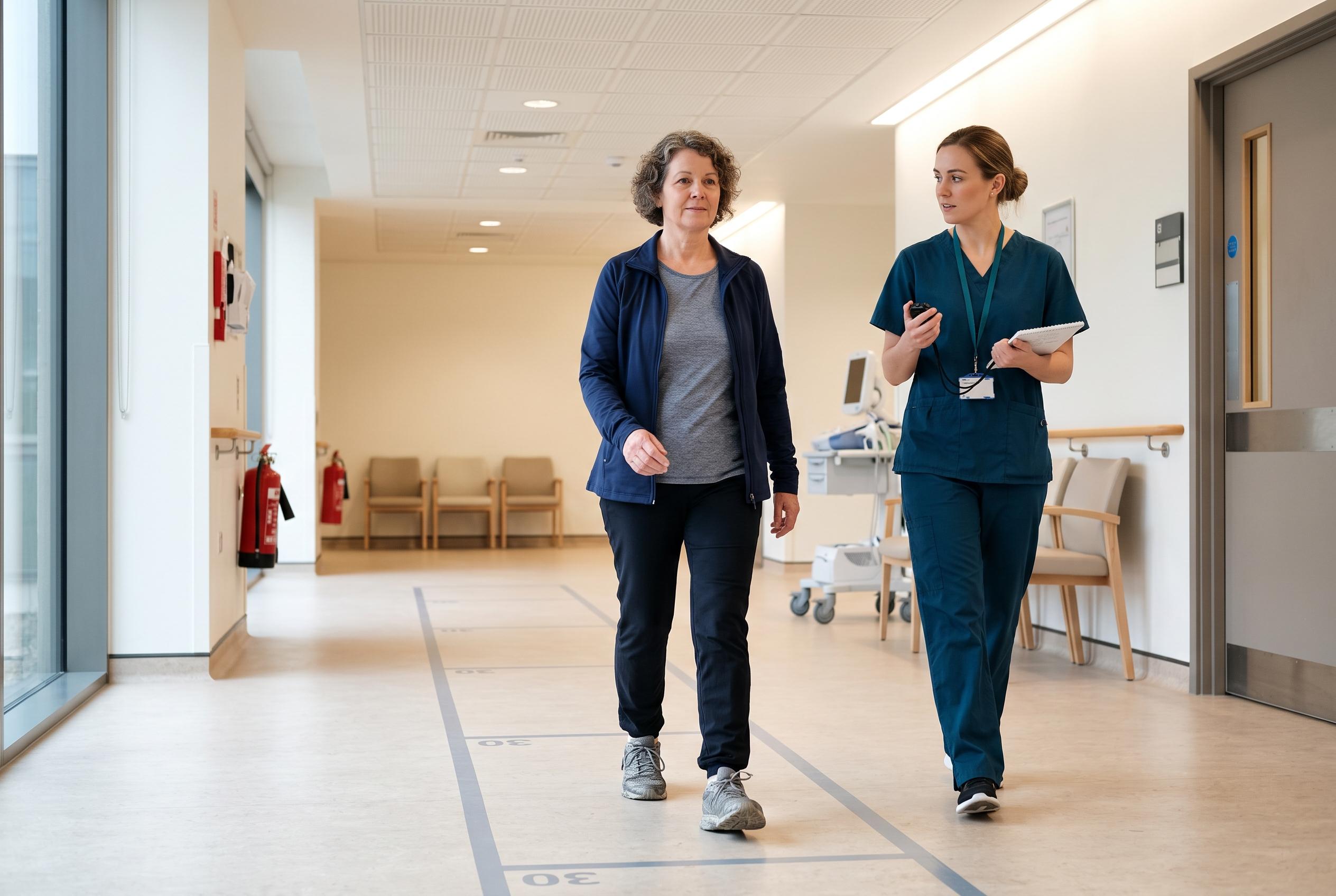

A two- to five-minute corridor test closely matched accelerometer readings and was considered more practical than treadmill testing in a small UK study.
A simple timed corridor walk may offer a practical way for UK diabetes clinics to gauge walking speed in people with type 2 diabetes, according to research published in Family Practice. The study found that a stopwatch-based test produced results that closely matched those from an accelerometer, while treadmill testing took far longer and was judged unsuitable for routine use.
Richard Baskerville and colleagues at Oxford Brookes University studied 30 adults with type 2 diabetes who attended a general practice over a two-month period in 2019. The participants, who had a mean age of 59.6 years and were mostly men, completed three assessments: a 28-metre timed walk through the surgery corridor, a measurement using an accelerometer fixed to the lower back, and a three-minute treadmill walk at a comfortable pace.
At baseline, average walking speed was 1.12 metres per second with the timed walk and 1.15 metres per second with the accelerometer, while the treadmill recorded 1.01 metres per second. The researchers reported good agreement between the timed walk and the wearable device, but much wider variation when the timed walk was compared with treadmill results. After six months, speeds were broadly unchanged across all three methods among the patients who returned for follow-up.
The study also found that the corridor walk was far easier to fit into everyday practice. Staff needed about two to five minutes per patient for the timed test, compared with roughly 10 to 20 minutes for treadmill assessment, and both patients and staff described the treadmill as impractical for routine care. The authors said the findings could help change diabetes clinic practice, adding that the timed walk caused less disruption to patient flow. The work was small, single-centre and excluded people with severe mobility or balance problems, so its results may not apply to all patients, but it adds to a growing body of evidence that walking speed carries clinical value in diabetes. Other recent studies, including UK Biobank analyses, have linked slower walking pace and less active walking patterns with a higher risk of developing type 2 diabetes, underlining why a quick, reliable measure may be useful in both prevention and ongoing care.
Disclaimer: This content is for informational purposes only and is not intended to be a substitute for professional medical judgment, advice, diagnosis, or treatment.



