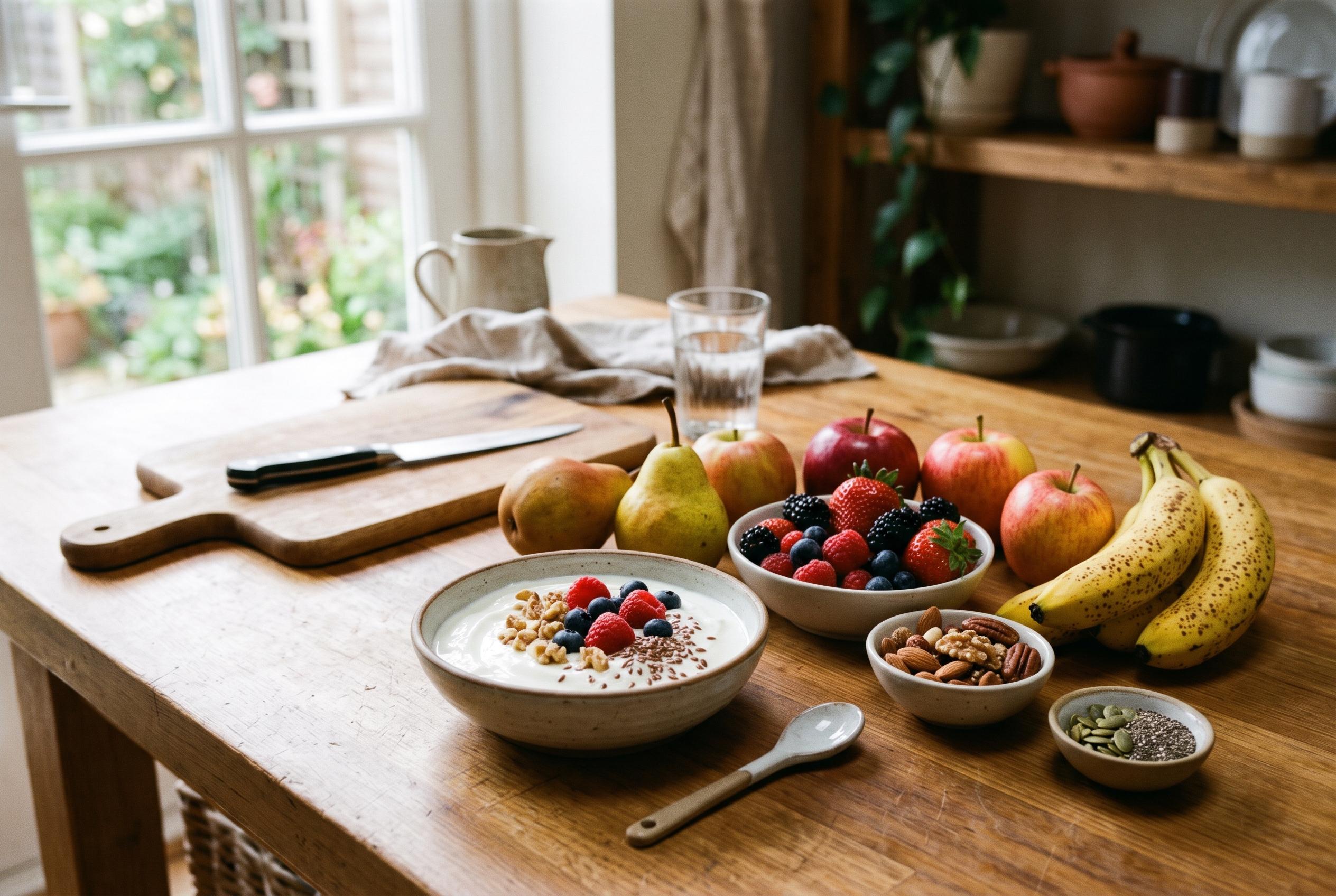

Berries, bananas, pears and apples need not be off the menu: pairing sensible portions with protein, healthy fats or extra fibre may help support fullness and a steadier glucose response.
Endocrinologists do not treat fruit as off-limits for people trying to manage blood sugar. The key, according to the Greek health site Pelop and supporting nutrition guidance from Healthline, is to focus less on sweetness alone and more on fibre, portion size and what fruit is eaten with. That combination can make a meaningful difference to satiety and the body’s glucose response.
Berries are a frequent choice because they pack plenty of fibre and antioxidants while containing relatively little digestible carbohydrate. Healthline notes that berries are also linked with better fullness, which helps explain why endocrinologist Ruchi Mathur often reaches for a small handful and pairs it with yoghurt. That combination adds protein, which can slow the rise in blood sugar after a meal or snack. Frozen berries, the article notes, are a practical stand-in when fresh fruit is not available.
Bananas also make the list, though their effect on blood sugar depends partly on ripeness and portion size. Healthline says bananas supply fibre, potassium and vitamin B6, but they also contain enough carbohydrate to raise glucose more than protein or fat would. For that reason, endocrinologist Isabel Casimiro prefers to eat them with nuts or peanut butter. In the article, she describes a banana with a handful of roasted peanuts as a handy option when she expects to be at her desk for some time.
Pears are another sensible choice for people looking for steadier energy. They contain fibre and polyphenols, plant compounds that are being studied for their role in metabolic health. Silvana Obici, another endocrinologist cited by Pelop, points out that pears can help promote fullness because of their fibre content. She suggests serving a small pear with yoghurt, cheese, nuts or almond butter, or alongside a meal that includes lean protein.
Apples round out the list, largely because of their soluble fibre, especially pectin. That fibre can slow digestion, while apples’ polyphenols are also thought to support metabolic health. Geetika Arora prefers them with peanut butter, almond butter, cheese, plain yoghurt or cottage cheese, and sometimes with oats and chia seeds. The broader message from both Pelop and the nutrition evidence is straightforward: whole fruit is generally preferable to juice, and fruit works best for blood sugar when it is eaten in sensible portions and combined with protein, healthy fats or extra fibre. Even so, there is no single fruit that guarantees a stable reading for everyone. People with diabetes, or those taking medicine that affects glucose, still need to adjust portion sizes to their own needs with advice from a doctor or dietitian.
Disclaimer: This content is for informational purposes only and is not intended to be a substitute for professional medical judgment, advice, diagnosis, or treatment.