

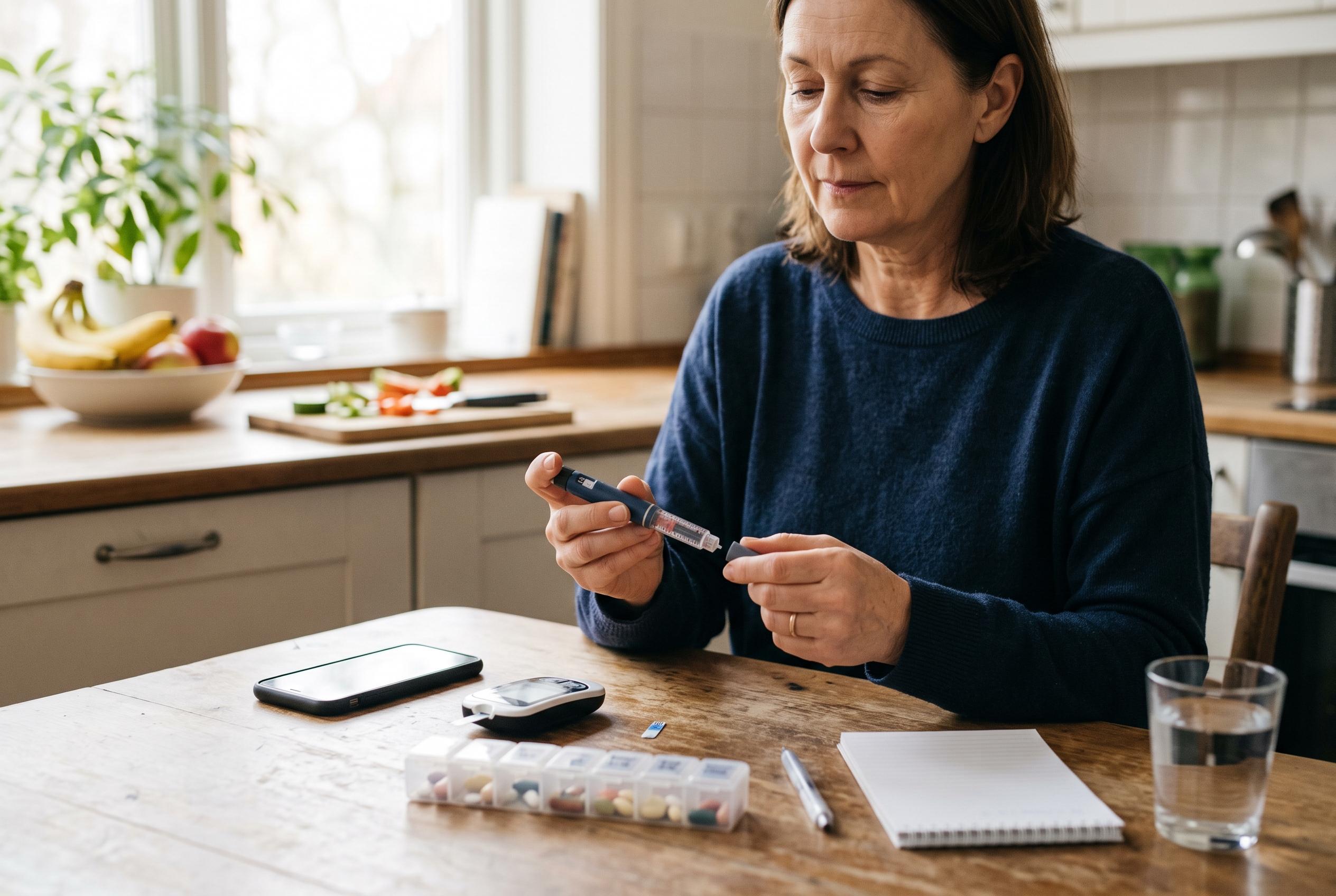

A new study indicates that discontinuing GLP-1 receptor agonists can diminish their heart-protective effects, highlighting the importance of ongoing treatment for patients with type 2 diabetes.
A large study from Washington University School of Medicine in St. Louis has found that the heart-protective effect linked to GLP-1 medicines may fade when treatment is stopped, adding to evidence that these drugs work best as part of ongoing care rather than as a short course.
The research, published in BMJ Medicine, followed more than 333,000 US veterans with type 2 diabetes for three years and compared people prescribed GLP-1 drugs with patients taking sulfonylureas, another class of diabetes medicine. Those who stayed on GLP-1 treatment throughout the study had an 18% lower risk of major cardiovascular events, including heart attack, stroke and death, than people on sulfonylureas. By contrast, people who interrupted treatment and later restarted it appeared to lose some of that protection.
The risk rose the longer people remained off therapy. After a year without GLP-1 medication, cardiovascular risk was 14% higher than among continuous users, and after two years the increase reached 22%. According to the researchers, even a six-month gap was associated with a measurable weakening of benefit. Ziyad Al-Aly, the senior author and a clinical epidemiologist at WashU Medicine, said the pattern suggested “metabolic whiplash” that could be harmful to heart health.
The findings fit with earlier work showing that GLP-1 receptor agonists do more than lower blood sugar. A review in Nature Reviews Cardiology described how they can reduce body weight, improve blood sugar control, lower blood pressure, ease post-meal fat levels and reduce inflammation, all of which may help explain their cardiovascular benefits. Other major trials have also found heart benefits from semaglutide, including the SELECT trial, which showed a 20% reduction in cardiovascular death, heart attack and stroke in adults with overweight or obesity who did not have diabetes, and earlier JAMA findings in people with established cardiovascular disease.
The newer BMJ Medicine study also reinforces a practical reality: many people do not stay on GLP-1 medicines. About 26% of users stopped treatment during the study, and roughly 23% had a gap of at least six months before restarting. Side effects such as nausea, vomiting and diarrhoea, along with cost, shortages and changes in weight-loss goals, can all lead people to stop. The research suggests that when these drugs are prescribed for long-term metabolic disease, stopping and starting may come at a cardiovascular price.
The study does not prove that every person who stops a GLP-1 medicine will have a heart event, and the population was limited to veterans with type 2 diabetes. Still, the overall message is clear: for patients who benefit from these medicines, continuity may matter as much as the choice of drug itself.
Disclaimer: This content is for informational purposes only and is not intended to be a substitute for professional medical judgment, advice, diagnosis, or treatment.



