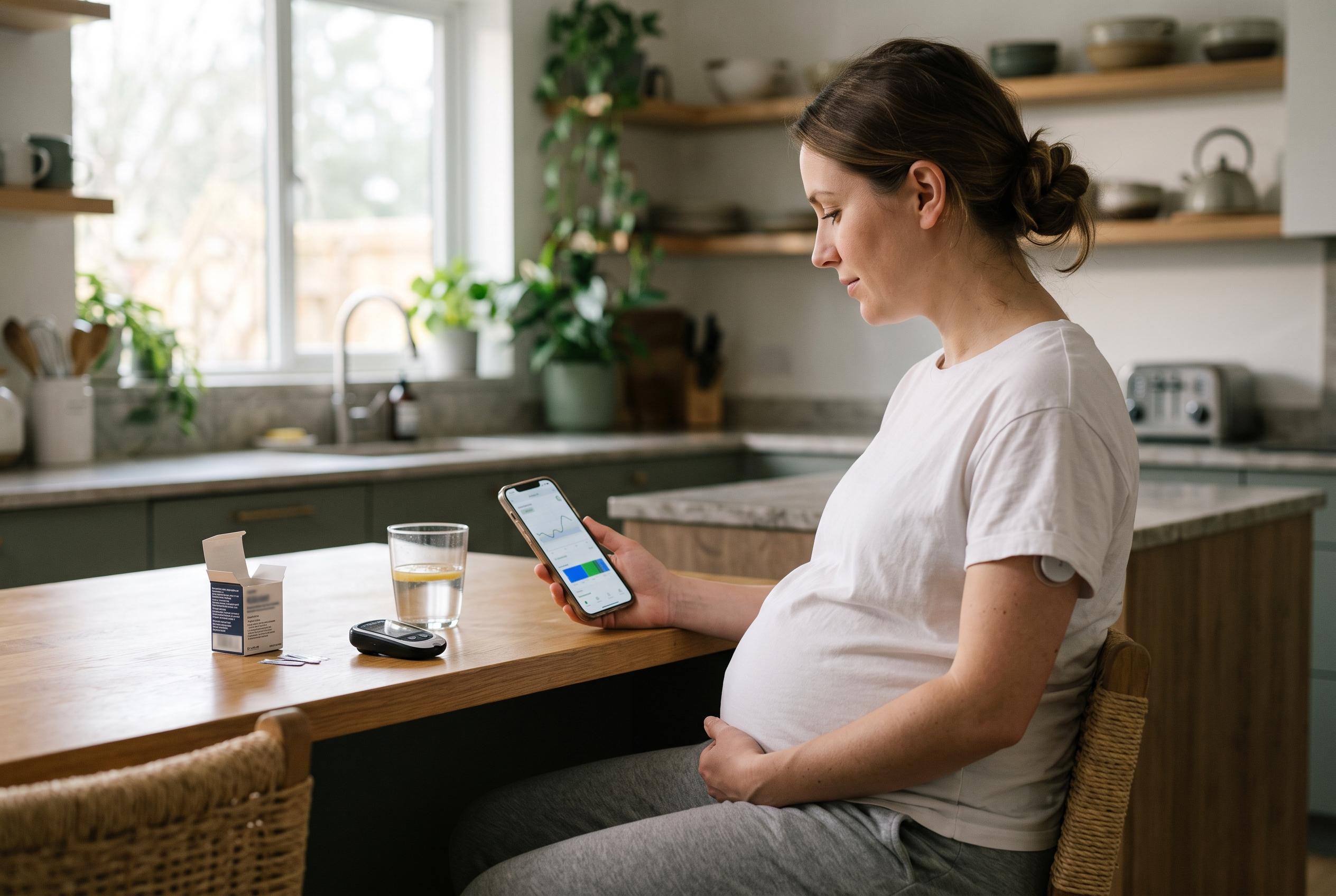

Emerging studies underscore the potential and pitfalls of continuous glucose monitors in gestational diabetes, revealing their ability to detect patterns missed by finger-pricks but also highlighting instances of divergence that could influence treatment decisions. Experts call for cautious interpretation, especially when readings fall outside expected ranges, to optimise maternal and neonatal outcomes.
Continuous glucose monitors are becoming harder to ignore in gestational diabetes care, not because they always match a finger-prick test, but because they reveal patterns that spot checks miss. The pregnancy studies behind that growing use also carry a warning: when readings stray low, or simply look lower than expected, some sensors can diverge enough from capillary blood glucose to matter for treatment decisions.
That matters more in pregnancy than in most other settings because glucose targets are tight and small differences can push a result from reassuring to concerning. The evidence base is still relatively modest and often mixes gestational, type 1 and type 2 diabetes, but the studies point in the same general direction: CGM can be clinically useful, yet the numbers are not interchangeable with a finger-prick result.
One of the most reassuring papers remains a 2018 multicentre study of the FreeStyle Libre system in 74 pregnant participants across 13 sites in the UK and Austria. That group included 39 people with gestational diabetes, 24 with type 1 diabetes and 11 with type 2 diabetes, and two-thirds were using insulin. The researchers found an overall mean absolute relative difference, or average percentage gap from self-monitored blood glucose, of 11.8%. They also reported that 88.1% of results fell into the most accurate zone of the Consensus Error Grid and 99.8% landed in zones considered clinically acceptable. Questionnaires showed high satisfaction, and the authors reported no unanticipated device-related adverse events.
Later studies, however, painted a less tidy picture for Libre-type systems in gestational diabetes alone. At Mount Sinai West in New York, investigators collected 1,604 paired readings over 14 days from 41 patients using the FreeStyle Libre 14-day system and standard capillary testing. The two methods still showed clinical agreement overall, with 99.8% of readings in the Parkes grid’s acceptable zones, but the sensor values trended lower: mean glucose was 102.0 mg/dL on blood glucose monitoring and 89.4 mg/dL on the intermittently scanned CGM. The authors said clinicians should be aware of the possible implications of that downward bias in a pregnancy setting where targets are narrow.
A head-to-head study from the All India Institute of Medical Sciences in New Delhi sharpened that point further. In 42 women with hyperglycaemia in pregnancy, researchers compared a blinded FreeStyle Libre Pro sensor and a blinded Medtronic iPro2 sensor against a Contour Plus capillary meter. The iPro2 performed better overall, with an 8.0% mean absolute relative difference against 19.0% for the Libre Pro. Yet both systems became less precise in the hypoglycaemic range, where the average gap rose to 18.0% for iPro2 and 16.8% for Libre Pro. On Bland-Altman analysis, the Libre Pro underestimated glucose by 1.09 mmol/L on average, while the iPro2 was almost level with the reference. That does not mean every low CGM reading is wrong, but it does show why an unexpectedly low sensor value should not be treated as beyond question.
Another 2023 study, this time from Hospital de Braga in Portugal, offered a more encouraging real-world assessment of FreeStyle Libre use in gestational diabetes while still underlining the limits. Using up to two sensors over 28 days, the team analysed 1,339 paired readings and found an overall mean absolute relative difference of 14.07%. Clinical accuracy was judged acceptable, with 94.4% of values in the Surveillance Error Grid’s no-risk or slight lower-risk zones. Participants overwhelmingly preferred flash monitoring to self-monitoring, with 95.8% to 100% saying they favoured it. Even so, the authors noted that only 122 paired readings were above target, and accuracy in that range was worse, with a mean absolute relative difference of 17.95%, leading them to call for larger studies before firm prescribing recommendations are made.
The Dexcom evidence in pregnancy is also favourable, though it comes from a smaller mixed cohort rather than a gestational-diabetes-only trial. At three US sites, 32 pregnant participants in the second or third trimester wore Dexcom G6 sensors on the abdomen, upper buttock and posterior upper arm. Against YSI laboratory blood glucose values, 92.5% of CGM readings met the study’s predefined accuracy threshold, and the overall mean absolute relative difference was 10.3%. Performance varied by wear site, with the posterior upper arm giving the strongest result at 8.7%, compared with 11.5% on the abdomen and 11.2% on the buttock. The researchers reported no device-related adverse events and only absent or minor skin reactions. Taken together with the Libre papers, that is enough to suggest differences between devices and wear sites, but not enough to build a simple league table from separate studies using different populations and reference methods.
The next question is whether better monitoring changes outcomes. In 2025, researchers from Oregon Health & Science University and the University of Colorado reported a randomised trial in Diabetes Care involving 111 pregnant participants with gestational diabetes enrolled between February 2021 and June 2023. Seventy-four were assigned to real-time Dexcom G6 monitoring plus capillary checks, while 37 used capillary monitoring alone with periodic blinded CGM. Those using CGM spent more time in the pregnancy target range of 60-140 mg/dL, recording 93 ± 6 versus 88 ± 14, and also had lower mean glucose and less time above range. Even so, the authors said more studies were needed to determine whether those lower glucose levels translate into better maternal and neonatal outcomes. Dexcom provided funding and CGM supplies for the trial.
The balance of the evidence, then, is not that CGM fails in pregnancy. It is that the technology is useful, popular and often accurate enough to guide day-to-day management, while still being vulnerable at precisely the points where pregnancy care can feel most urgent. If a sensor reading is unexpectedly low, persistently lower than finger-prick values, or likely to trigger a change in treatment, the studies suggest the safest response is not blind trust in either device, but confirmation with capillary blood glucose and a clinician who understands the strengths and blind spots of both.
Disclaimer: This content is for informational purposes only and is not intended to be a substitute for professional medical judgment, advice, diagnosis, or treatment.