

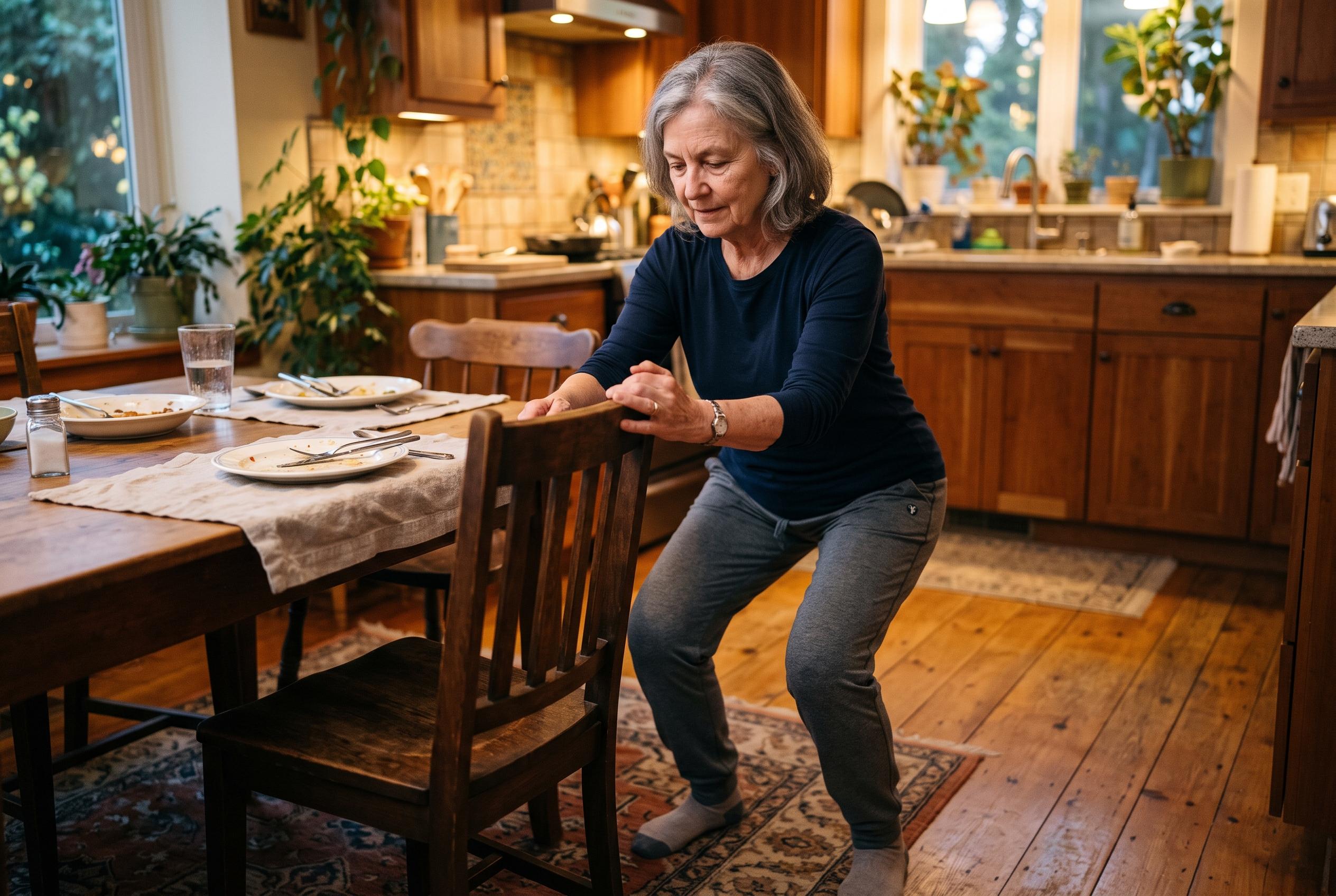

A short circuit of chair squats, counter push-ups and other at-home exercises could help older adults manage post-meal glucose more effectively than an easy stroll alone, but medication users should seek medical advice first.
For adults over 60, a short bout of strength work after supper may help blunt blood sugar spikes more effectively than an easy stroll alone. The central idea is simple: working muscles draw glucose out of the bloodstream, and the bigger the muscle group and the harder it works, the more glucose it can use. The Eat This article argues that the home exercises most likely to help are the ones that recruit large muscles quickly and can be done right after eating, when blood sugar is still rising.
That advice fits with guidance from the Cleveland Clinic and the Mayo Clinic, which both say physical activity soon after meals can help lower glucose and improve insulin sensitivity. Walking remains useful, especially after dinner, but the article contends that many older adults walk too gently, or too far from the meal, to make a strong dent in post-meal readings. It also points out a problem that becomes more common with age: muscle loss. As muscle mass declines, the body has less tissue available to store and use incoming glucose, which can make blood sugar harder to control.
The practical routine it recommends uses five simple movements: sit-to-stands from a chair, seated heel raises, counter push-ups, deadlifts with grocery bags and a loaded carry around the house or garden. Each one can be done without a gym and with items already at home. The chair work and deadlifts are especially valuable because they involve the thighs, hips and back, which are among the largest muscle groups in the body. The seated heel raises, meanwhile, are a low-impact option that can be done while watching television, making it easier to stay active during the long evening period when many people tend to sit for hours after dinner.
Safety still matters. Cleveland Clinic and Mayo Clinic both advise people who take insulin or other glucose-lowering drugs to monitor their levels and speak with a healthcare professional before changing exercise timing, because working out soon after a meal can cause glucose to fall more than expected. For those who can exercise safely, the combination of a brief post-meal circuit and regular strength training on non-consecutive days may offer a more effective way to manage blood sugar than walking alone. In that sense, the message is not to abandon walking, but to pair it with movements that ask more of the muscles already doing the work.
Disclaimer: This content is for informational purposes only and is not intended to be a substitute for professional medical judgment, advice, diagnosis, or treatment.



