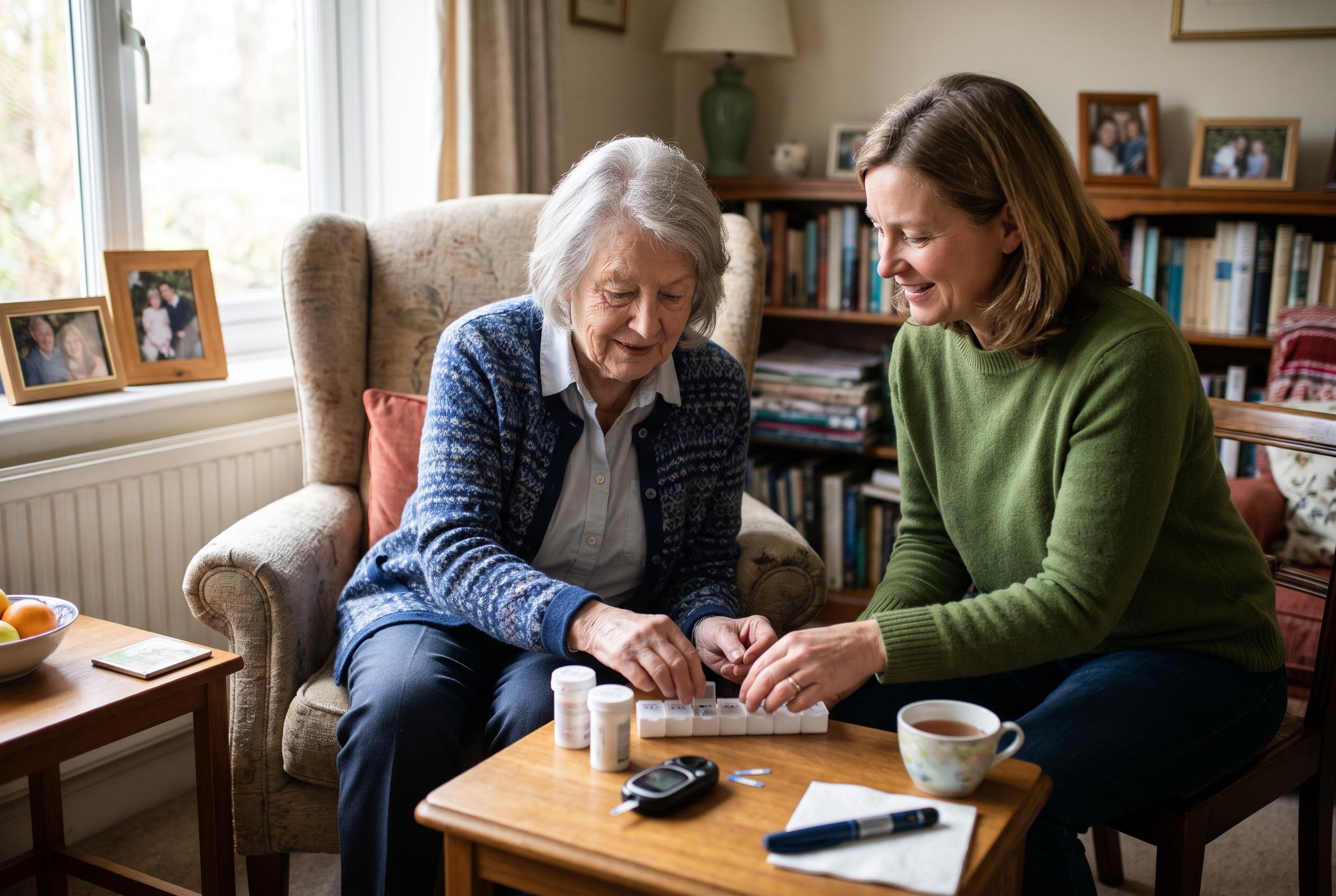

Genetic analysis of English data suggests type 2 diabetes substantially increases older adults’ use of both paid and unpaid care by limiting their ability to live independently.
A study published in Social Science & Medicine says type 2 diabetes does more than raise medical costs in later life: it also increases the likelihood that older adults will need paid and unpaid long-term care. Katerina Gousia and her co-authors analysed eight waves of the English Longitudinal Study of Ageing, covering 2002 to 2017 and involving 18,166 people, to estimate the effect of diabetes on care needs among older adults in England.
To address the problem that diabetes status may be linked to other factors that also affect care use, the researchers used a Mendelian randomisation approach, which relies on genetic variation as a tool for estimating causal effects. Their analysis found that type 2 diabetes raised the chance of using formal care by 6 percentage points and informal care by 27 percentage points. After allowing for possible effects running through obesity, the increase in informal care use was slightly smaller, at 25 percentage points.
The study also suggests a practical explanation for that extra need: diabetes was associated with a higher likelihood of limitations in activities of daily living, such as washing or dressing, and instrumental activities of daily living, such as shopping or managing medication. In other words, the condition appears to affect the ability of older adults to live independently, not just their health outcomes. The authors say this wider burden should be taken into account when policymakers and researchers assess the value of diabetes prevention and treatment programmes.
The findings broadly align with earlier work from the NIHR-funded Applied Research Collaboration South West Peninsula, which reported that diabetes was linked to greater use of both formal and informal care in the English Longitudinal Study of Ageing. More generally, the result adds to a growing body of research showing that type 2 diabetes in older age is shaped by wider social and biological factors, and that its effects can extend into areas such as disability, loneliness and socioeconomic disadvantage. That makes the case for evaluating diabetes interventions not only through the lens of clinical outcomes, but also through their potential to reduce demand for social care.
Disclaimer: This content is for informational purposes only and is not intended to be a substitute for professional medical judgment, advice, diagnosis, or treatment.