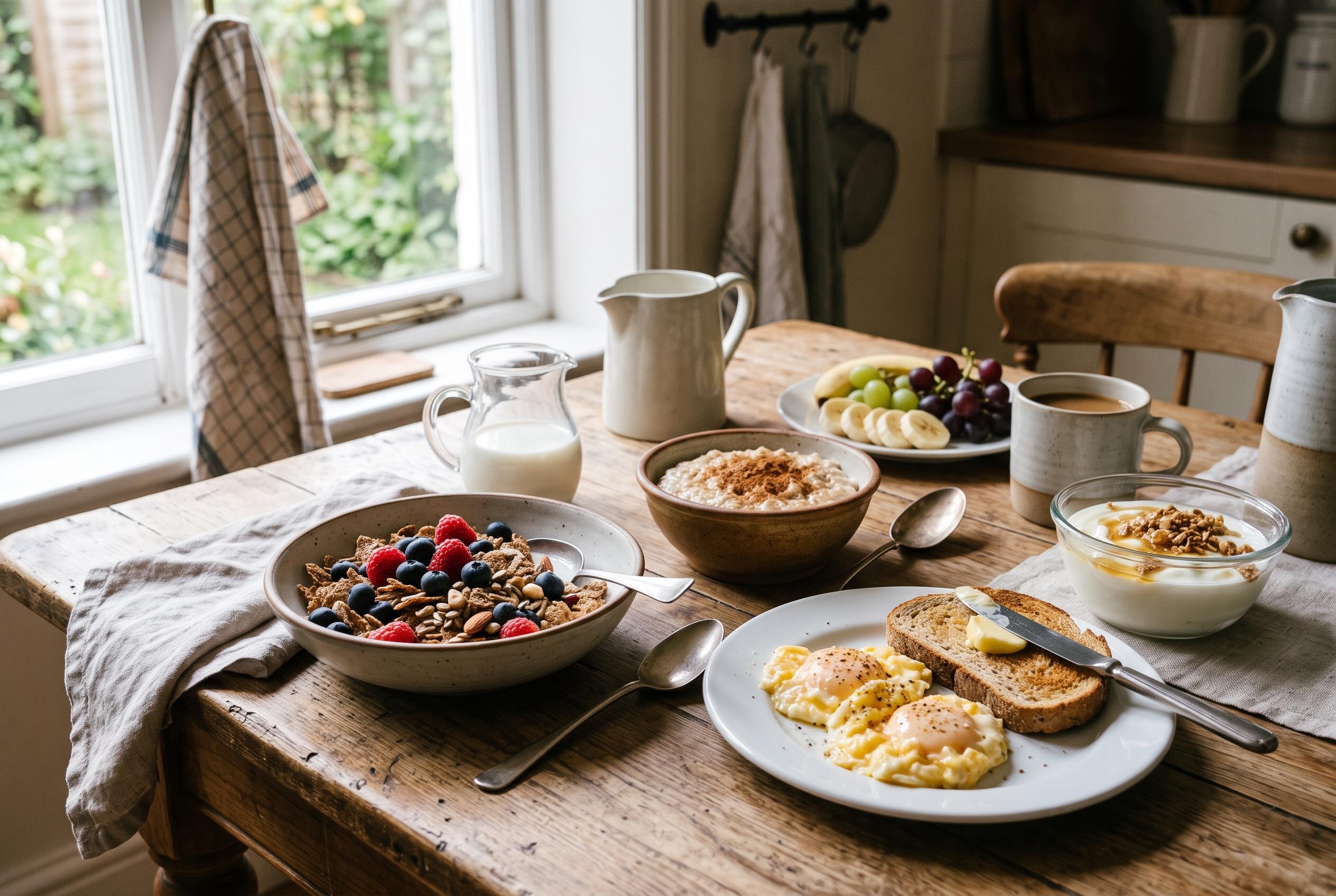

From fibre-rich cereal and slow-cooked oats to eggs and Greek yoghurt, balanced breakfasts may help support steadier blood sugar without banning familiar favourites.
For people living with type 2 diabetes, breakfast can set the tone for the rest of the day. A morning meal built around fibre, protein and fewer refined carbohydrates may help keep glucose steadier for longer, according to dietitian Erin Palinski-Wade, who says that breakfast choices with more fibre and less sugar are linked with better blood sugar control and fewer spikes after meals.
That does not mean cereal has to disappear from the table. Farhan Abdullah, a board-certified internal medicine physician, says cereal can still work for people with diabetes if it is made with whole grains and enough fibre to slow digestion. Cleveland Clinic likewise advises choosing cereals that are high in fibre, low in added sugar and paired with protein-rich foods such as nuts, seeds or dairy. In practice, that means checking the label carefully and paying as much attention to portion size as to the brand name.
Oatmeal is another breakfast that can fit well into a diabetes-friendly eating pattern, but preparation matters. Dawn Menning of Willow Laboratories recommends steel-cut or old-fashioned rolled oats rather than instant versions, because they tend to have a gentler effect on blood sugar. Jessica Jones of Diabetes Digital suggests keeping toppings simple and using fruit, cinnamon or vanilla instead of sweeteners. Healthline and Medical News Today both point to similar combinations, including oatmeal with berries, nuts or seeds, as a sensible way to add fibre, healthy fats and flavour without loading the bowl with sugar.
Other familiar breakfast staples can also work well when they are assembled thoughtfully. Palinski-Wade recommends eggs with sautéed vegetables or avocado on whole-grain toast as a high-protein option that may help with satiety and concentration. Healthline and Medical News Today also highlight Greek yoghurt with berries, multigrain toast with avocado and blended breakfasts that combine protein with fibre and healthy fats. That approach is the common thread: balance the carbohydrates with ingredients that digest more slowly and support a flatter glucose response.
The wider message is that a diabetes-friendly breakfast does not need to be dull or highly restrictive. Whether it is cereal, porridge, eggs or yoghurt, the best choices are usually the ones that combine fibre, protein and modest amounts of carbohydrates. For many people, that makes breakfast less about cutting foods out entirely and more about choosing versions that are kinder to blood sugar and easier to sustain day after day.
Disclaimer: This content is for informational purposes only and is not intended to be a substitute for professional medical judgment, advice, diagnosis, or treatment.